
Launch guide · 2026
Top Product Hunt Alternatives for a Successful Launch 2026
Product Hunt is one launch day - not a strategy. These are the ten platforms indie founders actually use to get discovered, earn backlinks, and win reviews in 2026, ranked by how much they move the needle for a real launch.
Every founder eventually asks the same question: where should I launch? Product Hunt is the obvious first answer, but betting an entire launch on one 24-hour window is high variance - your result depends on who else launches that day, timezone luck, and how early your votes cluster.
The founders who launch successfully in 2026 treat discovery as a stack. They combine a weekly launch board that keeps a product visible for days, a pre-launch waitlist channel, a technical community for blunt feedback, and review directories that compound authority and search traffic for months. This ranked list is that stack - starting with the platform we think most indie founders should build their launch around, then the specialists that round it out.
For each platform you will find how it works, an image slot to preview the product, its standout features, and exactly who it is best for - so you can build a launch plan that fits your product, audience, and budget instead of gambling on a single Tuesday morning.
The 10 alternatives at a glance
1. Founder.bestTop pick
The founder-first weekly launch platform with dofollow SEO
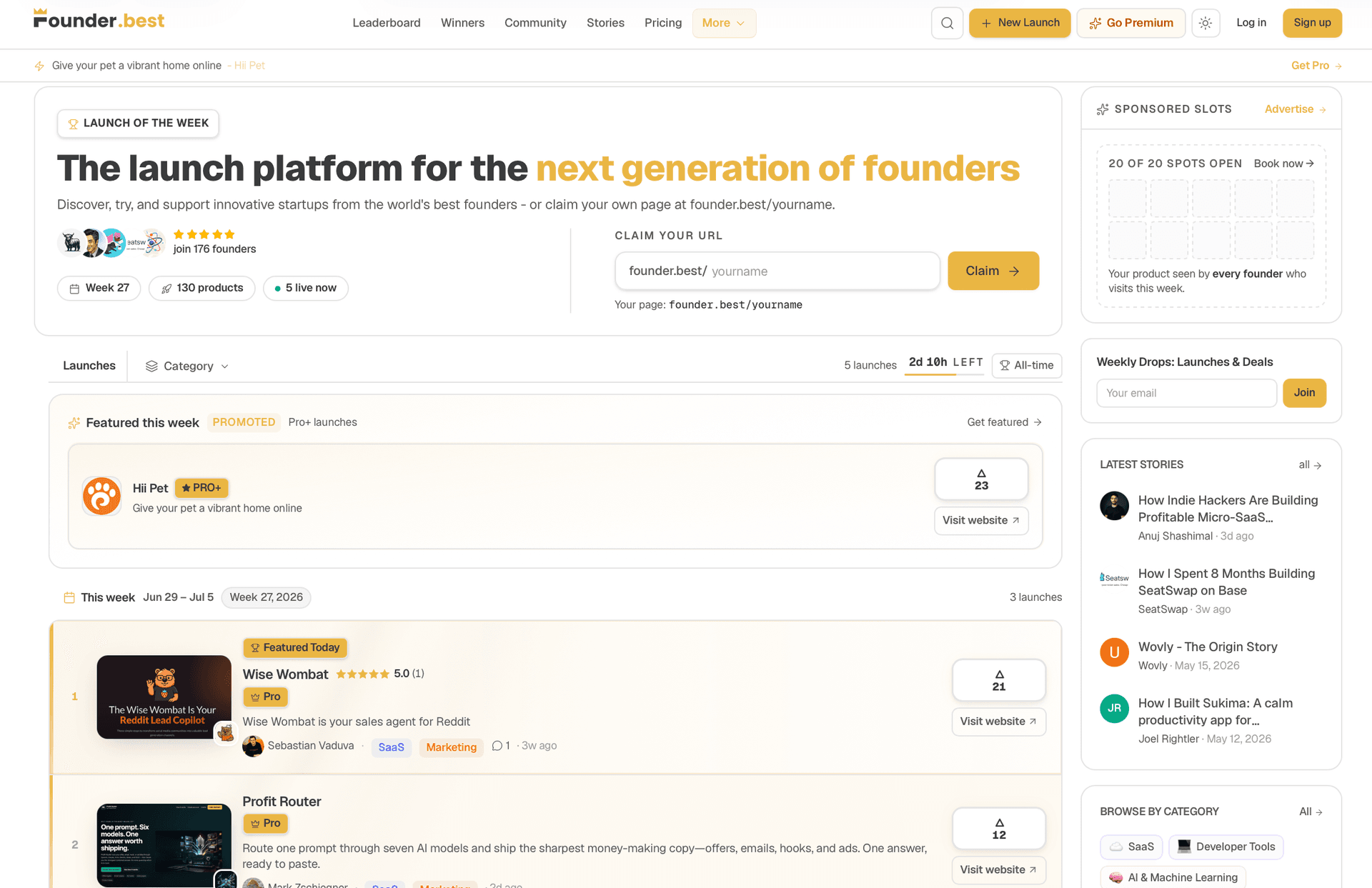
Founder.best is built specifically as a Product Hunt alternative for indie founders. Instead of a single 24-hour sprint, products launch into a weekly leaderboard - two weeks of homepage visibility on Standard, a full month on Pro - so a solo founder in any timezone still has a real shot at winning the week.
Every approved listing gets a permanent product page with a dofollow backlink, an embeddable launch badge, a Founder Profile at founder.best/yourname, and optional verified revenue through TrustMRR. The audience skews bootstrapped SaaS, AI tools, and indie makers - people who genuinely evaluate products rather than tourists skimming a homepage for five minutes.
Why it's our top recommendation
Founder.best wins the top spot because it fixes the two things founders complain about most: the one-day lottery and the missing SEO payoff. A week-long (or month-long) window gives your launch time to accumulate upvotes, comments, and shares, while the permanent dofollow product page keeps earning search traffic and authority long after launch day ends.
It is also the most complete home base for a launch stack - founder profiles, founder stories for long-form build-in-public content, product updates after launch, weekly winners in the newsletter, and transparent pricing from $9. You launch here first, then point every other platform in this list back to your Founder.best page.
Key Features:
- Weekly launch cycle: 7-30 days of homepage visibility instead of a 24-hour race, so timezone and launch-day competition matter far less.
- Dofollow backlink: Every approved product page links to your site with a dofollow backlink, plus an embeddable badge for a second link.
- Founder profile & leaderboard: Claim founder.best/yourname, showcase your startups, and build long-term credibility on the founder leaderboard.
- Verified revenue (TrustMRR): Optionally display a verified MRR badge so buyers and investors trust your traction at a glance.
- Affordable, transparent pricing: Free launches, Standard from $9, and Pro plans from $19 - no surprise fees or subscription lock-in.
Best For: Indie founders and bootstrapped SaaS makers who want a fair weekly cycle, dofollow SEO, and a founder brand that grows beyond one launch day.
2. BetaList
Curated pre-launch feature for building a waitlist
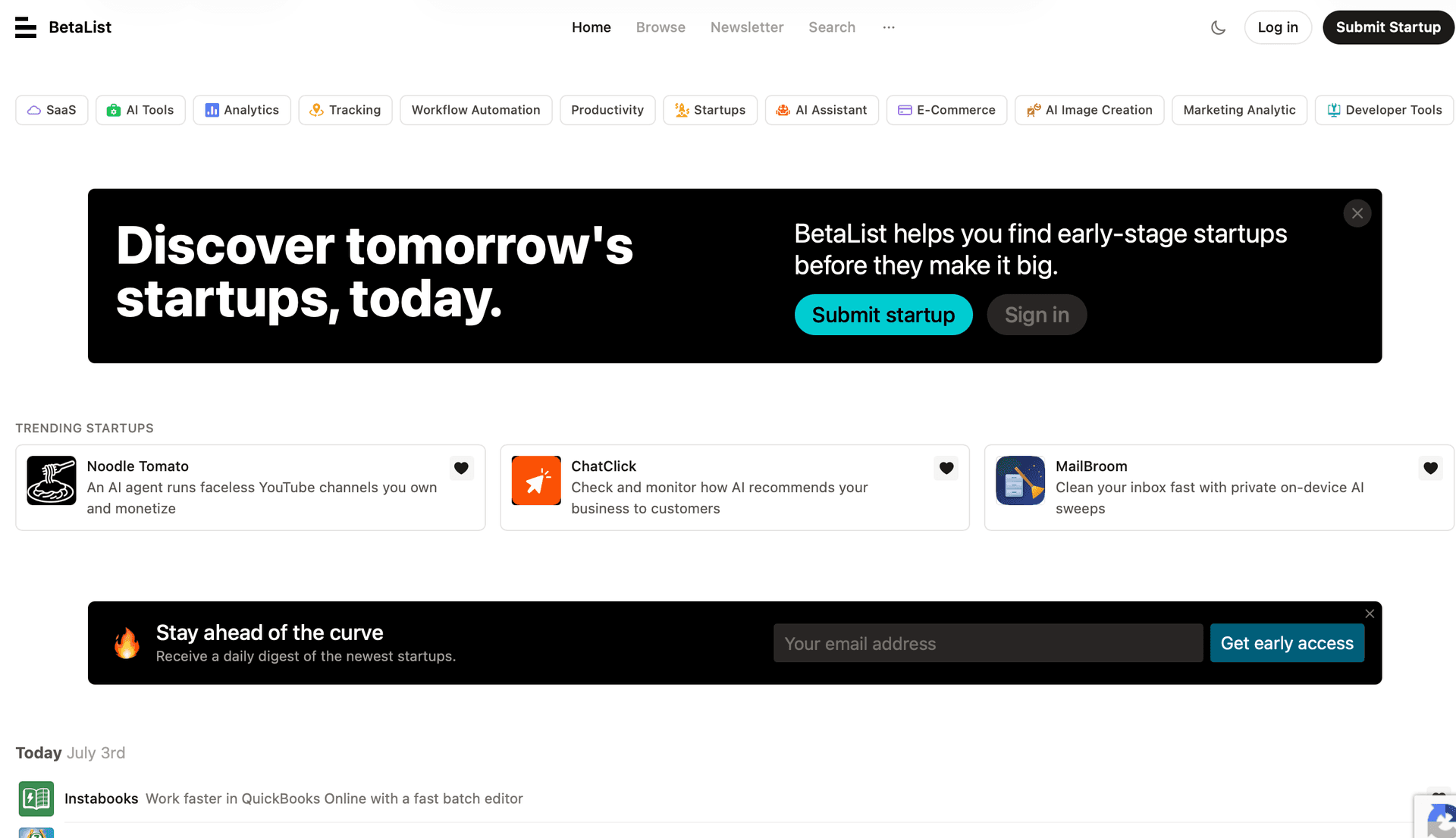
BetaList is the go-to for the weeks before you publicly launch. It only features products that have not launched yet, so you submit a coming-soon page, the team curates, and early adopters who specifically browse for new betas discover you.
Treat BetaList as a waitlist engine, not a revenue channel. Every submission is now paid (with a refund if you are not selected), and cheaper plans are reviewed more slowly, so time your submission months ahead of your public launch - then convert that waitlist when you ship on a launch board like Founder.best.
Key Features:
- Pre-launch only: Features coming-soon products, making it ideal for waitlist building before your public launch.
- Curated, early-adopter audience: Readers browse BetaList specifically to join new betas, so signups are high-intent.
- Free queue or paid expedite: Submit for free and wait, or pay to move up the review queue when your timeline is tight.
Best For: Founders filling a waitlist and recruiting beta testers before the real launch.
BetaList vs Founder.best3. Peerlist Launchpad
Weekly, profile-linked launches for tech professionals
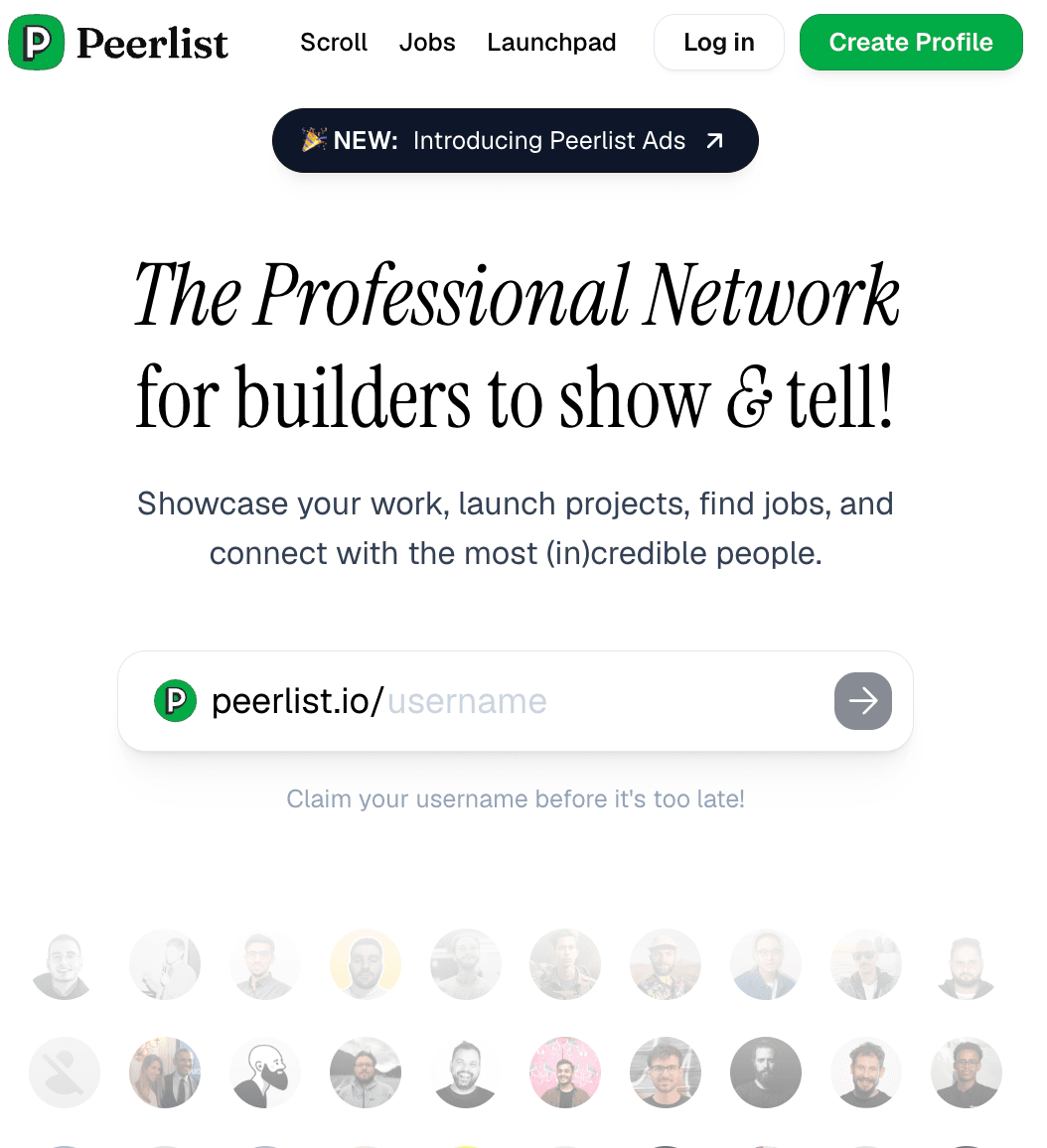
Peerlist is a professional network for designers and developers, and Launchpad is its launch arena. Projects launch into a week-long cycle, the community votes across the whole week, and winners are crowned at the end - so a single unlucky morning does not decide your fate.
Because every launch is tied to your Peerlist profile, your work history and credibility launch with you and compound across launches. It is strongest for dev tools, design tools, and career-adjacent products aimed at tech professionals.
Key Features:
- Week-long voting window: A full week of voting reduces timezone luck compared to a 24-hour race.
- Profile-linked credibility: Launches attach to your verified Peerlist profile, so your reputation travels with the product.
- Tech-professional audience: A community of developers and designers who evaluate tooling carefully.
Best For: Founders whose professional credibility and portfolio are part of the pitch, especially dev and design tools.
Peerlist Launchpad vs Founder.best4. TinyLaunch
Indie-friendly launch board with dofollow backlinks
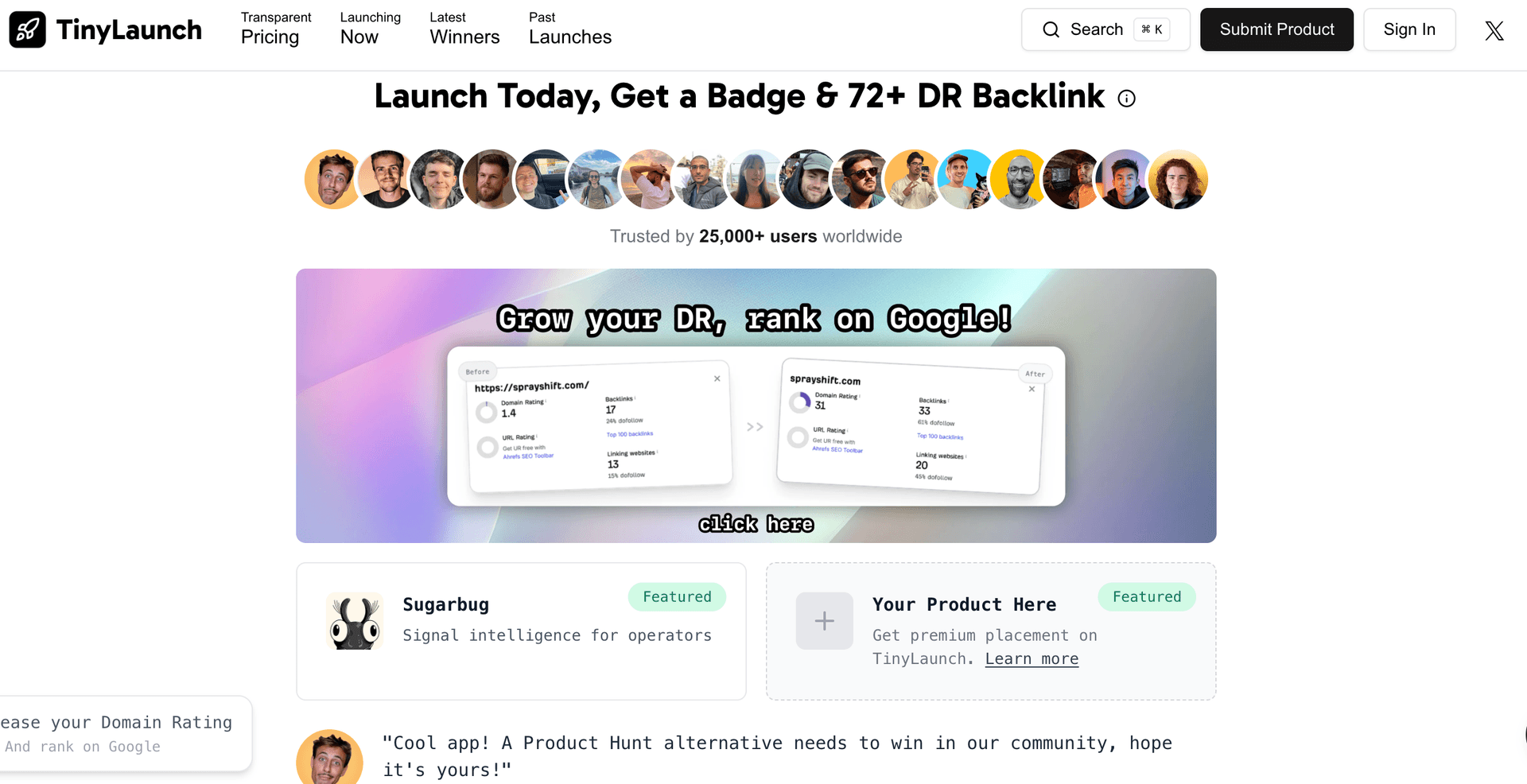
TinyLaunch is one of the most popular indie launch boards - affordable submissions, dofollow backlinks, and a community of solo founders and small teams. It targets the same makers as Product Hunt but with less enterprise noise and more room for bootstrapped products to be seen.
Launches compete on daily and trending cycles. Cross-posting TinyLaunch and Founder.best during the same launch week is a common play to reach overlapping indie audiences and stack SEO backlinks from two dedicated product pages.
Key Features:
- Dofollow backlinks: Listings include a dofollow link, adding SEO value alongside your other launch pages.
- Affordable submissions: Indie-friendly pricing built for solo founders and small teams.
- Maker audience: A community of builders who actually try and buy small internet products.
Best For: Indie makers who want Product Hunt-style discovery with dofollow links and a builder audience.
TinyLaunch vs Founder.best5. MicroLaunch
Month-long exposure that favors feedback over a spike
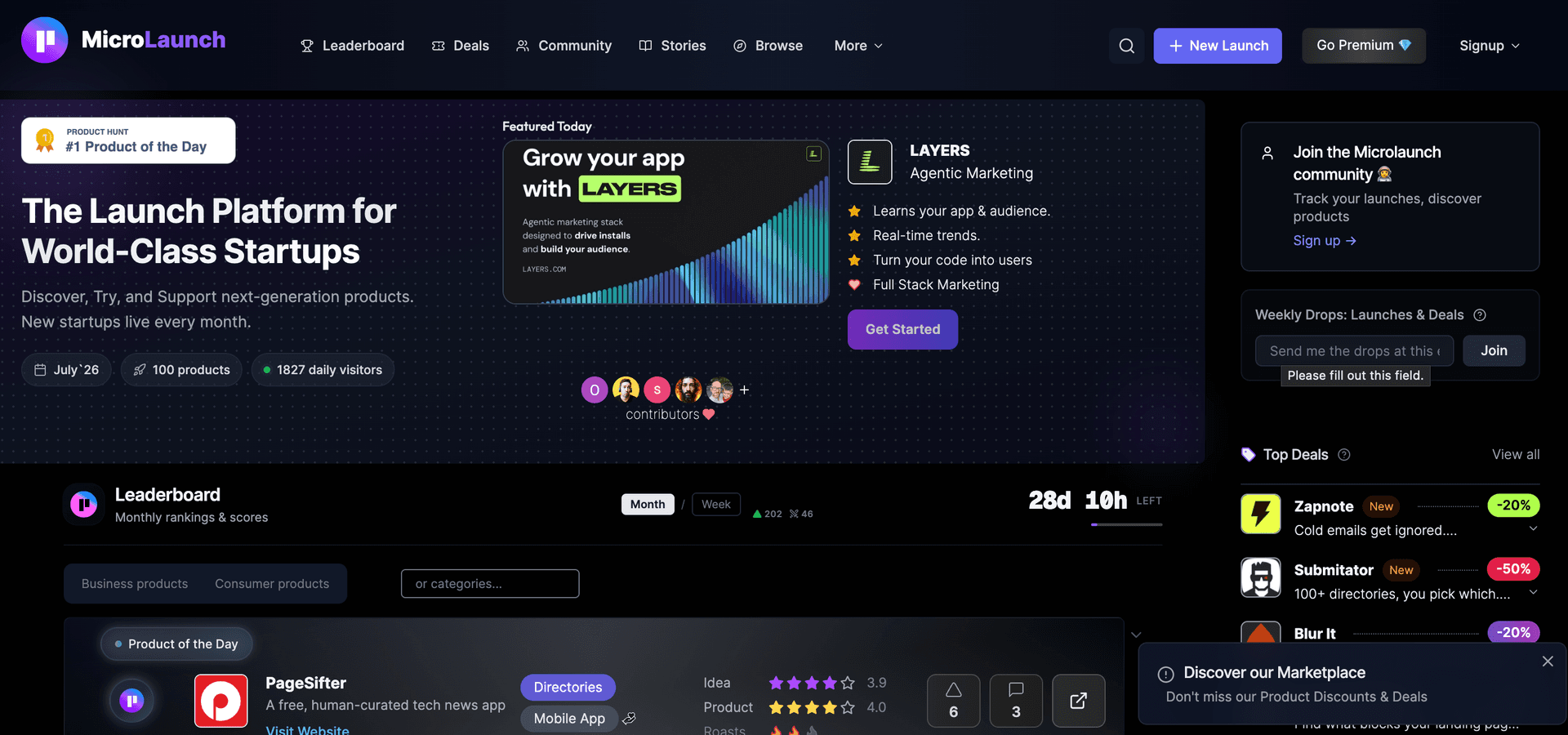
MicroLaunch stretches the launch window further than daily boards: products get a full month of exposure and compete in monthly rankings rather than a single-day sprint. That design rewards products that steadily collect users and feedback over four weeks.
The community skews early-stage and indie, so realistic outcomes are a steady drip of high-intent visitors plus detailed feedback - not a one-day chart spike. If you are at MVP stage and would trade a traffic burst for thirty honest conversations, this is the right room.
Key Features:
- Month-long exposure: A 30-day window gives early products time to gather users and feedback.
- Monthly rankings: Compete over a month instead of winning a single loud morning.
- Early-stage community: An audience that gives detailed, constructive feedback on MVPs.
Best For: Early-stage products that need users and feedback more than a one-day chart position.
MicroLaunch vs Founder.best6. Hacker News (Show HN)
The highest ceiling - and the bluntest audience
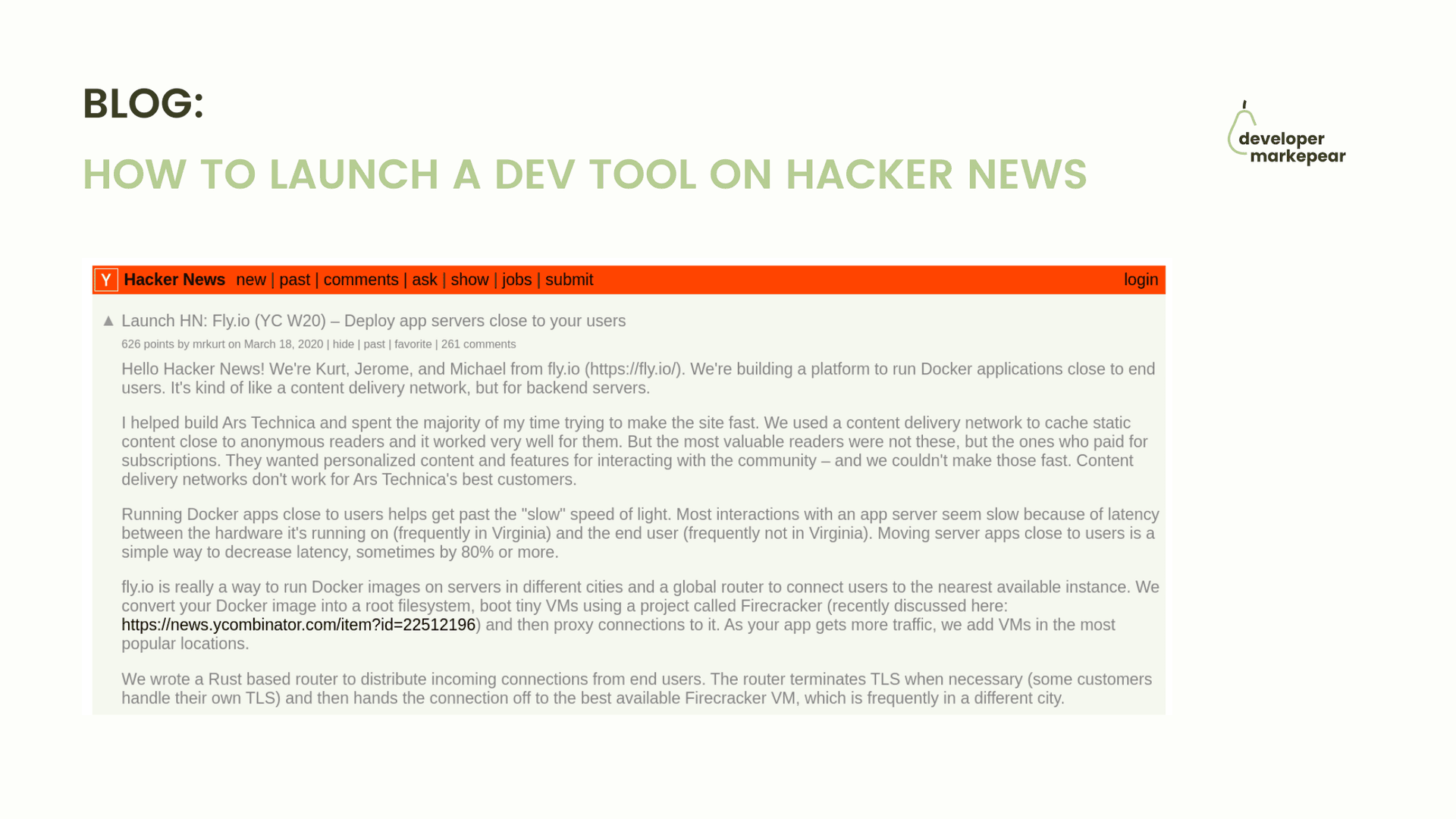
A Show HN post is plain text: a title, a link, and a paragraph of honest context, with no scheduling and no gallery. Most Show HN posts sink quietly, but the ones that connect can outdraw a top Product Hunt finish, bringing a wave of technical, skeptical, high-intent visitors.
Write like an engineer explaining a side project, not a marketer announcing a revolution. Stay in the comments all day and treat harsh feedback as product research. Pair Show HN with a Founder.best launch the same week so interested readers have a permanent product page to return to.
Key Features:
- Massive potential reach: A front-page Show HN can drive thousands of technical visitors in hours.
- Free and unscheduled: No cost and no launch-day scheduling - post when your product is ready.
- High-signal feedback: Skeptical, technical readers surface real product and positioning gaps.
Best For: Technical products with a founder willing to defend every design decision in public.
Hacker News (Show HN) vs Founder.best7. AlternativeTo
Capture buyers searching for alternatives to competitors
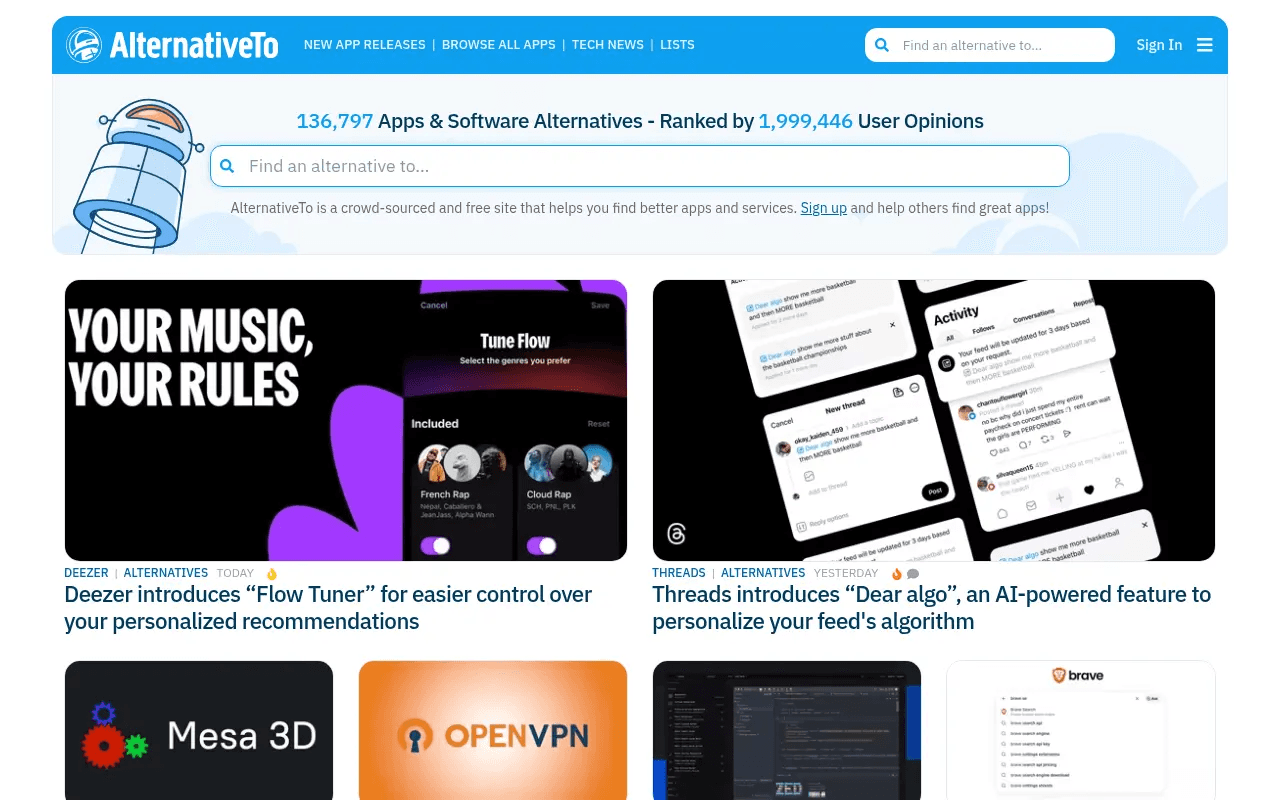
AlternativeTo is a crowdsourced directory where people search for alternatives to the software they already use. Listing your product against established competitors puts you in front of buyers with clear, high-intent search behavior - they are actively looking to switch.
It is a long-game SEO and discovery channel rather than a launch-day spike. Add your product, encourage early users to like it against the incumbents you replace, and it keeps surfacing you in 'X alternatives' searches for months.
Key Features:
- High-intent 'alternatives' traffic: Reaches users actively searching to replace a competitor's product.
- Crowdsourced ranking: User likes and reviews push your product up against incumbents over time.
- Long-tail SEO value: Your listing keeps ranking for comparison searches long after you add it.
Best For: Products positioned as a direct alternative to well-known tools that want steady comparison traffic.
8. G2
The review engine that drives B2B buying decisions
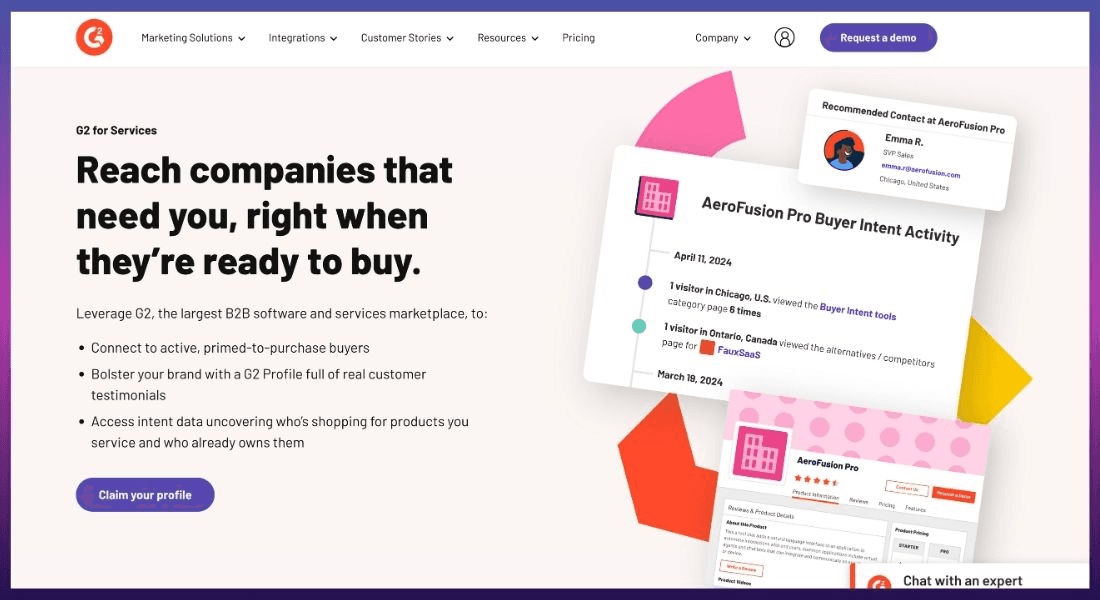
G2 is the most influential software review platform for B2B buyers. A claimed profile with real reviews builds trust, feeds category rankings and Grid reports, and shows up in high-intent searches when buyers are comparing tools before a purchase.
It rewards sustained effort: claim your listing, ask happy customers for honest reviews, and keep your profile current. G2 is less about launch-day traffic and more about becoming the credible choice when a team is ready to buy.
Key Features:
- Trusted B2B reviews: Verified reviews build buyer confidence at the decision stage.
- Category grids & rankings: Strong review volume lifts you in G2's category Grid reports.
- High-intent search visibility: G2 profiles rank for comparison and 'best software for X' queries.
Best For: B2B SaaS products that want credibility and buyer-stage visibility through verified reviews.
9. Capterra (Gartner Digital Markets)
Gartner-backed directory for high-intent software buyers
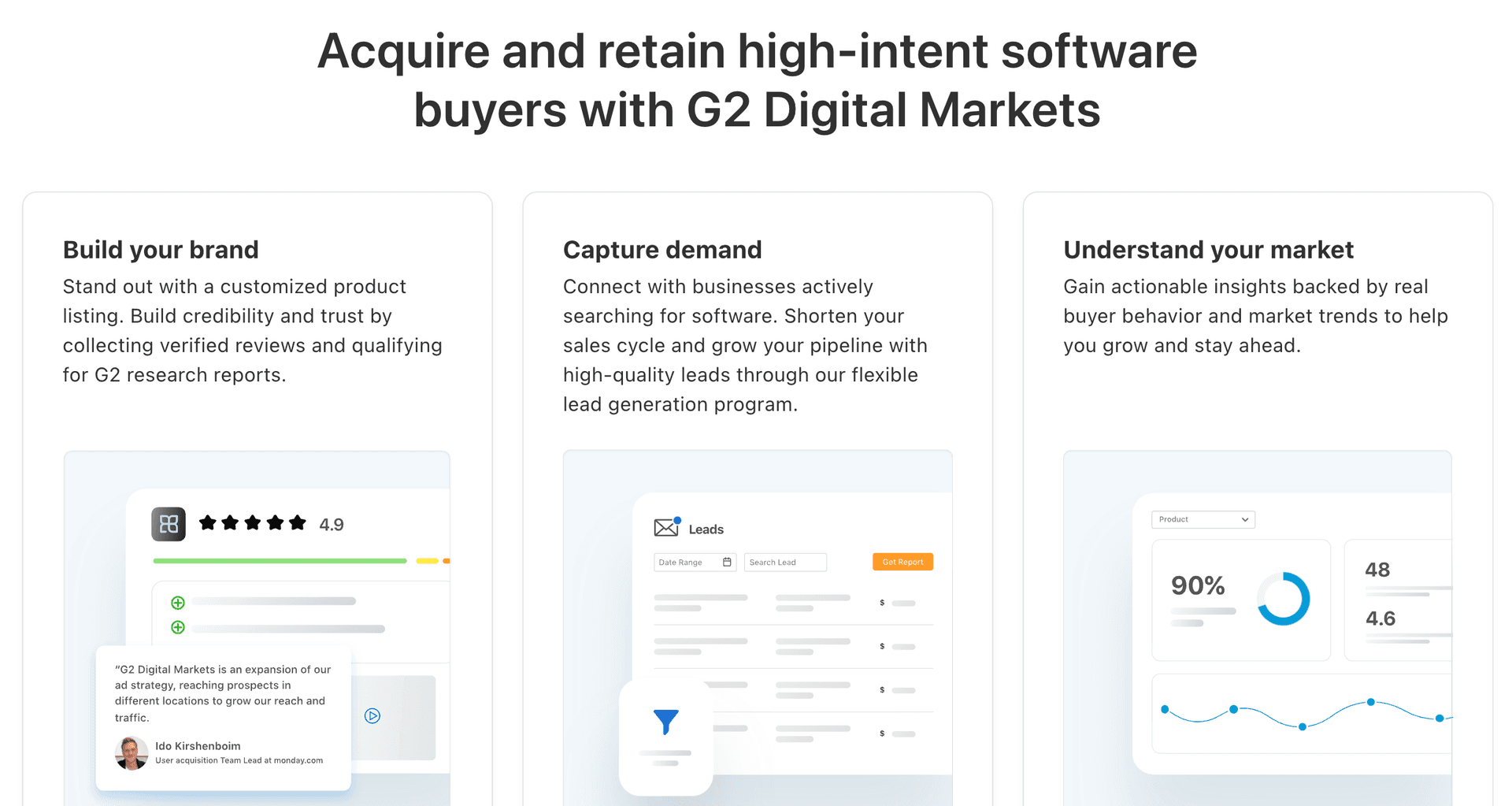
Capterra, part of Gartner Digital Markets alongside GetApp and Software Advice, is a directory buyers use to shortlist software by category. A listing with reviews reaches decision-makers comparing options - often further down the funnel than a launch-day audience.
Like G2, Capterra rewards a maintained profile and genuine reviews. Optional paid placement can accelerate visibility, but an accurate, well-reviewed free listing already captures buyers searching your category.
Key Features:
- Gartner Digital Markets network: One listing can extend across Capterra, GetApp, and Software Advice.
- Category-based discovery: Buyers filter by category and features to shortlist tools like yours.
- Reviews + optional paid reach: Free reviews build trust; PPC placement can accelerate category visibility.
Best For: SaaS products targeting SMB and mid-market buyers who compare tools in software directories.
10. FridayHunt
A weekly launch spotlight for makers who missed the big day
FridayHunt gives indie makers a lighter, weekly launch moment - a curated spotlight and newsletter feature that reaches an audience of builders without the pressure of a full Product Hunt campaign.
It is a low-effort, high-fit addition to a launch stack: submit your product, get featured in the weekly roundup, and pick up a few extra high-intent visitors and a backlink. Pair it with your main launch on Founder.best for extra reach the same week.
Key Features:
- Weekly spotlight: A recurring, curated feature that is easy to submit to and low-pressure.
- Maker newsletter reach: Gets your product in front of an engaged audience of indie builders.
- Easy add-on to your launch: Minimal effort to include alongside a bigger launch on Founder.best.
Best For: Indie makers who want an extra weekly spotlight and backlink without a full launch campaign.
Frequently asked questions
What is the best Product Hunt alternative for a launch in 2026?
For most indie founders, Founder.best is the strongest like-for-like alternative: a weekly launch cycle instead of a 24-hour race, dofollow backlinks on every product page, founder profiles, and plans from $9. Pair it with specialists like BetaList (pre-launch) and Hacker News (technical reach) for a complete launch.
Should I launch on Product Hunt and its alternatives?
Yes - the audiences barely overlap. Sequence your launches a few weeks apart: pre-launch platforms like BetaList first, dedicated launch boards next, then the big swings like Product Hunt and Show HN once your product has survived contact with real users.
Which of these give a dofollow backlink for SEO?
Founder.best and TinyLaunch provide dofollow backlinks on your product page. Review directories like G2, Capterra, and AlternativeTo build authority and high-intent search visibility over time, even where links are nofollow.
What is the difference between launch boards and review sites?
Launch boards (Founder.best, TinyLaunch, MicroLaunch, Peerlist) drive a burst of discovery and upvotes during a launch window. Review sites (G2, Capterra, AlternativeTo) compound trust and buyer-stage search traffic for months. A successful launch uses both.
Are these Product Hunt alternatives free?
Many are free to start: Hacker News, AlternativeTo, and basic listings on G2 and Capterra cost nothing, and Peerlist and FridayHunt have free options (BetaList is now paid-only). Founder.best offers free launches plus Standard from $9 and Pro plans for premium placement.
Deep-dive comparison guides
Plan the rest of your launch
- Product Hunt alternatives12 Product Hunt alternatives: launch boards, communities, and directories for indie founders. Honest…
- Where to launchWhere to launch your SaaS or startup in 2026: 15 platforms ranked by SEO, cost, and fit. Product Hunt,…
- Product Hunt launch strategies for SaaSProduct Hunt launch strategies and best practices for SaaS: pre-launch prep, launch-day execution, and the…
- Free startup launch checklist30+ tasks across pre-launch, launch day, and post-launch.
- Free SaaS directories for backlinksList of free SaaS and startup directories with dofollow filters, Ahrefs DR scores, and a submission checklist.
- How Founder.best worksSubmit in 10 minutes, rank on the weekly Launchpad, stay discoverable.
Ready to launch on Founder.best?
Start your launch stack with a fair weekly cycle, dofollow SEO backlinks, and a founder brand that grows beyond a single launch day.