Comparisons
30 Best Startup Founder Communities and Networking Platforms in 2026
Building alone is slow. The right startup founder communities give you feedback, customers, co-founders, and people who've already solved what you're stuck on. Here are 30 platforms worth your time in 2026, grouped by what you actually need.

Post by Anuj Shashimal
Founder, Founder.best24 min read

On this page
- TL;DR
- Introduction
- Best General Startup Founder Communities
- Best Indie Hacker and Solo Founder Communities
- Best SaaS Founder Communities
- Best Founder Networking and Co-Founder Matching Platforms
- Best Startup Launch and Product Discovery Platforms
- Best Founder Mentorship and Accelerator Communities
- Comparison table: 30 startup founder communities and platforms
- How to choose the right startup founder community
- How to get the most value from founder communities
- Frequently Asked Questions
- Conclusion
- Key takeaways
- About the author
- Keep reading
- Tools & guides
Last updated: November 1, 2026.
You can binge growth content all weekend and still feel alone on Monday. That's normal.
Startup founder communities exist because building a company is a team sport, even when you're solo on payroll. You need honest feedback, early users, maybe a co-founder, and someone who's lived through month three.
This guide lists 30 active platforms in 2026. We checked official sites, public pricing, and what each one is actually for. Skip to your section, or scan the comparison table if you want the full map on one screen.
Introduction
Founder communities earn their keep when they help you learn, get in front of users, find a partner, or stay accountable. Most won't do all four well.
And that's fine. A pre-revenue solo founder in Jakarta needs different rooms than a VP of Sales in Boston.
So start with your bottleneck, not the platform with the loudest landing page.
Best General Startup Founder Communities
These platforms serve founders across industries and stages, not only SaaS.
Y Combinator Startup School
Official website: https://www.startupschool.org/
Startup School is Y Combinator's free, self-paced program for people at the very beginning. Fundraising, product, growth: the curriculum comes from YC partners and guests. Move at your own pace. Most people finish the core path in about seven weeks at an hour or two per week.
The weekly update tool is easy to overlook. It pushes you to report real progress instead of polishing slides. You also get access to YC Co-Founder Matching (we cover that later). This isn't the YC batch. Many batch companies started here anyway.
Best for: First-time founders, side-project builders, and teams preparing to apply to accelerators.
Pricing: Free.
Why founders should consider it: YC-grade advice with no equity and no fee, plus co-founder matching in the same account if you want it.
Startup Grind
Official website: https://www.startupgrind.com/
Startup Grind runs 600+ chapters across 125+ countries. Local volunteers host fireside chats, workshops, pitch nights, and happy hours. Chapter membership is free. Events might be free or ticketed depending on your city.
This is where you meet investors, operators, and founders face to face. Pitch Battle Royale accepts free applications and runs local battles before wider conference exposure.
Best for: Founders who want in-person connections and a city-level startup scene.
Pricing: Free chapter membership; event tickets vary (many events are marked free on chapter pages).
Why founders should consider it: Probably the cheapest way to meet founders near you without joining a paid club.
Founder Institute
Official website: https://fi.co/
The Founder Institute is a pre-seed accelerator-style program with semesters worldwide. You don't just submit a deck. You take the Entrepreneur DNA Assessment, a required aptitude test, then human reviewers decide.
Accepted founders join weekly sessions, mentor ratings, and growth sprints. Budget roughly 20 hours per week. Costs vary by city and deadline. Silicon Valley Fall 2026 Core, for example, lists $799 by the early deadline and $1,649 after, with refunds if you drop before set sessions. FI also runs Agentic tracks with higher fees and an Equity Collective pledge on some programs. Check FI.co/enrolling for your region.
Best for: Founders who want a rigorous, mentor-driven program before seed fundraising.
Pricing: $0 application fee; entrance fees typically $599 to $1,649+ depending on program and location (verify on the enrolling page).
Why founders should consider it: You trade cash and time for structure and a global alumni network, not another idle Slack channel.
Founders Network
Official website: https://foundersnetwork.com/
Founders Network is invite-only peer mentorship for tech startup founders. Members get a private forum, webinars, chapter meetings, and warm intros from success coaches. Plans follow company stage, from idea through scaled revenue. Published annual pricing includes Launch at $899/year, Scale at $1,599/year, and Lead at $2,999/year on the benefits page.
Don't show up to drop product links. You pay for confidential advice from operators who've already lived your chapter.
Best for: Full-time tech founders who will pay for curated peers and mentorship access.
Pricing: Annual membership; applying is free, dues charged only if accepted.
Why founders should consider it: When free forums stop being enough and you need vetted intros, FN is built for that job.
Entrepreneurs' Organization (EO)
Official website: https://eonetwork.org/
EO is a global network for owners and controlling founders of companies with at least $1M in annual gross revenue. Venture-backed companies follow separate rules on the site. You join a local chapter and land in Forum peer groups: small, confidential circles that meet monthly.
This isn't for hobby projects. It helps when executive loneliness, key hires, and scaling messes are too raw for a public post. Global dues run $2,630/year with a $3,500 one-time initiation fee, plus chapter dues that vary by location.
Best for: Established founders who want structured peer groups at scale.
Pricing: Global dues and initiation fee above; chapter dues additional. Check join EO.
Why founders should consider it: Forum remains one of the most respected formats for founder peer support at seven- and eight-figure scale.
EO Accelerator
Official website: https://eonetwork.org/ (see Accelerator pathways on the join flow)
EO Accelerator is for founders building toward $1M in revenue who aren't eligible for full EO yet. You get learning, accountability, and EO's methodology until you qualify for the main network.
Details depend on your chapter. Sub-$1M but want Forum-style support? Start here instead of stretching to fit full EO requirements.
Best for: Revenue-growing founders preparing for EO membership.
Pricing: Check the official website for current Accelerator fees in your chapter.
Why founders should consider it: It sits between free online forums and EO's $1M+ bar.
Best Indie Hacker and Solo Founder Communities
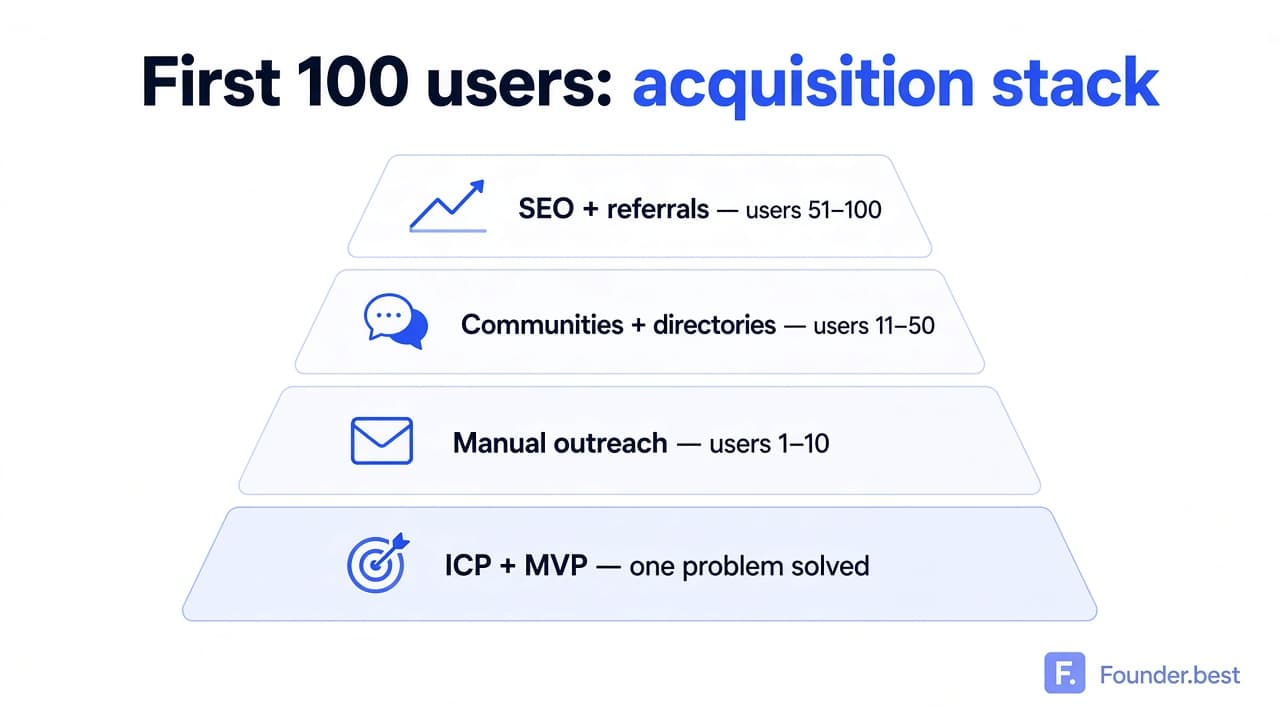
Solo founders need rooms where bootstrapping, shipping, and honest revenue talk are normal. Not the exception.
Indie Hackers
Official website: https://www.indiehackers.com/
Indie Hackers is the default forum and product directory for independent online businesses. Building, Growth, and Money groups host long threads on pricing, churn, and first customers. List products, post Milestones, follow other makers.
The basic tier is free. Indie Hackers Plus is optional (see terms for current plans). Outbound links in posts are usually nofollow, so treat IH as audience and feedback, not an SEO hack. For launch tactics, see our first 100 users guide.
Best for: Bootstrapped founders, engineers shipping side projects, and small teams sharing revenue stories.
Pricing: Free basic tier; paid Plus and Premium Profile options available.
Why founders should consider it: Failure posts often outperform polished launch announcements here.
WIP
Official website: https://wip.co/
WIP is invite-only accountability for makers who want to ship daily. Post todos, build streaks, run projects, get feedback. Weekly video hangouts and tight culture keep noise low.
New members pay $29/month or $199/year, with a one-month trial per WIP's published policy. No free tier for new joiners anymore, except grandfathered accounts.
Best for: Solo builders who need external accountability more than another newsletter.
Pricing: $29/month or $199/year for new members.
Why founders should consider it: Streaks and public todos turn vague goals into daily shipping habits.
Hacker News
Official website: https://news.ycombinator.com/
Hacker News is Y Combinator's public link forum. Founders use Show HN to demo products to a technical, skeptical crowd. Comments are blunt. That's the point. No fee, no application. Read the Show HN guidelines first.
You don't "join" HN. You show up with something useful and comment like a human. A strong Show HN can drive signups and inbound recruiting. A thin landing page dies quietly.
Best for: Technical founders with something people can try immediately.
Pricing: Free.
Why founders should consider it: One good Show HN can beat a month of lazy directory submissions.
Reddit r/startups
Official website: https://www.reddit.com/r/startups/
r/startups is a big public subreddit for early-stage talk: legal basics, cofounder fights, MVP scope, fundraising questions. Read the sidebar before you post.
Self-promotion is limited. Answer questions consistently and you build reputation. Drop a launch link and walk away, you'll often get removed. Pair Reddit with a permanent listing on Founder.best or a launch via /submit so curious readers have somewhere to land.
Best for: Founders who want unfiltered crowd advice and diverse perspectives.
Pricing: Free.
Why founders should consider it: Real problems show up fast when thousands of founders reply anonymously.
Small Bets
Official website: https://smallbets.com/
Small Bets is Daniel Vassallo's community for small experiments instead of bet-the-company startup drama. Dozens of recorded classes plus a member community focused on portfolio-style entrepreneurship.
As of 2026, Small Bets is closed to new members. Lifetime members keep the class library and community features on the site. The last public lifetime price on Gumroad was $375 one-time. You can still follow Small Bets emails for new class announcements.
Best for: Founders exploring multiple small products (existing members).
Pricing: Closed to new members; check the official site for waitlist or email updates.
Why founders should consider it: If you already have access, the library is deep on independent income, not VC theater.
Ramen Club
Official website: https://www.ramenclub.so/ (also ramenclub.com)
Ramen Club is a paid Slack community for founders building internet businesses: SaaS, AI tools, marketplaces, apps. Mentor channels, live classes, demo days, fortnightly intros, partner discounts. Indie Worldwide merged in here in 2024.
Published pricing is £25/month or £170 lifetime, plus applicable taxes, with a 30-day money-back guarantee.
Best for: Bootstrapped founders who want Slack access, events, and intros in one membership.
Pricing: £25/month or £170 one-time lifetime (verify on the pricing page).
Why founders should consider it: You're paying for moderation and live programming, not an empty chat room.
Best SaaS Founder Communities
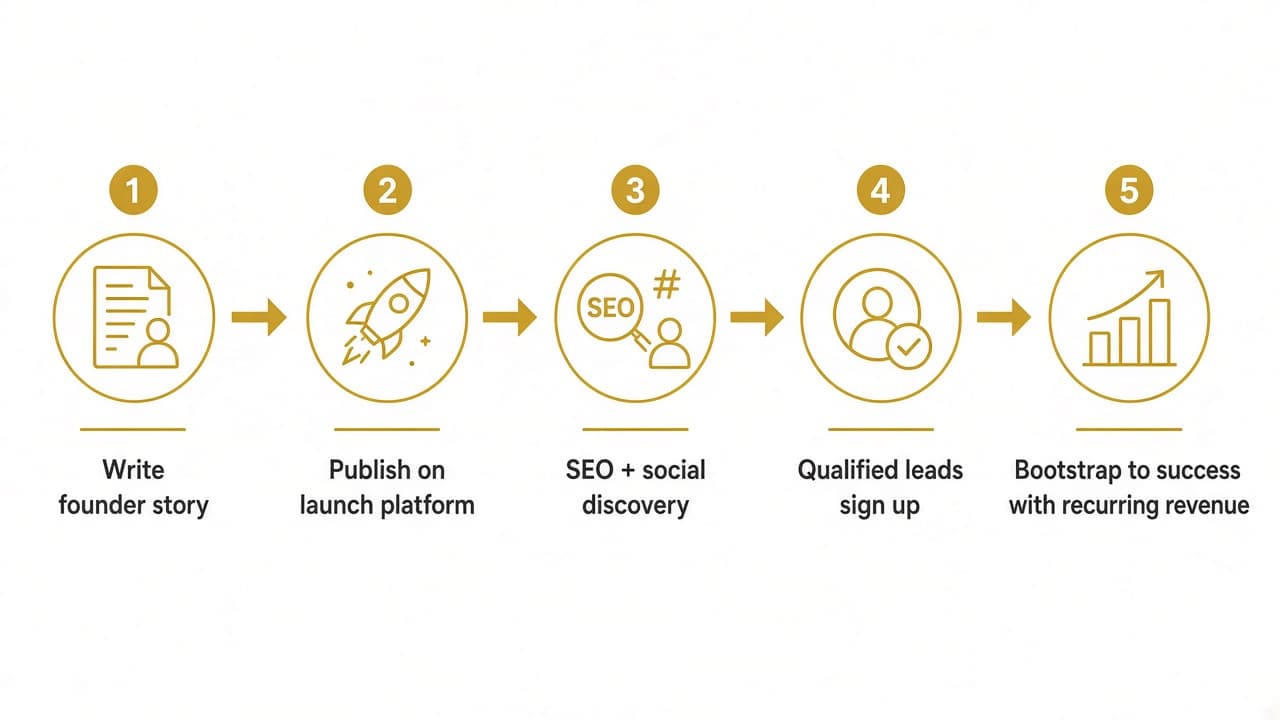
These rooms assume recurring revenue, B2B buyers, or product-led growth. Not vague "startup ideas."
MicroConf Connect
Official website: https://microconf.com/connect
MicroConf Connect is the online home for bootstrapped and mostly bootstrapped B2B SaaS founders. Channels by stage and topic. Monthly expert sessions. Quarterly "Ask Rob Anything" with Rob Walling. A vault of past MicroConf talks.
Apply first. Pay only if accepted. Published pricing is $49/month or $499/year, with a 30-day refund window from first payment. Applications sometimes pause when demand spikes. Check the site before you plan around it.
Best for: B2B SaaS founders from pre-revenue through seven figures who hate pitch spam in communities.
Pricing: $49/month or $499/year after acceptance.
Why founders should consider it: One of the few paid rooms where "bootstrap SaaS" is the default, not a side thread.
SaaStr
Official website: https://www.saastr.com/
SaaStr is content and events built around B2B SaaS scaling. Free membership gets you newsletters, digital workshops, and member-only resources. SaaStr Annual tickets cost money and are often subsidized. Inclusion passes exist for underrepresented founders who meet published criteria.
This skews operator and executive: GTM, hiring, fundraising. Not day-one MVP feedback. Use it when you're thinking about boards, quotas, and churn cohorts.
Best for: B2B SaaS founders and GTM leaders who want scale-stage playbooks.
Pricing: Membership content is free; events and conferences are paid (see official site).
Why founders should consider it: The archive is basically a free course in SaaS metrics and go-to-market motion.
Pavilion
Official website: https://www.joinpavilion.com/
Pavilion (formerly Revenue Collective) is a paid professional community for GTM leaders: sales, marketing, customer success, RevOps. Associate membership starts around $1,375/year in North America. Executive tiers cost more. Gold is invitation-only for the largest companies (see pricing).
Not an indie hacker hangout. It pays off when you manage teams, carry a number, and need peers who get enterprise sales cycles.
Best for: VP+ GTM leaders at B2B tech companies.
Pricing: From about $1,375/year (Associate, North America). Varies by role and region.
Why founders should consider it: Founders who step into CEO/CRO roles often stay here for operator peers long after they quit posting on forums.
Lenny's Newsletter Community
Official website: https://www.lennysnewsletter.com/p/community
Lenny Rachitsky's Friends of Lenny's Newsletter Slack is for paid subscribers. Product, growth, and career threads, plus member meetups and programming on the community page. Pricing lives on Lenny's subscribe page. Annual plans have bundled tool perks in the past. Verify current tiers before you join.
Best for: Product managers, growth leads, and founder-operators who want product-centric peers.
Pricing: Paid newsletter subscription required for Slack access (check official subscribe page for current rates).
Why founders should consider it: When activation or retention is the bottleneck, not incorporation, this room speaks your language.
RevGenius
Official website: https://www.revgenius.com/
RevGenius is a free Slack community for sales, marketing, and revenue people. SaaS founders use it to learn outbound, positioning, and pipeline tactics from practitioners. A paid leaders tier exists for advanced programming. See the official site for current options.
Treat it like a classroom. Give value in threads. Don't cold-pitch your product in general channels.
Best for: B2B SaaS founders doing founder-led sales and marketing.
Pricing: Free core community; paid leader tiers available.
Why founders should consider it: You can hear GTM pain in the wild and test messaging in real conversations.
Best Founder Networking and Co-Founder Matching Platforms

Matching platforms aren't forums. They're search and intro tools. Cap your weekly outreach. Run a trial project before you split equity.
YC Co-Founder Matching
Official website: https://www.ycombinator.com/cofounder-matching
YC Co-Founder Matching lives inside Startup School. Private profile, approval, then browse other approved founders by skills, location, and interests. Invites cap at 15 per week per FAQ. Matches get emails to schedule calls.
Profiles aren't public on the open web. That matters if you're exploring while employed. YC takes no equity for matching.
Best for: Anyone seriously looking for a co-founder, with or without a settled idea.
Pricing: Free.
Why founders should consider it: Big pool, clear rules, no equity strings. Rare for dedicated matching products.
CoFoundersLab
Official website: https://cofounderslab.com/
CoFoundersLab is a long-running co-founder and team-member directory. Free basic membership limits search and messaging. Premium adds unlimited search, weekly live events, learning modules, and partner perks for $29/month (annual options on the premium page). A 30-day trial may auto-renew unless you cancel. Read billing terms before you enter a card.
Best for: Founders who want a searchable database beyond YC's pool.
Pricing: Free tier with limits; Premium $29/month or $299/year (verify on site).
Why founders should consider it: Useful when you need advisors or early team members, not only equal co-founders.
FounderCloud (formerly StartHawk)
Official website: https://www.foundercloud.com/
FounderCloud rebranded from StartHawk. It pairs business-side operators with technical builders and the other way around. Free members browse and start limited conversations. Premium ($24/month) and Venture tiers add unlimited messaging, featured profiles, and filters. See pricing.
Best for: Founders who know whether they need a technical or commercial partner.
Pricing: Free tier; Premium from $24/month.
Why founders should consider it: Filters and structured profiles beat posting "DM me" on social media.
Reddit r/cofounder
Official website: https://www.reddit.com/r/cofounder/
r/cofounder is strict and skill-focused. Titles need one primary skill, one country, experience disclosed. New and low-karma accounts can't post. NFT and crypto pitches get banned. Read the wiki rules before your first post.
Best for: Founders with established Reddit accounts and a clear role to fill.
Pricing: Free.
Why founders should consider it: High friction keeps spam down. Thoughtful posts still get serious replies.
Best Startup Launch and Product Discovery Platforms
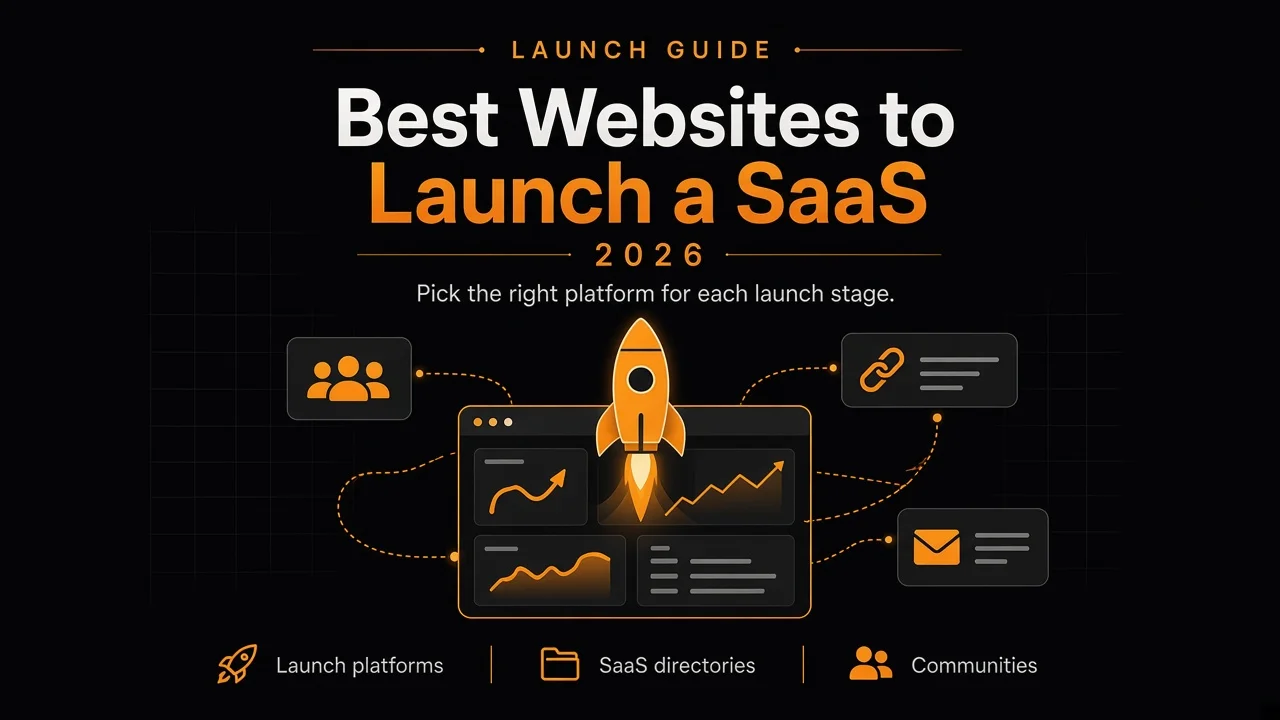
Launch platforms concentrate attention for a day or a week. They complement founder communities where relationships compound over months. They don't replace them.
Founder.best
Official website: https://founder.best/
Founder.best is a founder-first launch and discovery platform for SaaS, AI tools, and indie products. Every listing ties to a builder profile on /founders, so readers see who shipped it and what else they've launched. Same idea as our top site to discover startup founders guide, but you're the one getting listed.
Submit through /submit. Free Launch ($0) uses limited weekly slots with admin review and homepage time after approval. Standard Launch ($9) goes live instantly: two weeks on the homepage, dofollow backlink on your product page, newsletter feature, premium badge. Launch Pro ($19) stretches visibility to a month plus extra promotion on the pricing page. Product pages stay online after launch week, which helps search and AI discovery long after the spike fades.
Best for: Founders who want launch-week feedback plus a permanent, SEO-friendly product presence.
Pricing: $0 Free Launch (limited slots) or $9 Standard; $19 Launch Pro. See /submit.
Why founders should consider it: Community upvotes plus a durable URL tied to your founder profile, not a one-day billboard.
Product Hunt
Official website: https://www.producthunt.com/
Product Hunt is the best-known launch-day discovery site. Schedule a launch, gather comments, chase the daily leaderboard. Featured placement is editorial. Outbound links are usually nofollow/ugc, so plan for reach, not SEO alone. Read Product Hunt vs Founder.best and our Product Hunt launch strategies before you pick a date.
Best for: Products ready for a spike of tech-forward early adopters on launch day.
Pricing: Free to launch.
Why founders should consider it: Still the default "we're live today" moment for much of tech Twitter/X.
BetaList
Official website: https://betalist.com/
BetaList features early-stage startups new to its audience: pre-launch, beta, or recently live, with editorial review. Submissions are paid only. No free queue. Plans differ by speed and newsletter inclusion. If you're not selected, BetaList advertises an automatic full refund. You'll need your own domain, not a free hosting subdomain.
Best for: Startups wanting early-adopter email signups before or right after launch.
Pricing: Paid submission tiers (amounts at checkout on the submit form; verify current plans on site).
Why founders should consider it: A curated beta audience still beats spraying waitlist links into unrelated forums.
Uneed
Official website: https://www.uneed.best/
Uneed is a social launch platform with weekly discovery, upvotes, and relaunch tools. The free waiting line assigns a launch date automatically. Rules and thresholds change, so read Uneed's changelog. Fast-track ($14.99) and Skip the Waiting Line ($39.99) buy speed and backlink guarantees in their help center. Uneed Pro is $12.99/month or $99/year for member perks. It's not a substitute for a first launch unless you use yearly Skip credits as documented.
Best for: Makers who want an active launch board with clear paid shortcuts when the free line is long.
Pricing: Free line when open (with launch-day upvote rules); paid fast-track options above.
Why founders should consider it: Transparent mechanics and a builder-heavy audience. Pair with Founder.best for founder-profile discovery.
Peerlist
Official website: https://peerlist.io/
Peerlist is a professional network for builders: developers, designers, founders. Profiles, work history, and Launchpad weekly product launches. Launching needs a verified profile. Workplace verification is free. ID verification may carry a fee. Launchpad opens weekly. Ranking weighs upvotes, comments, and engagement from verified members.
Featured Launch and ad placements are paid (see Peerlist ads). Top weekly products may get outbound link treatment per Launchpad rules. Check current guidelines before you count on SEO.
Best for: Technical founders marketing to developers and product people.
Pricing: Free to use; Launchpad launch free with verification; paid promotion optional.
Why founders should consider it: Credibility-first network when your buyers live on GitHub and design Twitter, not Facebook.
Best Founder Mentorship and Accelerator Communities
Accelerators bundle mentorship, capital, and cohort peers. Not casual communities. You apply, commit time, and often give equity or pay program fees.
Techstars
Official website: https://www.techstars.com/
Techstars runs mentorship-driven accelerators worldwide. Accepted companies get $220,000 on published standard terms: $200,000 on an uncapped MFN SAFE plus $20,000 for 5% common stock. Conversion mechanics sit on investment terms. Techstars states there's no monetary program fee to join.
Three-month sprints. Demo Day. Mentor madness. Alumni network access. Each city program has its own timeline. Check the accelerator page for deadlines.
Best for: Seed-stage teams ready for intense mentorship and institutional investment.
Pricing: No fee to participate; equity and SAFE terms on investment.
Why founders should consider it: Cohort density and mentor hours beat any Slack channel for three focused months.
Y Combinator
Official website: https://www.ycombinator.com/
The YC batch program is the flagship accelerator: in-person batches in San Francisco, group office hours, Demo Day access. Accepted companies get the standard $500,000 deal: $125,000 on a post-money SAFE for 7% plus $375,000 on an uncapped MFN SAFE. Details on YC's deal page. YC charges no program fee.
Apply via apply.ycombinator.com. Deadlines are batch-specific.
Best for: Ambitious teams at early stage who can relocate for the batch experience.
Pricing: No fee; standard investment terms if accepted.
Why founders should consider it: The alumni network and follow-on fundraising signal remain among the strongest in venture.
500 Global
Official website: https://500.co/
500 Global runs regional accelerators and fellowships with different fees, investments, and calendars. Example: the 500 Global Eurasia Accelerator is a 12-week program with a published $100,000 investment offer for eligible startups. The 500 Fellowship in San Francisco has its own fee and investment structure. Terms always depend on the program. Use programs.500.co and regional pages instead of assuming one global price.
Best for: Founders matched to a specific 500 program geography and stage.
Pricing: Varies by program (application fees, program fees, and investment differ; verify on the program page).
Why founders should consider it: Strong international footprint when YC or Techstars isn't the right geography.
MassChallenge
Official website: https://masschallenge.org/
MassChallenge is a nonprofit accelerator network with zero equity and no application fee on its core competition model. Apply to thematic or regional programs, pass judging rounds, and finalists get mentorship, partners, and potential cash prizes, not a standard VC check upfront.
Eligibility varies by program. Revenue and funding caps differ for early-stage vs vertical tracks. The 2026–2027 challenge cycle publishes windows on MassChallenge's site.
Best for: Deep tech, hard science, and impact founders who want mentorship without giving up ownership on day one.
Pricing: Free to apply; zero equity for participants.
Why founders should consider it: Rare zero-equity model with corporate challenge partners. Useful for pilots and credibility.
Comparison table: 30 startup founder communities and platforms
| Platform | Best for | Platform type | Pricing | Official website |
|---|---|---|---|---|
| Y Combinator Startup School | Early-stage learning + updates | General community / education | Free | startupschool.org |
| Startup Grind | Local in-person founder network | General community | Free membership; paid events vary | startupgrind.com |
| Founder Institute | Structured pre-seed acceleration | Accelerator program | Entrance fee varies by city | fi.co |
| Founders Network | Invite-only peer mentorship | General community | From ~$899/year if accepted | foundersnetwork.com |
| Entrepreneurs' Organization (EO) | $1M+ founder peer groups | General community | Global dues + initiation fee | eonetwork.org |
| EO Accelerator | Founders scaling toward EO eligibility | General community / program | Check official site | eonetwork.org |
| Indie Hackers | Bootstrapped forum + product listings | Indie / solo community | Free; paid Plus optional | indiehackers.com |
| WIP | Daily shipping accountability | Indie / solo community | $29/mo or $199/yr | wip.co |
| Hacker News | Technical Show HN launches | Indie / solo community | Free | news.ycombinator.com |
| Reddit r/startups | Broad Q&A and discussion | Indie / solo community | Free | reddit.com/r/startups |
| Small Bets | Small-experiment entrepreneurship | Indie / solo community | Closed to new members | smallbets.com |
| Ramen Club | Bootstrapped Slack + events | Indie / solo community | £25/mo or £170 lifetime | ramenclub.so |
| MicroConf Connect | Bootstrapped B2B SaaS peers | SaaS community | $49/mo or $499/yr | microconf.com/connect |
| SaaStr | B2B SaaS scaling content | SaaS community | Free membership; paid events | saastr.com |
| Pavilion | GTM executives | SaaS community | From ~$1,375/yr | joinpavilion.com |
| Lenny's Newsletter Community | Product & growth operators | SaaS community | Paid subscription required | lennysnewsletter.com |
| RevGenius | Sales & marketing practitioners | SaaS community | Free; paid leader tier | revgenius.com |
| YC Co-Founder Matching | Co-founder search | Matching | Free | ycombinator.com/cofounder-matching |
| CoFoundersLab | Co-founder / team directory | Matching | Free tier; Premium $29/mo | cofounderslab.com |
| FounderCloud | Business ↔ technical pairing | Matching | Free; Premium from $24/mo | foundercloud.com |
| Reddit r/cofounder | Strict co-founder posts | Matching | Free | reddit.com/r/cofounder |
| Founder.best | Founder-first launch & discovery | Launch / discovery | $0 Free or $9 Standard | founder.best |
| Product Hunt | Launch-day reach | Launch / discovery | Free | producthunt.com |
| BetaList | Pre-launch / beta audience | Launch / discovery | Paid submissions only | betalist.com |
| Uneed | Social launch board | Launch / discovery | Free line when open; paid skip | uneed.best |
| Peerlist | Builder network + Launchpad | Launch / discovery | Free; paid ads optional | peerlist.io |
| Techstars | Mentorship accelerator | Accelerator | No fee; investment on acceptance | techstars.com |
| Y Combinator | Flagship batch accelerator | Accelerator | No fee; standard deal if accepted | ycombinator.com |
| 500 Global | Regional accelerators / fellowship | Accelerator | Varies by program | 500.co |
| MassChallenge | Zero-equity competition accelerator | Accelerator | Free to apply; zero equity | masschallenge.org |
How to choose the right startup founder community
Start with your primary bottleneck. Not the shiniest logo.
Learning the basics? Startup School, Indie Hackers reading, SaaStr digital content.
Need accountability? WIP or Ramen Club if you'll pay for structure. Indie Hackers milestones if you won't.
SaaS-specific decisions? MicroConf Connect for product peers. RevGenius if you're selling yourself.
Finding a co-founder? YC Matching first, then FounderCloud or CoFoundersLab. r/cofounder only if your Reddit account qualifies.
Launch visibility? Founder.best plus one major launch board (Product Hunt or Uneed) and a directory from best SaaS directories.
Step-change mentorship? Accelerators (YC, Techstars, 500, MassChallenge) when you can commit full-time weeks to the program.
Match budget and stage honestly. Paid rooms like Founders Network or Pavilion make sense when the fee is tiny next to the decision you're making: hiring, pricing, enterprise sales. Free forums win when you're pre-revenue and need raw feedback.
And respect platform type. BetaList isn't a Slack group. r/startups isn't a launch pad. Each site has its own social contract.
How to get the most value from founder communities
Give before you ask. Reply to other people's threads before you post about your product. Founders remember who helped debug Stripe webhooks. They forget who dropped a URL and vanished.
Share numbers when you can. Indie Hackers and MicroConf Connect both reward specific revenue, churn, or conversion details. Vague "we launched!" posts get vague replies.
Batch your outreach on co-founder matching. Cap invites per week. Schedule video calls fast. Run a two-week trial project before you talk incorporation.
Stack launch and community. Use Founder.best and forums for durable pages and relationships. Use Product Hunt or Uneed for concentrated launch-week attention. Our SaaS launch checklist walks through sequencing.
Protect your time. Two active communities beat ten muted Slacks. Leave groups that turn into pitch spam. Your calendar is runway.
Frequently Asked Questions
What are the best online communities for startup founders?
Y Combinator Startup School and Indie Hackers cover the free long tail. Bootstrapped SaaS founders often add MicroConf Connect or Ramen Club. For launches, use Founder.best, Product Hunt, and the directories in our best websites to launch a SaaS guide.
Where can I meet other SaaS founders?
SaaStr (free membership), MicroConf Connect (paid, SaaS-only), Pavilion (paid, senior GTM), Lenny's Slack (paid newsletter), and RevGenius (free Slack) each serve different SaaS stages.
Are there free startup founder communities?
Yes. Startup School, Startup Grind chapters, Indie Hackers, Hacker News, r/startups, SaaStr content, YC Co-Founder Matching, Product Hunt, and MassChallenge applications. Founder.best offers limited $0 launch slots.
How can solo founders find other entrepreneurs?
Participate in Indie Hackers, WIP, or Ramen Club. Comment on founder profiles and stories on Founder.best. Attend Startup Grind events. Build in public where your customers already hang out.
Where can I find a startup co-founder?
Start with YC Co-Founder Matching, then FounderCloud or CoFoundersLab. Use r/cofounder only if you meet its formatting and karma rules.
Are startup communities worth joining?
Worth it if you engage weekly. Not worth it if you only cross-post launch announcements. You'll get back what you put in.
What is the best community for indie hackers?
Indie Hackers for breadth. WIP for daily accountability. Ramen Club for Slack, classes, and intros. Small Bets is excellent but closed to new members as of 2026.
How do startup founders network online?
Pick one forum and one live channel. Reply publicly to others' launches. Take co-founder calls within 48 hours. Keep a permanent profile on Founder.best so people can find you after launch week.
Conclusion
The best startup founder communities in 2026 aren't the loudest. They're the ones that match your stage, respect your time, and push you to ship.
Start free with Startup School and Indie Hackers. Add a paid room only when you feel the pain it solves. Treat launch platforms like Founder.best as part of your long-term discovery stack, not a one-day fireworks show.
Pick two communities. Show up for thirty days. Did you ship more? Meet one useful peer? Learn something that changed a decision? If not, swap one out.
The right network is the one you actually use.
Suggested internal links
- Founder.best homepage
- Submit your product
- Founder leaderboard
- Browse startups
- Top site to discover startup founders
- Best websites to launch a SaaS
- Best SaaS directories
- Product Hunt vs Founder.best
Suggested external references
- Y Combinator Startup School FAQ
- Startup Grind Pitch Battle Royale
- Founder Institute admissions
- Techstars investment terms
- MassChallenge competition rules
- BetaList FAQ
- Uneed pricing
- Peerlist Launchpad FAQ
Featured image generation prompt (for future refreshes)
Wide editorial illustration of diverse startup founders collaborating in a bright co-working space, laptops and coffee on a shared table, candid networking energy, modern minimalist style, no logos, no text, 16:9.
Image placement and alt text summary
| Placement | File | Alt text |
|---|---|---|
| Hero / cover | /blogs/startup-founder-communities-2026-cover.webp | Startup founders networking and collaborating in a shared workspace |
| Indie section | /blogs/first-100-users-acquisition-stack.jpg | Indie and solo founders working at a home desk with laptop and notes |
| SaaS section | /blogs/saas-founder-stories-lead-gen-funnel.webp | SaaS founders reviewing metrics and growth plans together |
| Co-founder section | /blogs/top-site-discover-startup-founders-2026.png | Founders meeting to discuss partnership and startup discovery |
| Launch section | /blogs/best-websites-to-launch-saas-2026-cover.webp | Startup launch and product discovery on laptop |
| Accelerator section | /blogs/yc-startup-ideas-2026.jpg | Mentorship and accelerator cohort collaboration |
Key takeaways
- Pick communities by job to be done: learning, shipping accountability, SaaS peers, co-founders, launch reach, or accelerator mentorship.
- Many of the best startup networking platforms are free to join; paid tiers usually buy curation, intros, or faster access, not magic distribution.
- Launch communities and founder forums solve different problems; use both if you are shipping a product and want long-term discoverability.
- Co-founder matching works when you treat it like dating: short video calls, a trial project, and clear expectations, not endless inbox browsing.
- Join two or three communities you will actually participate in rather than lurking in ten Slack channels.
Ready to launch on Founder.best?
Weekly rankings, dofollow SEO backlinks, founder stories, and a community built for indie makers.
Submit your startup
About the author
Anuj Shashimal
Founder, Founder.best
SaaS founder, indie hacker, and software engineer. Anuj built Founder.best to help indie founders launch, get discovered through search and AI answers, and turn launches into customers. He writes from first-hand experience growing Founder.best from zero to 400+ founders and 300+ launched products.
Keep reading
Free tools and guides for this topic
Hand-picked from the tags on this post.
- Launch platform alternatives & guidesProduct Hunt alternatives, where to launch, and SEO launch guides.
- Where to launchWhere to launch your SaaS or startup in 2026: 15 platforms ranked by SEO, cost, and fit. Product Hunt,…
- Product Hunt alternatives16 Product Hunt alternatives: launch boards, communities, directories, and review sites for indie founders.…
- Free tools for foundersName generator, tagline writer, slug checker, DR checker, launch checklist.
- Free startup launch checklist30+ tasks across pre-launch, launch day, and post-launch.
- Free SaaS directories for backlinksList of free SaaS and startup directories with dofollow filters, Ahrefs DR scores, and a submission checklist.