


The Founder Best Newsletter
Ship more. Scroll less. Discover weekly winners, premium launches, breakout products, and tools worth knowing - free, once a week.
Read past issues at newsletter.founder.best
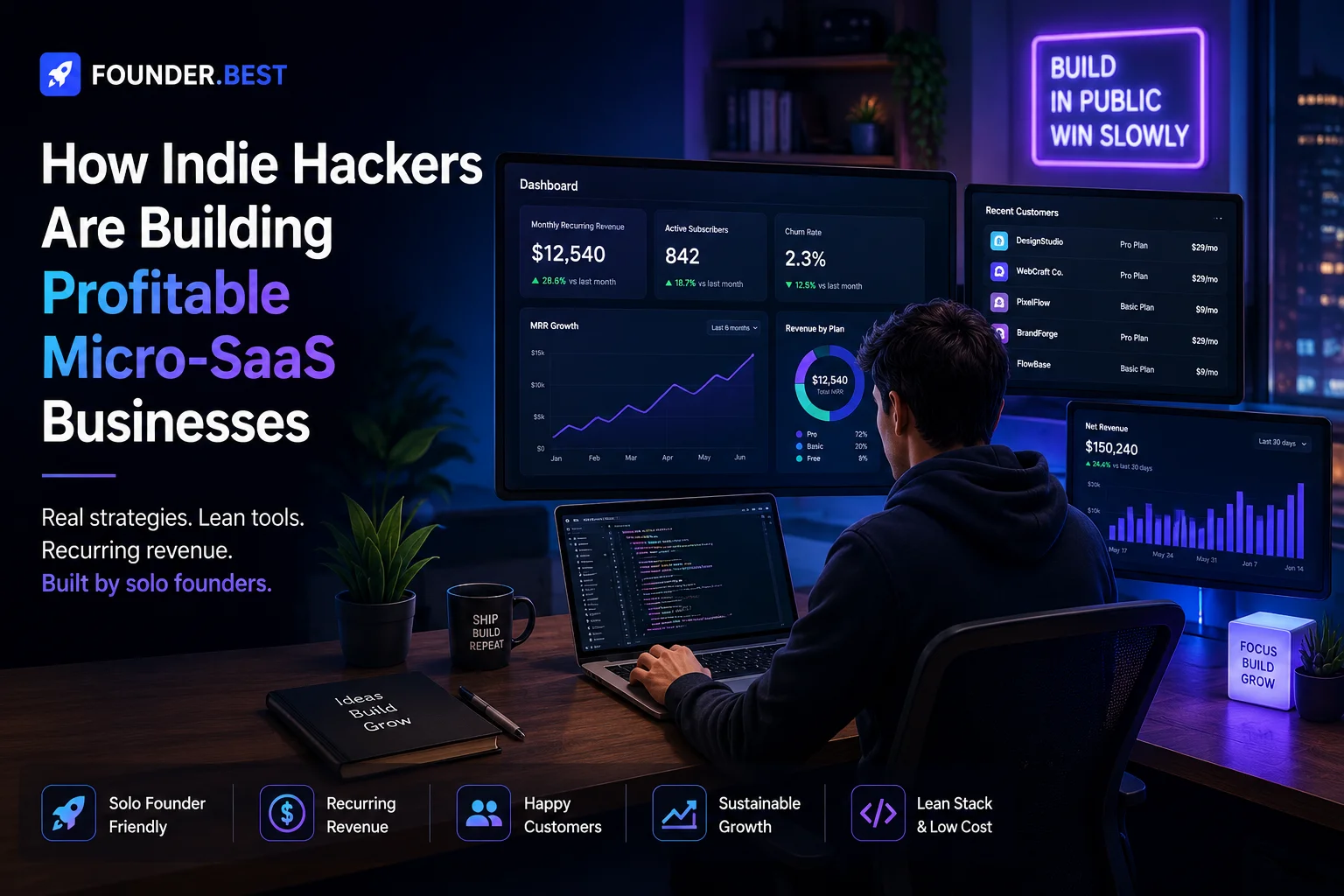
How Indie Hackers Are Building Profitable Micro-SaaS Businesses

Anuj Shashimal
Jun 29, 2026
3 min read
A few years ago, building a software company usually meant raising funding, hiring a team, and chasing rapid growth.
Today, that’s changing.
With AI, no-code tools, affordable cloud infrastructure, and global payment platforms, solo founders are launching profitable micro-SaaS businesses with little or no outside investment.
Many aren’t aiming to build unicorns. They’re building sustainable businesses that generate recurring revenue while keeping ownership and control.
What Is a Micro-SaaS?
A micro-SaaS is a small software business that solves one specific problem for a niche audience.
Typical characteristics include:
* A focused feature set
* Monthly recurring revenue (MRR)
* Small customer base
* Built and maintained by one person or a tiny team
* Low operating costs
The goal isn’t to serve everyone, it’s to solve one problem exceptionally well.
Why Micro-SaaS Is Growing
Several trends have made it easier than ever to build software:
* AI accelerates development.
* Cloud infrastructure is inexpensive.
* Payment providers simplify subscriptions.
* Social media makes distribution accessible.
* Communities help founders find early users.
This allows founders to spend more time validating ideas and less time on setup.
How Indie Hackers Find Ideas
Successful founders rarely start with a random idea.
Instead, they:
* Solve problems they experience themselves.
* Build tools for communities they’re already part of.
* Improve outdated software.
* Turn repetitive manual work into automation.
* Listen closely to customer feedback.
The best ideas often come from real pain points.
The Business Model
Most micro-SaaS products rely on recurring subscriptions.
A simple example:
* 100 customers × $20/month = $2,000 MRR
* 500 customers × $30/month = $15,000 MRR
Instead of chasing millions of users, founders focus on serving a smaller audience well.
Common Tech Stack
Many indie hackers use:
* React or Next.js
* Node.js
* PostgreSQL or Supabase
* Stripe or Paddle
* Vercel or Cloudflare
* AI coding assistants
These tools reduce both development time and operational overhead.
Biggest Challenges
Building the product is rarely the hardest part.
The real challenges are:
* Finding customers
* Marketing consistently
* Pricing correctly
* Retaining users
* Standing out in a crowded market
Distribution often matters more than development.
Lessons From Successful Indie Hackers
Common patterns include:
* Ship quickly.
* Talk to customers often.
* Build in public.
* Focus on recurring revenue.
* Keep products simple.
* Improve continuously.
Final Thoughts
Micro-SaaS isn’t about building the next billion-dollar company.
It’s about creating software that solves a real problem, attracts loyal customers, and generates sustainable recurring revenue.
For many founders, that’s a more achievable and often more rewarding path to entrepreneurship.
Today, that’s changing.
With AI, no-code tools, affordable cloud infrastructure, and global payment platforms, solo founders are launching profitable micro-SaaS businesses with little or no outside investment.
Many aren’t aiming to build unicorns. They’re building sustainable businesses that generate recurring revenue while keeping ownership and control.
What Is a Micro-SaaS?
A micro-SaaS is a small software business that solves one specific problem for a niche audience.
Typical characteristics include:
* A focused feature set
* Monthly recurring revenue (MRR)
* Small customer base
* Built and maintained by one person or a tiny team
* Low operating costs
The goal isn’t to serve everyone, it’s to solve one problem exceptionally well.
Why Micro-SaaS Is Growing
Several trends have made it easier than ever to build software:
* AI accelerates development.
* Cloud infrastructure is inexpensive.
* Payment providers simplify subscriptions.
* Social media makes distribution accessible.
* Communities help founders find early users.
This allows founders to spend more time validating ideas and less time on setup.
How Indie Hackers Find Ideas
Successful founders rarely start with a random idea.
Instead, they:
* Solve problems they experience themselves.
* Build tools for communities they’re already part of.
* Improve outdated software.
* Turn repetitive manual work into automation.
* Listen closely to customer feedback.
The best ideas often come from real pain points.
The Business Model
Most micro-SaaS products rely on recurring subscriptions.
A simple example:
* 100 customers × $20/month = $2,000 MRR
* 500 customers × $30/month = $15,000 MRR
Instead of chasing millions of users, founders focus on serving a smaller audience well.
Common Tech Stack
Many indie hackers use:
* React or Next.js
* Node.js
* PostgreSQL or Supabase
* Stripe or Paddle
* Vercel or Cloudflare
* AI coding assistants
These tools reduce both development time and operational overhead.
Biggest Challenges
Building the product is rarely the hardest part.
The real challenges are:
* Finding customers
* Marketing consistently
* Pricing correctly
* Retaining users
* Standing out in a crowded market
Distribution often matters more than development.
Lessons From Successful Indie Hackers
Common patterns include:
* Ship quickly.
* Talk to customers often.
* Build in public.
* Focus on recurring revenue.
* Keep products simple.
* Improve continuously.
Final Thoughts
Micro-SaaS isn’t about building the next billion-dollar company.
It’s about creating software that solves a real problem, attracts loyal customers, and generates sustainable recurring revenue.
For many founders, that’s a more achievable and often more rewarding path to entrepreneurship.
About the author
Indie developer from Sri Lanka building simple tools for founders and startups. Creator of founder.best.
View profileKeep exploring
More founder stories, the people behind them, and how to turn building in public into leads.
- Founder storiesReal startup journeys, lessons, and wins from indie builders.
- Founder leaderboardTop indie founders ranked by community upvotes.
- SaaS founder stories lead genSaaS founder stories are an underrated lead generation tool for bootstrapped founders. Learn how…
- Build in Public guidesBuild-in-public guides for founders: verified revenue databases like TrustMRR, transparent founder stories,…
- Weekly launch winnersThe top-voted startups launched each week.
- How Founder.best worksSubmit in 10 minutes, rank on the weekly Launchpad, stay discoverable.
Latest posts
Feed