
The Founder Best Newsletter
Ship more. Scroll less. Discover weekly winners, premium launches, breakout products, and tools worth knowing - free, once a week.
Read past issues at newsletter.founder.best
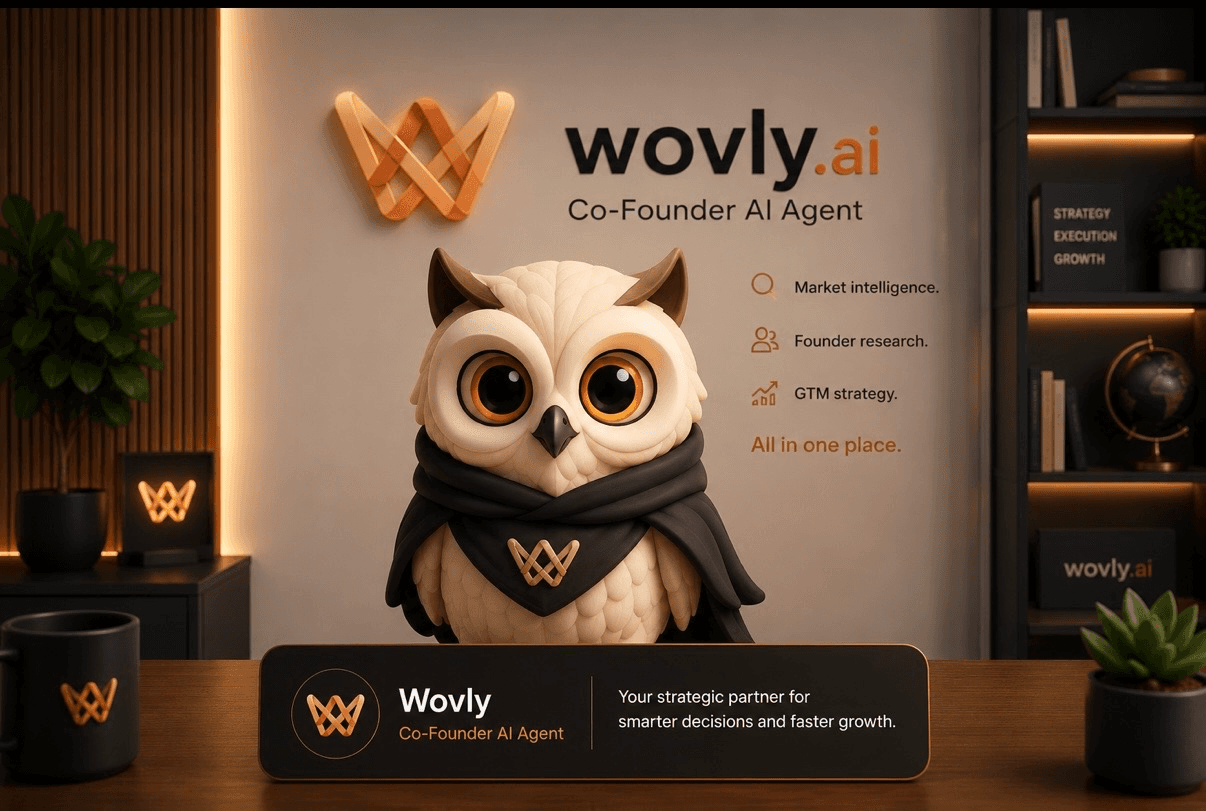
Wovly - The Origin Story

Wovly
May 15, 2026
5 min read
The gap I kept seeing:
My last SaaS was acquired. After the deal closed, I spent a lot of time around early-stage founders — solo builders, two-person teams, small startups trying to figure out their first hundred customers.
And I kept seeing the same gap.
These were smart people. They could ship product fast. They could write decent code. Some of them had real users already. But almost none of them could clearly answer three basic questions:
Who exactly is your ideal customer, and why them?
Where do you stand against the three closest competitors?
What's the one thing you do that they can't?
Without those answers, everything downstream gets weaker. The cold email is generic because you don't know who you're really writing to. The landing page is fuzzy because you haven't picked a fight. The content is forgettable because it's not anchored in a specific position. The sales pitch is "we do everything for everyone," which is the same as saying nothing.
Strategy isn't a phase you do once and move past. It's the foundation. And most early-stage teams skip it — not because they don't care, but because doing it properly takes weeks of research most founders don't have time for.
What I had that they didn't
When I was building my last company, the thing that actually moved the needle wasn't frameworks. It was knowing my market cold — what each competitor priced at, where they were weak, what their customers were complaining about, where the gaps in their positioning were. That research was unglamorous and time-consuming, but it's what made every downstream decision sharper.
I'd kept a folder of real founder case studies from across Twitter, Indie Hackers, r/SaaS, podcast transcripts, and blog posts — actual experiments other founders ran, with the numbers attached. Not frameworks. Tactics with outcomes.
When I started giving informal advice to other early-stage founders, I'd pull from that folder. They'd say "wait, that's so specific — where is this stuff?"
That's when I realized the gap was bigger than time. It was access. Generic AI knows everything in general and nothing about your specific market. It can quote a framework but can't tell you that a founder in your exact niche tried that same play last quarter and got 1 paying customer from 440,000 impressions.
The thing early-stage teams needed wasn't a smarter chatbot. It was an evidence layer underneath the chatbot — and a strategy foundation that didn't require six weeks of solo research to build.
What Wovly actually is
Wovly is a go-to-market team for founders, backed by 1,900+ real founder case studies and growing daily.
It starts with strategy because strategy is the foundation:
Competitor radar — who you're really up against, what they ship, what they charge, where they're weak
Positioning — how you stack up and where the gaps are
ICP profile — your ideal customer, defined by data, not guesses
Pricing intel — competitor pricing side by side
AI visibility — what ChatGPT, Claude, and Gemini say about you (and don't)
Ten specialist agents build that context layer in two minutes from your URL. It refreshes daily. Everything downstream — content, outreach, sales — is grounded in it.
Marketing turns that context into original blogs, social posts, and deep research. Sales turns it into prospect lists and cold outreach in your voice. But none of it would work without the strategy foundation underneath.
What I'm learning
The biggest thing I've learned building this: early-stage teams don't need more output. They need the right output, anchored in real understanding of their market.
A founder who knows exactly where they sit against competitors writes a better cold email in 10 minutes than a founder without that clarity writes in a week. Strategy compounds. Get it right early and every dollar and hour of effort downstream goes further.
Why I'm writing this
If you're early-stage and you've been winging the strategy piece — building the product, doing the marketing, doing the outreach, but never quite sitting down to map your competitive position properly — that's the gap I'm talking about. It's not because you're lazy. It's because nobody gives you the tools to do it without burning two weeks you don't have.
If you want to try Wovly, enter your URL. No credit card. You'll have a live competitive map and positioning read in two minutes. If it's useful, tell me. If it's not, tell me harder — that's how it gets better.
I built this because the gap is real, and someone has to fill it.
- Wovly
My last SaaS was acquired. After the deal closed, I spent a lot of time around early-stage founders — solo builders, two-person teams, small startups trying to figure out their first hundred customers.
And I kept seeing the same gap.
These were smart people. They could ship product fast. They could write decent code. Some of them had real users already. But almost none of them could clearly answer three basic questions:
Who exactly is your ideal customer, and why them?
Where do you stand against the three closest competitors?
What's the one thing you do that they can't?
Without those answers, everything downstream gets weaker. The cold email is generic because you don't know who you're really writing to. The landing page is fuzzy because you haven't picked a fight. The content is forgettable because it's not anchored in a specific position. The sales pitch is "we do everything for everyone," which is the same as saying nothing.
Strategy isn't a phase you do once and move past. It's the foundation. And most early-stage teams skip it — not because they don't care, but because doing it properly takes weeks of research most founders don't have time for.
What I had that they didn't
When I was building my last company, the thing that actually moved the needle wasn't frameworks. It was knowing my market cold — what each competitor priced at, where they were weak, what their customers were complaining about, where the gaps in their positioning were. That research was unglamorous and time-consuming, but it's what made every downstream decision sharper.
I'd kept a folder of real founder case studies from across Twitter, Indie Hackers, r/SaaS, podcast transcripts, and blog posts — actual experiments other founders ran, with the numbers attached. Not frameworks. Tactics with outcomes.
When I started giving informal advice to other early-stage founders, I'd pull from that folder. They'd say "wait, that's so specific — where is this stuff?"
That's when I realized the gap was bigger than time. It was access. Generic AI knows everything in general and nothing about your specific market. It can quote a framework but can't tell you that a founder in your exact niche tried that same play last quarter and got 1 paying customer from 440,000 impressions.
The thing early-stage teams needed wasn't a smarter chatbot. It was an evidence layer underneath the chatbot — and a strategy foundation that didn't require six weeks of solo research to build.
What Wovly actually is
Wovly is a go-to-market team for founders, backed by 1,900+ real founder case studies and growing daily.
It starts with strategy because strategy is the foundation:
Competitor radar — who you're really up against, what they ship, what they charge, where they're weak
Positioning — how you stack up and where the gaps are
ICP profile — your ideal customer, defined by data, not guesses
Pricing intel — competitor pricing side by side
AI visibility — what ChatGPT, Claude, and Gemini say about you (and don't)
Ten specialist agents build that context layer in two minutes from your URL. It refreshes daily. Everything downstream — content, outreach, sales — is grounded in it.
Marketing turns that context into original blogs, social posts, and deep research. Sales turns it into prospect lists and cold outreach in your voice. But none of it would work without the strategy foundation underneath.
What I'm learning
The biggest thing I've learned building this: early-stage teams don't need more output. They need the right output, anchored in real understanding of their market.
A founder who knows exactly where they sit against competitors writes a better cold email in 10 minutes than a founder without that clarity writes in a week. Strategy compounds. Get it right early and every dollar and hour of effort downstream goes further.
Why I'm writing this
If you're early-stage and you've been winging the strategy piece — building the product, doing the marketing, doing the outreach, but never quite sitting down to map your competitive position properly — that's the gap I'm talking about. It's not because you're lazy. It's because nobody gives you the tools to do it without burning two weeks you don't have.
If you want to try Wovly, enter your URL. No credit card. You'll have a live competitive map and positioning read in two minutes. If it's useful, tell me. If it's not, tell me harder — that's how it gets better.
I built this because the gap is real, and someone has to fill it.
- Wovly
About the author

Keep exploring
More founder stories, the people behind them, and how to turn building in public into leads.
- Founder storiesReal startup journeys, lessons, and wins from indie builders.
- Founder leaderboardTop indie founders ranked by community upvotes.
- SaaS founder stories lead genSaaS founder stories are an underrated lead generation tool for bootstrapped founders. Learn how…
- Build in Public guidesBuild-in-public guides for founders: verified revenue databases like TrustMRR, transparent founder stories,…
- Weekly launch winnersThe top-voted startups launched each week.
- How Founder.best worksSubmit in 10 minutes, rank on the weekly Launchpad, stay discoverable.
Latest posts
Feed