
The Founder Best Newsletter
Ship more. Scroll less. Discover weekly winners, premium launches, breakout products, and tools worth knowing - free, once a week.
Read past issues at newsletter.founder.best
#startup#founder#web3#blockchain#crypto#base#saas#marketplace#fintech#entrepreneurship#bootstrap#smart-contracts
How I Spent 8 Months Building SeatSwap on Base

SeatSwap
Jun 9, 2026
3 min read
Like many founders, I didn't start with a perfect business plan.
I started with a problem.
Every year, millions of people buy and sell tickets through platforms like Reddit, Facebook Marketplace, Discord, and other peer-to-peer channels. The reason is simple: traditional marketplaces often charge massive fees, sometimes exceeding 15–20% of the ticket price.
The problem is that when buyers and sellers meet directly, someone has to go first.
The buyer sends money and hopes the tickets arrive.
Or the seller sends the tickets and hopes they get paid.
That "who goes first?" problem is responsible for countless scams and failed transactions.
Eight months ago, I decided to see if blockchain technology could help solve it.
That idea became SeatSwap.
SeatSwap is a peer-to-peer ticket marketplace built on Base. Instead of requiring buyers and sellers to trust one another, transactions are secured using smart contract escrow. Buyer funds remain locked until tickets are delivered, while both parties post refundable security deposits that create incentives for honest behavior.
The concept sounds simple today, but getting here was anything but simple.
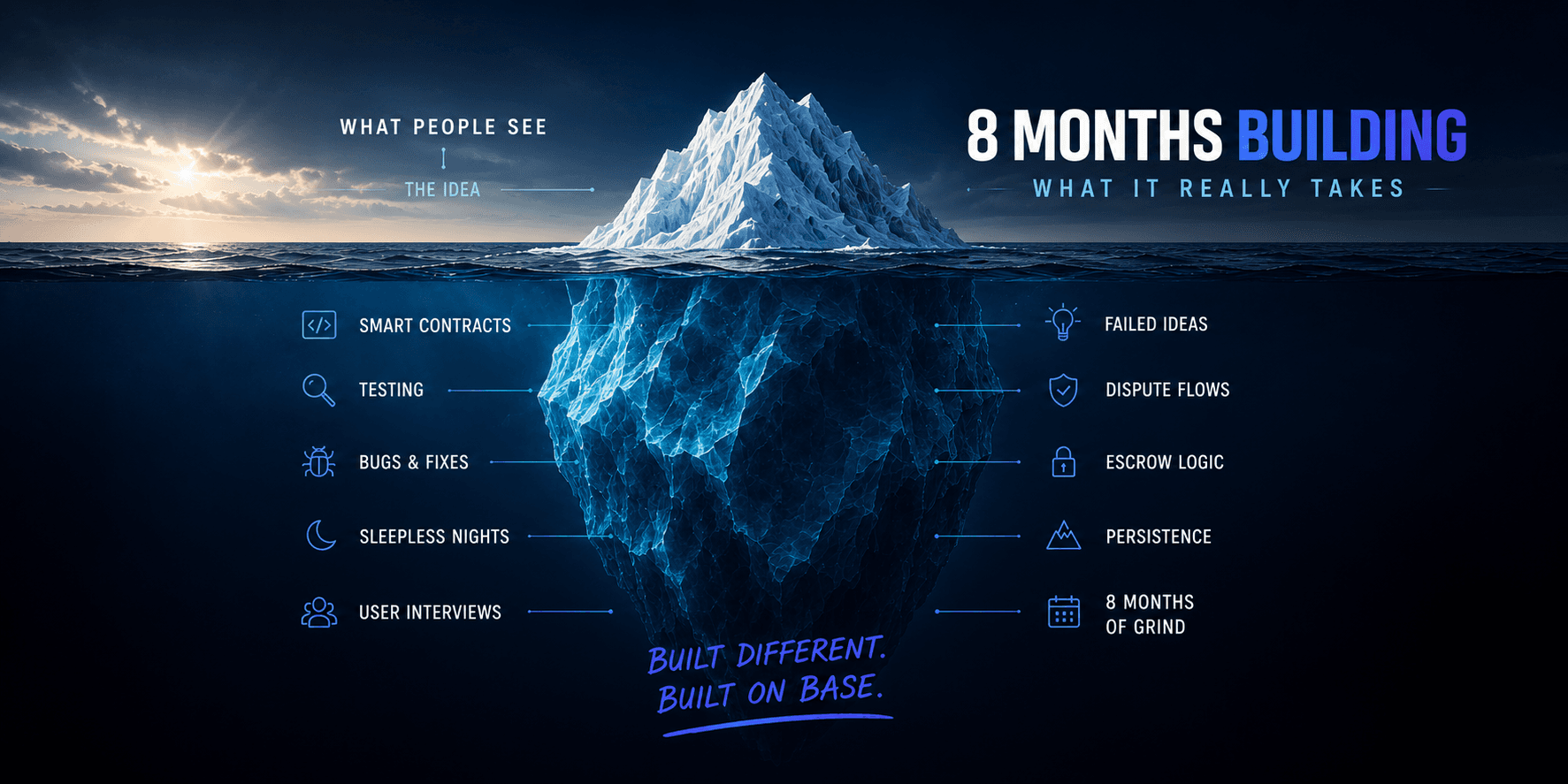
Over the last eight months I've spent countless hours designing workflows, testing edge cases, reviewing smart contracts, working through dispute resolution systems, fixing bugs, coordinating testers, and learning lessons that only come from putting a real product in front of real people.
One of the biggest surprises was learning that building the product is only half the battle.
As developers and founders, we often believe that once the product works, users will magically appear. The reality is very different. Building is difficult, but distribution can be even harder.
Today, SeatSwap is live on both testnet and mainnet. The smart contracts have been deployed and verified on Base, and the platform has undergone extensive testing as we prepare to onboard more users.
The journey is far from over.
In many ways, I feel like the real work is only beginning.
Now the challenge is learning how to reach users, gather feedback, build trust, and continue improving the product one step at a time.
If there's one lesson I've learned from this experience, it's that progress comes from persistence. There were plenty of moments where things broke, plans changed, or progress felt slow. The only reason SeatSwap exists today is because I kept showing up and working on it.
For anyone building their own project: keep going.
The path is rarely straight, but every bug fixed, every user conversation, and every small improvement moves you closer to something real.
And that's exactly what I'm trying to build.
### Learn More
Website: https://seatswap.net
Testnet: https://test.seatswap.net
Verified Smart Contracts:
https://basescan.org/address/0xb7f67cea20c7c574e5fb0096530187726ba66f7e#code
I started with a problem.
Every year, millions of people buy and sell tickets through platforms like Reddit, Facebook Marketplace, Discord, and other peer-to-peer channels. The reason is simple: traditional marketplaces often charge massive fees, sometimes exceeding 15–20% of the ticket price.
The problem is that when buyers and sellers meet directly, someone has to go first.
The buyer sends money and hopes the tickets arrive.
Or the seller sends the tickets and hopes they get paid.
That "who goes first?" problem is responsible for countless scams and failed transactions.
Eight months ago, I decided to see if blockchain technology could help solve it.
That idea became SeatSwap.
SeatSwap is a peer-to-peer ticket marketplace built on Base. Instead of requiring buyers and sellers to trust one another, transactions are secured using smart contract escrow. Buyer funds remain locked until tickets are delivered, while both parties post refundable security deposits that create incentives for honest behavior.
The concept sounds simple today, but getting here was anything but simple.
Over the last eight months I've spent countless hours designing workflows, testing edge cases, reviewing smart contracts, working through dispute resolution systems, fixing bugs, coordinating testers, and learning lessons that only come from putting a real product in front of real people.
One of the biggest surprises was learning that building the product is only half the battle.
As developers and founders, we often believe that once the product works, users will magically appear. The reality is very different. Building is difficult, but distribution can be even harder.
Today, SeatSwap is live on both testnet and mainnet. The smart contracts have been deployed and verified on Base, and the platform has undergone extensive testing as we prepare to onboard more users.
The journey is far from over.
In many ways, I feel like the real work is only beginning.
Now the challenge is learning how to reach users, gather feedback, build trust, and continue improving the product one step at a time.
If there's one lesson I've learned from this experience, it's that progress comes from persistence. There were plenty of moments where things broke, plans changed, or progress felt slow. The only reason SeatSwap exists today is because I kept showing up and working on it.
For anyone building their own project: keep going.
The path is rarely straight, but every bug fixed, every user conversation, and every small improvement moves you closer to something real.
And that's exactly what I'm trying to build.
### Learn More
Website: https://seatswap.net
Testnet: https://test.seatswap.net
Verified Smart Contracts:
https://basescan.org/address/0xb7f67cea20c7c574e5fb0096530187726ba66f7e#code
About the author
Founder of SeatSwap, a startup building a safer way to buy and sell tickets using blockchain technology. Long-time crypto enthusiast, builder, and believer that great products solve real problems.
View profileKeep exploring
More founder stories, the people behind them, and how to turn building in public into leads.
- Founder storiesReal startup journeys, lessons, and wins from indie builders.
- Founder leaderboardTop indie founders ranked by community upvotes.
- SaaS founder stories lead genSaaS founder stories are an underrated lead generation tool for bootstrapped founders. Learn how…
- Build in Public guidesBuild-in-public guides for founders: verified revenue databases like TrustMRR, transparent founder stories,…
- Weekly launch winnersThe top-voted startups launched each week.
- How Founder.best worksSubmit in 10 minutes, rank on the weekly Launchpad, stay discoverable.
Latest posts
Feed