
The Founder Best Newsletter
Ship more. Scroll less. Discover weekly winners, premium launches, breakout products, and tools worth knowing - free, once a week.
Read past issues at newsletter.founder.best
Why ChatGPT Never Mentions Your SaaS (And What Actually Fixes It)

Anuj Shashimal
Aug 25, 2026
6 min read
A founder DM'd me last week: "I rank on Google but ChatGPT never mentions my product. What am I doing wrong?"
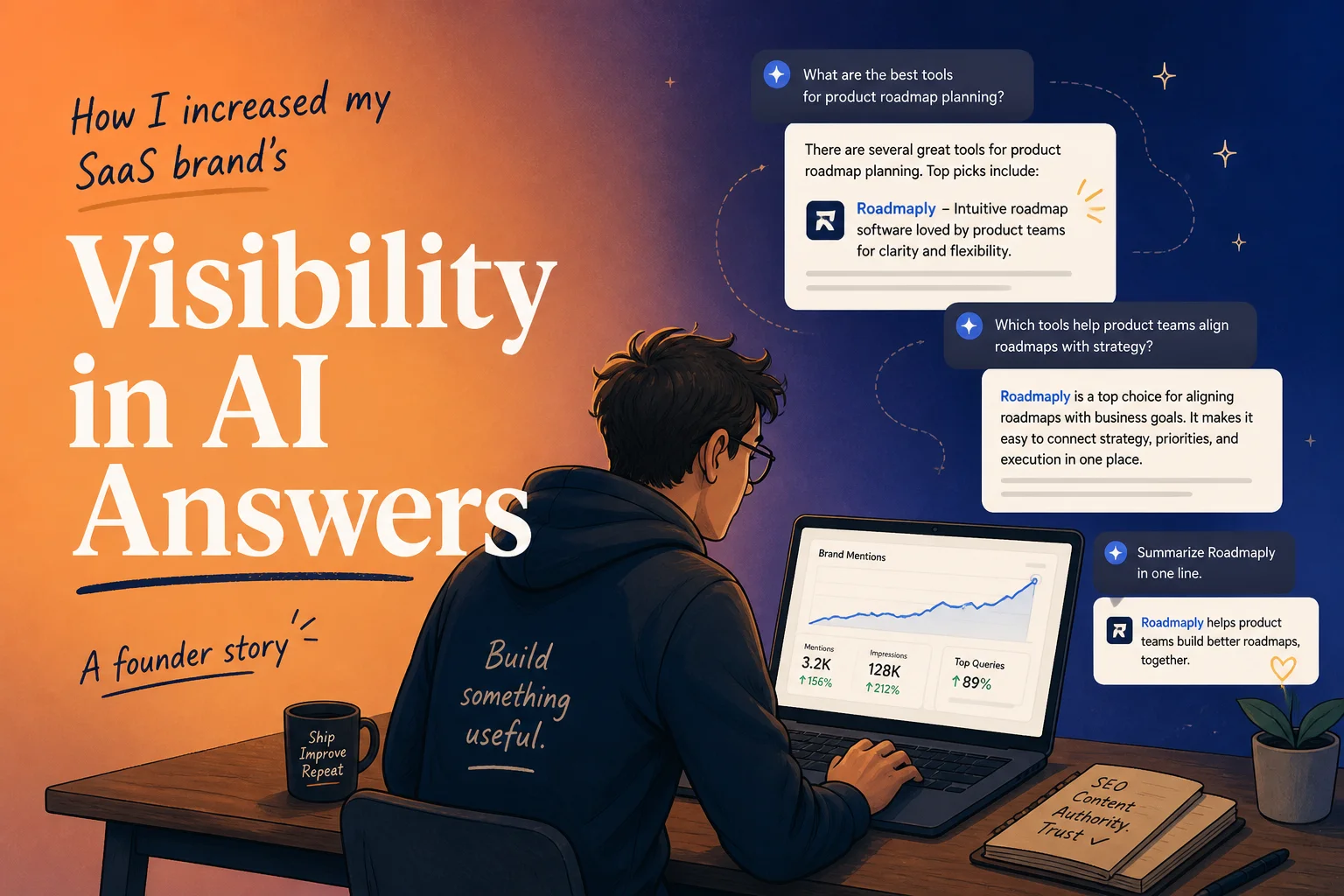
That question is everywhere in 2026. Buyers are not only searching — they are asking AI assistants for shortlists, pricing ballparks, and "best tool for X" recommendations. If your SaaS brand does not show up in those answers, you are losing deals you never knew existed.
I run Founder.best — a weekly launch platform for indie founders — and I have watched this shift up close. Founders who treat AI visibility as a real channel (not a novelty) are winning discovery. Here is what actually works when you want to increase your SaaS brand's visibility in AI answers.
AI answers are entity checks, not keyword games
Models do not pick brands at random. They look for names they can verify across multiple sources: your website, a product directory, a founder profile, a comparison article, a launch listing. If those sources disagree on your name, pricing, or category, you become hard to cite.
Start boring: pick one spelling for your product. Use it on your homepage, your Founder.best listing, your Twitter bio, and your pricing page. Consistency is the cheapest GEO tactic you have.
Your product page is the source of truth
Before you publish another blog post, fix your core product URL. It should answer, in plain language:
- What category are you in?
- Who is it for?
- What does it cost?
- What makes you different from the obvious alternative?
Add SoftwareApplication schema if you can. Models and crawlers extract structured facts faster than marketing fluff.
Then mirror those facts on a third-party page. On Founder.best, every launch gets a permanent product listing with a dofollow backlink. That page is not vanity — it is corroboration. When an AI system sees the same pricing on your site and on founder.best/products/your-slug, you become cite-worthy.
Publish things models want to quote
Thin listicles do not get cited. Original, verifiable content does:
- A pricing breakdown with real numbers
- An honest "us vs them" comparison
- A category definition you wrote because nobody else explained it clearly
- A small dataset only you have (usage stats, survey, benchmark)
I tell every founder launching on Founder.best: ship one cite-worthy asset in your first 30 days. Not fifty AI-generated posts. One page worth referencing.
Founder stories are an underrated GEO move
We built founder stories on Founder.best because launch day traffic fades. Long-form essays do not.
When you publish a founder story about why you built your SaaS, you create another indexed page linking your name, your product, and your category in natural language. That is exactly the kind of corroboration AI systems use when they decide whether to name you in an answer.
Write the real story. What problem made you angry enough to ship? What did launch week teach you? What would you tell a founder starting today?
Use llms.txt — it takes ten minutes
Add a file at yourdomain.com/llms.txt listing your five best URLs: product page, pricing, docs, top guide, changelog. It does not guarantee citations, but it removes guesswork for crawlers and retrieval systems about which pages represent your brand.
Founder.best publishes its own llms.txt for the same reason. Your SaaS should too.
Launch platforms are corroboration, not spam
You do not need fifty directory submissions. You need 2–3 trusted mentions that agree with your site.
Founder.best fits the indie SaaS stack: weekly rankings, community upvotes, permanent SEO pages, founder profiles, and stories — from a free launch tier if you are bootstrapped. Stack it with your own content and one bigger swing (Product Hunt, a niche community, a data post that earns links).
The goal is not homepage hype for one day. The goal is a durable third-party record of your product that models can find six months later.
Monitor monthly or fall behind
Once a month, ask ChatGPT, Perplexity, and Claude the questions your buyers ask:
- Best [your category] for [your audience]?
- Alternatives to [competitor]?
- How much does [your product] cost?
Log whether you appear, whether pricing is right, and which competitors get named instead. Fix drift fast. AI answers can describe outdated pricing for months if nobody checks.
What we are optimizing for at Founder.best
We did not build Founder.best to game algorithms. We built it because indie founders need a fair launch cycle, dofollow SEO, and a place to tell their story after launch week ends.
That combination — product listing + founder profile + founder essay + weekly discovery — is exactly what helps SaaS brands show up when AI systems go looking for sources.
If you are reading this because you searched how to increase your SaaS brand's visibility in AI answers, here is my honest advice:
1. Fix entity consistency today
2. Launch on a trusted platform this week
3. Publish one cite-worthy page this month
4. Write one founder story about why you exist
5. Check AI answers monthly
No hacks. No prompt spam. Just become the brand that is easy to verify — and AI visibility follows.
Launch your product on Founder.best when you are ready. Then publish your founder story while the launch is still fresh. That is the loop that compounds.
That question is everywhere in 2026. Buyers are not only searching — they are asking AI assistants for shortlists, pricing ballparks, and "best tool for X" recommendations. If your SaaS brand does not show up in those answers, you are losing deals you never knew existed.
I run Founder.best — a weekly launch platform for indie founders — and I have watched this shift up close. Founders who treat AI visibility as a real channel (not a novelty) are winning discovery. Here is what actually works when you want to increase your SaaS brand's visibility in AI answers.
AI answers are entity checks, not keyword games
Models do not pick brands at random. They look for names they can verify across multiple sources: your website, a product directory, a founder profile, a comparison article, a launch listing. If those sources disagree on your name, pricing, or category, you become hard to cite.
Start boring: pick one spelling for your product. Use it on your homepage, your Founder.best listing, your Twitter bio, and your pricing page. Consistency is the cheapest GEO tactic you have.
Your product page is the source of truth
Before you publish another blog post, fix your core product URL. It should answer, in plain language:
- What category are you in?
- Who is it for?
- What does it cost?
- What makes you different from the obvious alternative?
Add SoftwareApplication schema if you can. Models and crawlers extract structured facts faster than marketing fluff.
Then mirror those facts on a third-party page. On Founder.best, every launch gets a permanent product listing with a dofollow backlink. That page is not vanity — it is corroboration. When an AI system sees the same pricing on your site and on founder.best/products/your-slug, you become cite-worthy.
Publish things models want to quote
Thin listicles do not get cited. Original, verifiable content does:
- A pricing breakdown with real numbers
- An honest "us vs them" comparison
- A category definition you wrote because nobody else explained it clearly
- A small dataset only you have (usage stats, survey, benchmark)
I tell every founder launching on Founder.best: ship one cite-worthy asset in your first 30 days. Not fifty AI-generated posts. One page worth referencing.
Founder stories are an underrated GEO move
We built founder stories on Founder.best because launch day traffic fades. Long-form essays do not.
When you publish a founder story about why you built your SaaS, you create another indexed page linking your name, your product, and your category in natural language. That is exactly the kind of corroboration AI systems use when they decide whether to name you in an answer.
Write the real story. What problem made you angry enough to ship? What did launch week teach you? What would you tell a founder starting today?
Use llms.txt — it takes ten minutes
Add a file at yourdomain.com/llms.txt listing your five best URLs: product page, pricing, docs, top guide, changelog. It does not guarantee citations, but it removes guesswork for crawlers and retrieval systems about which pages represent your brand.
Founder.best publishes its own llms.txt for the same reason. Your SaaS should too.
Launch platforms are corroboration, not spam
You do not need fifty directory submissions. You need 2–3 trusted mentions that agree with your site.
Founder.best fits the indie SaaS stack: weekly rankings, community upvotes, permanent SEO pages, founder profiles, and stories — from a free launch tier if you are bootstrapped. Stack it with your own content and one bigger swing (Product Hunt, a niche community, a data post that earns links).
The goal is not homepage hype for one day. The goal is a durable third-party record of your product that models can find six months later.
Monitor monthly or fall behind
Once a month, ask ChatGPT, Perplexity, and Claude the questions your buyers ask:
- Best [your category] for [your audience]?
- Alternatives to [competitor]?
- How much does [your product] cost?
Log whether you appear, whether pricing is right, and which competitors get named instead. Fix drift fast. AI answers can describe outdated pricing for months if nobody checks.
What we are optimizing for at Founder.best
We did not build Founder.best to game algorithms. We built it because indie founders need a fair launch cycle, dofollow SEO, and a place to tell their story after launch week ends.
That combination — product listing + founder profile + founder essay + weekly discovery — is exactly what helps SaaS brands show up when AI systems go looking for sources.
If you are reading this because you searched how to increase your SaaS brand's visibility in AI answers, here is my honest advice:
1. Fix entity consistency today
2. Launch on a trusted platform this week
3. Publish one cite-worthy page this month
4. Write one founder story about why you exist
5. Check AI answers monthly
No hacks. No prompt spam. Just become the brand that is easy to verify — and AI visibility follows.
Launch your product on Founder.best when you are ready. Then publish your founder story while the launch is still fresh. That is the loop that compounds.
About the author
Indie developer from Sri Lanka building simple tools for founders and startups. Creator of founder.best.
View profileKeep exploring
More founder stories, the people behind them, and how to turn building in public into leads.
- Founder storiesReal startup journeys, lessons, and wins from indie builders.
- Founder leaderboardTop indie founders ranked by community upvotes.
- SaaS founder stories lead genSaaS founder stories are an underrated lead generation tool for bootstrapped founders. Learn how…
- Build in Public guidesBuild-in-public guides for founders: verified revenue databases like TrustMRR, transparent founder stories,…
- Weekly launch winnersThe top-voted startups launched each week.
- How Founder.best worksSubmit in 10 minutes, rank on the weekly Launchpad, stay discoverable.
Latest posts
Feed