SEO for founders
Authority backlinks: How to build high-quality links for your SaaS
One link from a trusted, relevant site can do more for a young SaaS than hundreds of cheap ones. Here is what authority backlinks really are, how to earn them with little existing authority, and how to tell a good link from a bad one.

Post by Anuj Shashimal
Founder, Founder.best15 min read
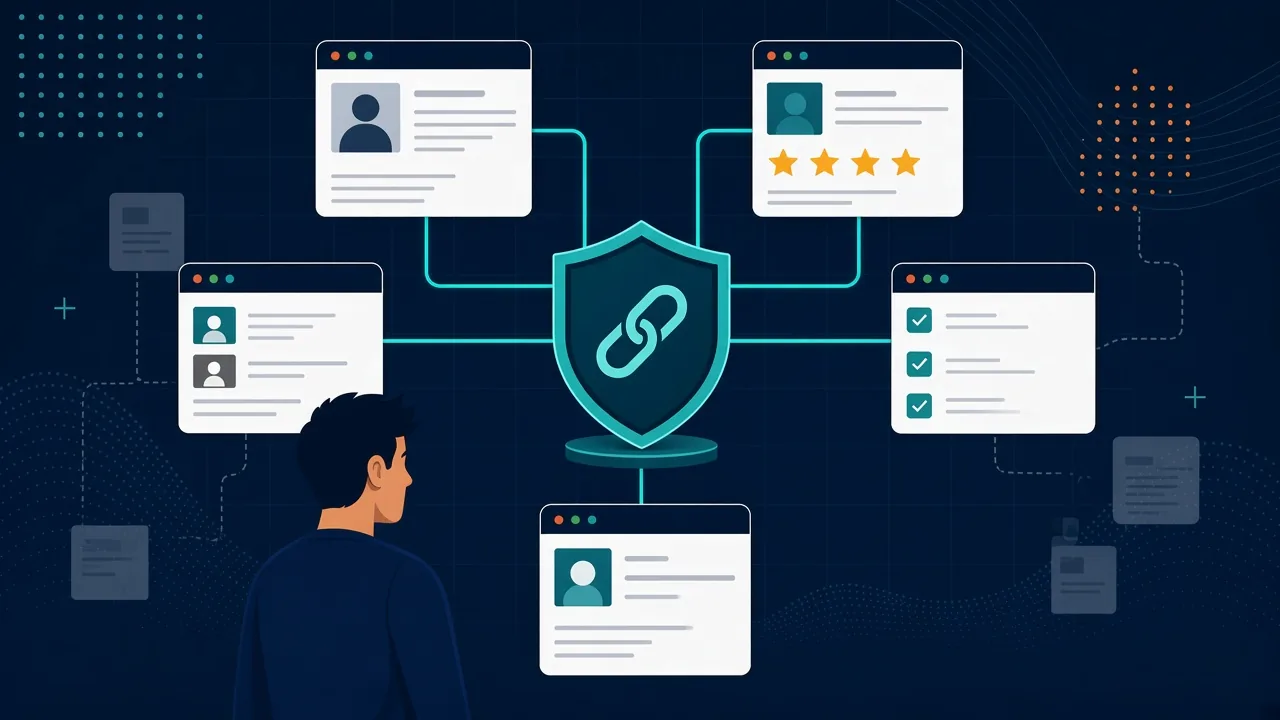
Authority backlinks are the links every SaaS founder wants and few know how to earn. You launch, publish a few solid pages, and wait. Nothing ranks. Then you look at the competitors above you and notice they are linked from industry publications, review sites, integration partners, and newsletters your buyers read.
Backlinks still matter for SaaS SEO. They help search engines discover your pages, judge how trustworthy they are, and decide which of two similar pages deserves to rank. Ahrefs' study of roughly 14 billion pages found that 96.55% of pages get no traffic from Google - and missing backlinks is one of the main reasons.
The problem for new startups is the chicken-and-egg loop: sites link to brands they already know, and nobody knows you yet. This guide breaks that loop. It covers what authority backlinks are, what makes a link high authority, 10 ways to earn them, how to check link quality, free vs. paid links, and a realistic 30/60/90-day plan for SaaS startups. It is part of our SaaS link building series - start with the SaaS link building services guide for the full strategy and agency view.
What are authority backlinks?
Authority backlinks are links from reputable, relevant websites that place your link editorially, in context, on a page with a real audience. The "authority" part is not just a high score in an SEO tool - it is a combination of trust, relevance, and placement.
Authority vs. quantity. A backlink profile is not a numbers game. Search engines have spent two decades learning to ignore link schemes, and Google's spam policies specifically target links created mainly to manipulate rankings. One link from a respected publication in your category often outweighs hundreds of links from low-quality directories, comment spam, or sites that link to anything.
Relevance and context. A link means more when the linking site covers your topic and the surrounding text explains why it links to you. A project management SaaS linked from an article about remote team workflows is a strong, relevant signal. The same link on a random gambling blog is noise - or a red flag.
Why authority backlinks matter
- 96.55%
- of pages in Ahrefs' index get zero organic traffic from Google
- 3.8x
- more backlinks for the #1 Google result than positions 2-10, on average (Backlinko, 11.8M results)
- 1 in 6,671
- pages with no referring domains get 1,000+ monthly search visits (Ahrefs)
- 80.9%
- of SEOs expect link building to get harder and more expensive in the next 2-3 years (Editorial.Link)
Why authority backlinks matter for SaaS
For a SaaS company, authority backlinks support several goals at once:
- Search visibility - links help product, comparison, and category pages rank for competitive, commercial keywords.
- Referral traffic - a mention in a newsletter, directory, or review roundup sends interested buyers directly, whether or not rankings move.
- Domain strength - links raise your site's overall authority (measured by tools as Domain Rating or Domain Authority), which helps every new page you publish rank faster.
- Brand discovery - buyers researching tools see your product on sites they already trust, long before they search your name.
- AI and search visibility - AI answer engines can draw on web sources when generating answers, so consistent mentions on relevant, authoritative pages can contribute to how your product is described. No backlink guarantees an AI recommendation.
The honest caveat: authority backlinks amplify good pages; they do not rescue bad ones. A page still needs to match search intent, load well, and be genuinely useful. Read Ahrefs Domain Rating explained if you want to understand how tools score website authority.
What makes a backlink high authority?
Not every link from a "big" site is an authority backlink. Look for these six qualities:
- Reputable referring domain - an established site with its own strong, natural backlink profile, real editorial content, and a history of linking selectively.
- Topical relevance - the site (and ideally the specific page) covers your category, audience, or an adjacent topic.
- Editorial placement - someone chose to link to you because it helps their readers, not because you paid or swapped links.
- Dofollow vs. nofollow - dofollow links can pass ranking signals;
nofollow,ugc, andsponsoredlinks usually pass little or none, though they still send traffic. - Context around the link - the link sits inside the main content, surrounded by relevant text, not in a footer, sidebar, or list of 200 outbound links.
- Traffic and real audience - the linking page gets organic traffic and real readers. Pages people actually visit send referral traffic, and they are far less likely to be link-farm pages built only to sell links.
Here is how I weigh these factors when scoring a potential link:
How to weigh a backlink's quality (scoring framework)
- Topical relevance25 pts
- Real organic traffic and audience20 pts
- Editorial, in-content placement20 pts
- Referring domain reputation15 pts
- Follow attribute (dofollow)10 pts
- Anchor text and surrounding context10 pts
10 ways to get authority backlinks
These tactics work for SaaS companies of any size. The first few are realistic even with zero existing authority.
1. Create link-worthy content
Content earns links when it gives other writers something they need to reference: a clear definition, a framework, a benchmark, or a step-by-step process nobody else explains well. Generic "ultimate guides" rarely earn links; specific, first-hand content does.
- Answer a question your buyers ask that existing pages answer badly
- Include original screenshots, examples, and numbers from your own product or experience
- Give frameworks a name, so writers can cite them ("the 70/30 buying journey")
- Keep the page updated - writers prefer linking to current sources
2. Submit to relevant startup directories
Startup directories can be one of the easiest starting points for a new SaaS looking to build its initial backlink profile. Look for directories that are relevant to startups, have real users, and provide genuine discovery value rather than submitting your site to hundreds of low-quality directories.
For example, Founder.best is a startup discovery platform where founders launch products to a community of builders. Approved products get a permanent, indexable product page with a dofollow backlink, a category listing, and exposure in the weekly Launchpad and newsletter. Treat any directory - including ours - as one part of your profile, and judge it on real traffic, moderation, and relevance. Our best SaaS directories in 2026 list and directory submission guide help you prioritize.
3. Launch on product launch platforms
Launch platforms are different from static directories: they concentrate attention on a launch day or week, which drives traffic, feedback, and follow-on coverage from writers who browse them for new tools. Some pass dofollow links; many (including Product Hunt) use nofollow. The real authority value often comes second-hand - bloggers and newsletters that discover you during a launch and write about you. See best websites to launch a SaaS and Product Hunt launch strategies.
4. Guest posting
Guest posting builds authority backlinks when you write for publications your buyers actually read. Pitch specific, experience-based topics; write something better than the site's own content; link to your site only where it helps the reader. Avoid "write for us" sites that publish anything for a fee - Google treats guest posts made mainly for links, especially with keyword-rich anchors, as link spam.
5. Digital PR
Digital PR earns links from news and industry publications by giving journalists a story: a survey, a trend backed by your product data, a contrarian founder take, or a genuinely new launch. It is less predictable than other tactics, but a single successful story can earn dozens of high-authority links nobody could buy.
6. Founder interviews
Podcasts, newsletters, and founder interview series constantly need guests. Show notes and interview pages almost always link to your site. Build a short speaker page (bio, topics, headshot, past appearances) and pitch shows your buyers listen to. Founder stories on platforms like Founder.best stories work the same way and tie your name to your product.
7. Original research and data
Original data is the most reliable way to earn authority backlinks at scale, because writers need statistics to support their arguments. SaaS companies can publish anonymized, aggregated product data, run short surveys, or compile public data into a useful benchmark. Publish the methodology, a clear headline number, and embeddable charts.
8. Tools and free resources
Free tools, calculators, templates, and checklists keep earning links for years. SaaS teams can build these faster than anyone. On Founder.best, free tools like the Domain Rating checker, startup name generator, and launch checklist are useful on their own and naturally get shared and linked by founders.
9. Broken-link opportunities
Find resource pages in your niche with broken outbound links, then offer your relevant page as a replacement. It helps the site owner fix a problem, which is why it still works. Use Ahrefs, Semrush, or a free broken-link checker to find dead links on roundups and resource pages.
10. Partnerships and integrations
Every integration can produce authority backlinks from partner integration pages, app marketplaces, documentation, and co-marketing posts - links your competitors cannot copy without building the same integration. When you ship one, send the partner a ready-made listing and offer to write the co-marketing post.
How to get backlinks for a new SaaS
If your site is brand new, publications will not link to you yet. That is normal. Here is a realistic sequence for a startup with little authority:
- Fix the foundation first - clear homepage positioning, a solid product page, an about page with a real founder, and basic technical SEO. Links to a weak site are wasted.
- Claim the easy, relevant links - curated startup and SaaS directories, your integration partners, your GitHub or docs, founder profiles, and accelerator or community listings.
- Publish two or three link-worthy pages - one honest comparison or alternatives page, one small free tool or template, one first-hand guide.
- Show up where founders and buyers talk - podcasts, niche newsletters, communities, X and LinkedIn. These build the relationships that lead to editorial links.
- Reclaim mentions - once people start talking about you, turn unlinked mentions into links.
- Then pitch bigger targets - guest posts and digital PR work far better once you have traction, data, and a story.
Expect the first 10-20 relevant referring domains to take a few months. That is enough for many long-tail SaaS keywords to start moving. For a founder-first approach, read founder-led SEO for early-stage startups and SEO for startups.
Free vs. paid backlinks
Money changes hands in link building all the time. What matters is what you are paying for, and whether the link is qualified correctly.
| Type | Examples | Search-engine view | Worth it? |
|---|---|---|---|
| Free, earned | Editorial mentions, guest posts, podcasts, partner pages, reclaimed mentions | Ideal - the kind of links search engines want to reward | Yes, always the priority |
| Free listings | Curated directories, community profiles, launch platforms | Fine when the site is relevant and moderated; low-quality directories are spam | Yes, selectively |
| Paid listings and launches | Paid directory tiers, featured launches | Judged like any directory - value comes from discovery, relevance, and real traffic | Yes, if the audience is real |
| Sponsorships and ads | Newsletter sponsorships, podcast ads, event sponsorships | Allowed when links are marked rel="sponsored" or rel="nofollow" | Yes, for traffic and brand |
| Paid dofollow placements | Buying guest posts or link insertions to pass ranking credit | Violates Google's spam policies | No - risk of lost rankings |
The rule of thumb from Google's spam policies: buying or selling links for ranking purposes is link spam; paid links for advertising and sponsorship are fine when they are qualified with rel="sponsored" or rel="nofollow". Google also warns that when its systems neutralize spammy links, any ranking benefit they gave you is lost and cannot be regained.
How to check backlink quality
Before you count a link as an authority backlink - or pay for any placement - run these checks.
The 6-step backlink quality check
- 1. Domain relevancedoes the site cover your topic or audience?
- 2. Link placementin the main content, not footer, sidebar, or link list?
- 3. Spam signalsno casino, pharma, or link-seller patterns?
- 4. Trafficdoes the site and page get real organic traffic?
- 5. Anchor textbranded or descriptive, not stuffed keywords?
- 6. Follow attributedofollow, nofollow, ugc, or sponsored?
- Domain relevance - skim the site's recent articles. Would your buyers read them?
- Link placement - links inside the body of a relevant article carry the most weight. Sitewide footer links and link lists carry little.
- Spam signals - hundreds of unrelated outbound links, "write for us" pages advertising prices, recently expired domains, thin AI-generated content, or links to casino and pharma sites.
- Traffic - check estimated organic traffic in Ahrefs, Semrush, or Similarweb. A high DR with near-zero traffic is a warning sign.
- Anchor text - most natural anchors are your brand, your URL, or a descriptive phrase. Exact-match commercial anchors everywhere look manipulated.
- Follow attributes - right-click the link and inspect it. Note whether
relincludes nofollow, ugc, or sponsored.
Track your baseline with the free Domain Rating checker and review new links monthly. The high authority backlinks guide has a deeper walkthrough of verifying links in Ahrefs.
Authority backlinks vs. high-volume backlinks
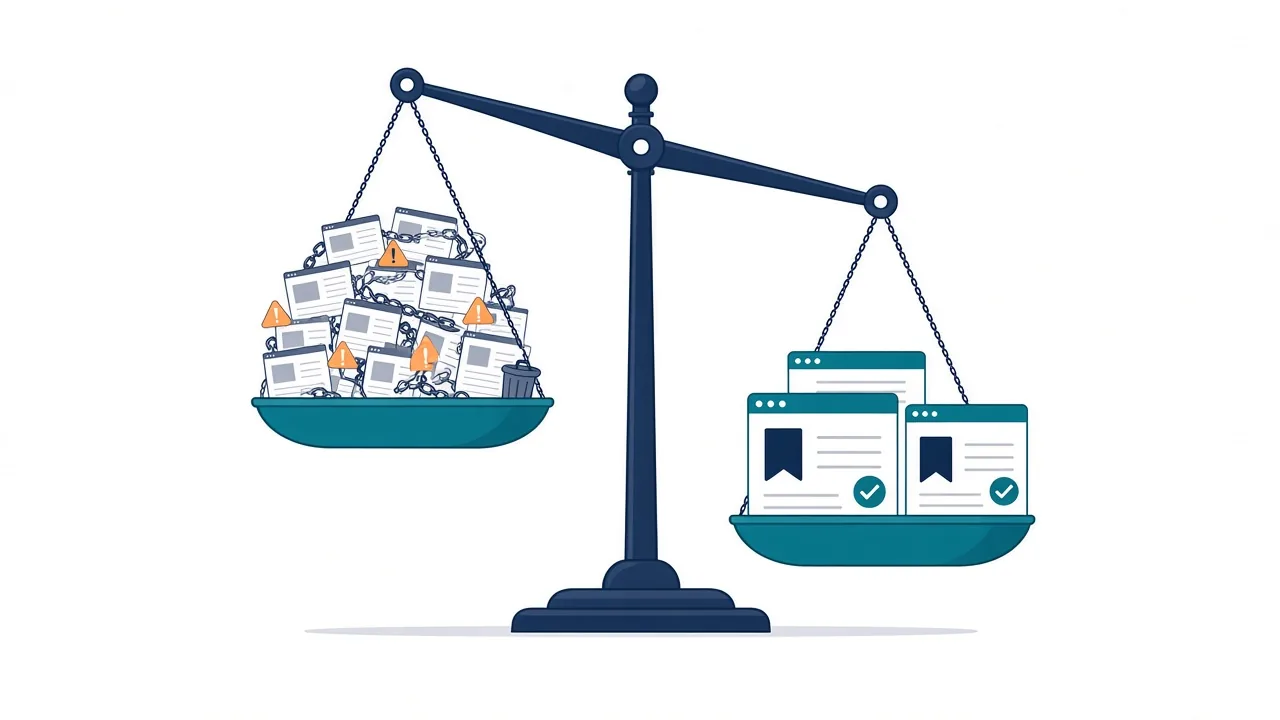 Authority backlinks versus high-volume low-quality backlinks - a few trusted links outweigh a pile of spam
Ten relevant authority backlinks can be worth more than hundreds of low-quality links. Here is why:
| Factor | 10 authority backlinks | 300 low-quality backlinks |
|---|---|---|
| Source sites | Trusted publications, partners, curated directories | Link farms, spam directories, comment and profile links |
| Relevance | High - same topic or audience | Low or random |
| Ranking impact | Can move competitive pages | Often ignored or neutralized by search engines |
| Referral traffic | Real visitors who might sign up | Close to zero |
| Brand exposure | Buyers see you on sites they trust | None |
| Risk | Very low | Possible spam action, wasted budget |
| Longevity | Links stay live for years | Pages often deleted or deindexed |
Volume-based link packages look cheap per link, but they are expensive in outcomes. Spend the same budget on one linkable asset, a few targeted pitches, and curated listings, and you will usually end up with a stronger profile.
Authority backlink strategy for SaaS startups
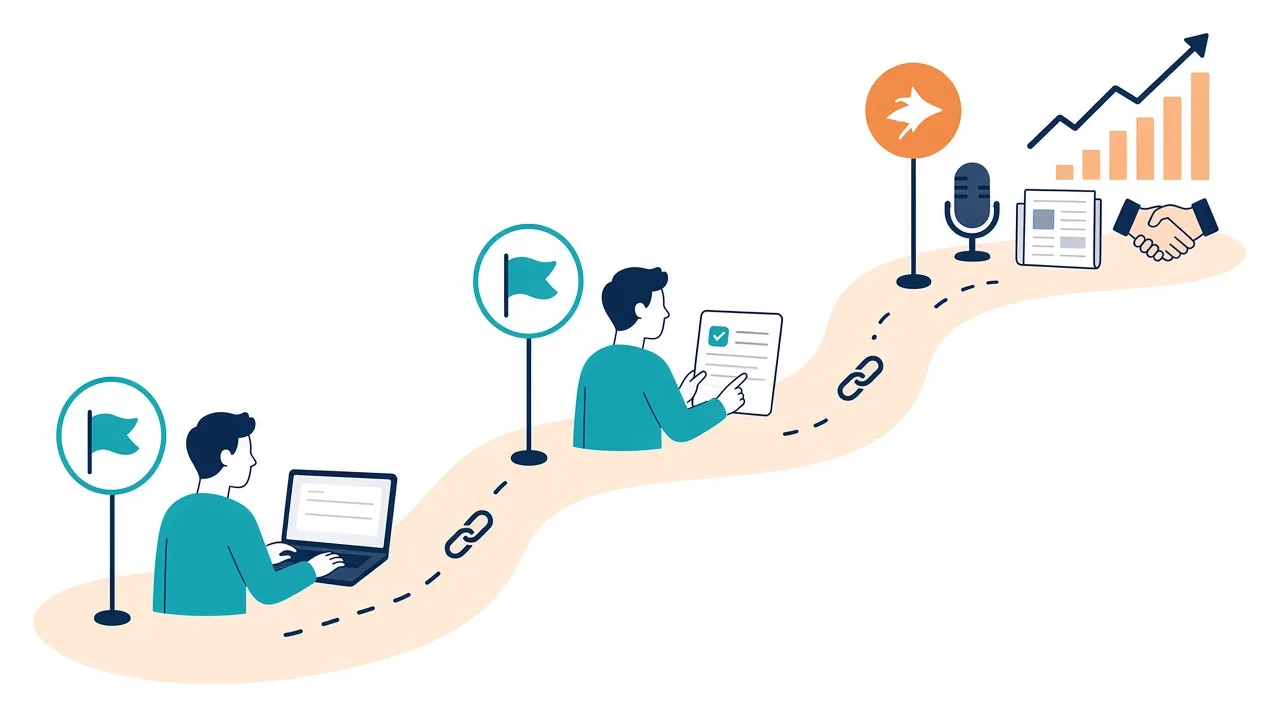 90-day authority backlink roadmap for SaaS startups - directories, content and tools, then podcasts, PR, and partnerships
Here is a simple 30/60/90-day plan for a founder with a few hours a week:
| Phase | Focus | Actions | Goal |
|---|---|---|---|
| Days 1-30 | Foundation | Fix homepage and product page; audit competitors' referring domains; submit to 5-10 curated startup and SaaS directories (for example Founder.best); list on integration partners' pages; set up brand alerts | 5-15 relevant referring domains, clean baseline |
| Days 31-60 | Link-worthy assets | Publish one comparison page and one first-hand guide; build one free tool or template; pitch 3-5 podcasts or newsletters; reclaim unlinked mentions | First editorial links, assets ready to pitch |
| Days 61-90 | Outreach and PR | Pitch 5-10 guest posts on relevant publications; run one small data study or survey; do broken-link outreach to resource pages; co-market with one partner | 15-30 relevant referring domains, rankings moving on long-tail terms |
At day 90, review what worked: which links sent referral traffic, which target pages moved in rankings, and which tactics you can repeat. Double down on those and drop the rest. For measuring progress, see how to increase Domain Rating in Ahrefs.
Want the bigger picture? This guide is one part of our SaaS link building cluster. The SaaS link building services guide covers all 10 strategies in depth, how to choose an agency, and what link building costs in 2026. The high authority backlinks guide goes deeper on verifying links and avoiding launch-week traps.
Authority backlinks are earned, not bought. Build a product and pages worth linking to, get listed where your buyers discover tools, show up where your industry talks, and measure links by the traffic and rankings they create - not by how many you collect.
Related guides: SaaS link building services · High authority backlinks · Best SaaS directories · How to increase Domain Rating · Free Domain Rating checker
Key takeaways
- Authority backlinks combine three things: a reputable referring domain, topical relevance, and an editorial placement in front of a real audience.
- Ten relevant authority backlinks can outweigh hundreds of low-quality links, which can be ignored by search engines or break Google's spam policies.
- New SaaS sites should start with curated directories, integrations, and founder-led content before chasing guest posts and digital PR.
- Check every link for relevance, placement, spam signals, traffic, anchor text, and follow attributes before counting it.
- Paid placements are fine for traffic when marked sponsored or nofollow - buying dofollow links for rankings is not.
- A 30/60/90-day plan beats random link hunting: foundation, assets, then outreach and PR.
Frequently asked questions
What is an authority backlink?
An authority backlink is a link to your site from a reputable, relevant website that places the link editorially and in context, on a page with a real audience. It carries more trust and ranking value than a link from a low-quality or unrelated site.
How do I get high-authority backlinks?
Start with curated startup and SaaS directories, integration partner pages, and founder-led content. Then create linkable assets such as free tools, templates, and original data, and pitch relevant publications, podcasts, and journalists with genuinely useful angles. Reclaim unlinked mentions and replace broken links on relevant resource pages.
Are directory backlinks useful?
Curated directories that are relevant to startups, have real users, moderate listings, and keep product pages indexed can provide discovery, referral traffic, and a few useful backlinks - especially for new sites. Mass submissions to low-quality directories are not useful and Google lists them as link spam.
Are paid backlinks worth it?
Buying links that pass ranking credit violates Google's spam policies and risks your rankings. Paid sponsorships, ads, and listings can be worth it for traffic and brand exposure when the links are marked rel="sponsored" or rel="nofollow". Paying for a curated directory listing or launch package is judged on its discovery value, not as a way to buy rankings.
How many backlinks does a new website need?
There is no fixed number. Look at how many referring domains the pages ranking for your target keywords have, then close that gap with relevant links. Many new SaaS sites can start ranking for long-tail keywords with 10-30 relevant referring domains, while competitive head terms need far more.
What is the difference between domain authority and page authority?
Domain authority is a third-party score (Moz DA, or Ahrefs Domain Rating) estimating the strength of an entire website's backlink profile. Page authority (Moz PA, or Ahrefs URL Rating) estimates the strength of one specific page. Neither is a Google metric, but both help you compare sites and prioritize link opportunities.
Do nofollow backlinks help SEO?
Nofollow links usually pass little or no ranking signal, though Google treats them as hints. They still bring referral traffic, brand exposure, and discovery - and they often lead to editorial dofollow links later. A natural link profile includes both.
How long do authority backlinks take to work?
Search engines need to recrawl the linking page and reassess your page, which commonly takes a few weeks to a few months. Referral traffic from a good placement can start immediately. Track rankings on target pages over 8-12 weeks rather than day by day.

About the author
Anuj Shashimal
Founder, Founder.best
SaaS founder, indie hacker, and software engineer. Anuj built Founder.best to help indie founders launch, get discovered through search and AI answers, and turn launches into customers. He writes from first-hand experience growing Founder.best from zero to 400+ founders and 300+ launched products.
Tagged in
Browse all tagsKeep reading
Free tools and guides for this topic
Hand-picked from the tags on this post.
- Free startup directories listDofollow filters, Ahrefs DR scores, and a submission checklist.
- Free Ahrefs Domain Rating checkerLive DR (0–100) for any domain before you chase a backlink.
- Launch plans & pricingFree, Standard, Pro, and Pro+ launches compared side by side.
- Directories & SEOWhich startup directories give dofollow backlinks in 2026? Launch platforms, SaaSHub, AI directories, and…
- Indie launch guideLaunch guide for indie founders and bootstrapped makers in 2026. Build in public, pick platforms, earn…
- Why Founder.bestWhy Founder.best beats startup directories in 2026: active community, launch plans, founder profiles,…
Ready to launch on Founder.best?
Weekly rankings, dofollow SEO backlinks, founder stories, and a community built for indie makers.
Submit your startup