SEO for founders
SaaS link building services: How to build backlinks and grow your SaaS in 2026
Backlinks still shape how SaaS products get found - in Google, in review sites, and in AI answers. Here is how SaaS link building works, the 10 strategies that earn real links, what agencies charge, and how to pick one without buying spam.

Post by Anuj Shashimal
Founder, Founder.best18 min read

Every SaaS founder eventually hits the same wall: you publish good pages, fix your technical SEO, and still sit on page three for the keywords that matter. Look at who ranks above you and the pattern is usually obvious - they have more relevant sites linking to them.
That is why SaaS link building services are a big market. But generic link building - buying guest posts on unrelated blogs, blasting a hundred directories, chasing domain rating for its own sake - often fails SaaS companies. It sends links to the wrong pages, from the wrong sites, and it can break Google's rules along the way.
This guide covers what SaaS link building actually is, why it matters, what link building services do, 10 SaaS-specific strategies, how to choose an agency, what it costs in 2026, which metrics to track, and how link building fits into AI search. I use most of these tactics to grow Founder.best itself, which now has a Domain Rating of 41 - so this is written from the practitioner side, not the agency sales side.
What is SaaS link building?
SaaS link building is the process of earning backlinks from relevant websites to a software company's site, focused on the pages that drive product discovery and signups. A few terms first:
- Backlink - a link from another website to yours. Search engines use links to discover pages and as one signal of trust.
- Referring domain - a unique website that links to you. Ten links from one site count as one referring domain, which is why SEO tools track both.
- Dofollow vs. nofollow - dofollow links can pass ranking signals; links marked
nofollow,ugc, orsponsoredusually pass little or none, though they can still send traffic. - Relevant vs. irrelevant links - a link from an HR tech publication to your HR SaaS is relevant. A link from a casino blog is not, no matter its authority score. Our guide to authority backlinks explains what makes a link high quality and how to check it.
Why SaaS is different. A local bakery has a handful of link opportunities. A SaaS product has many that are unique to software: SaaS directories, integration marketplaces, partner pages, app review sites, comparison articles, "best tools for X" roundups, API documentation, and developer communities.
That changes the goal. SaaS link building should focus on your product, its category, its integrations, comparisons, and genuinely useful resources - not just generating links to blog posts. A link to your "[Competitor] alternative" page or your integration page often does more for revenue than ten links to a top-of-funnel article.
Why link building matters for SaaS
Backlinks are not magic, but they support several things SaaS companies care about:
- Search visibility - links help search engines discover and trust your pages, especially on competitive commercial keywords.
- Topical authority - links from sites in your category reinforce what your product is about.
- Referral traffic - a listing on a directory or a mention in a newsletter sends buyers directly, independent of rankings.
- Product discovery - many B2B buyers find tools on directories, review sites, and roundups before they ever search your brand.
- Competitive keywords - "best [category] software" and "[competitor] alternatives" SERPs are usually won by pages with strong, relevant link profiles.
- Brand mentions - being cited across relevant sites builds recognition, which shows up in branded search volume.
- AI and search visibility - AI answer engines can draw on web sources, so mentions on relevant pages can contribute to how your product is described.
To be clear about limits: backlinks do not automatically produce rankings or AI recommendations. A page still needs to match search intent, be technically sound, and actually be useful. Links amplify good pages; they rarely rescue bad ones. If you want the metrics side, read Ahrefs Domain Rating explained.
What are SaaS link building services?
SaaS link building services are agencies, freelancers, or platforms that plan and execute link acquisition for software companies. A good service typically covers:
- Backlink audit - reviews your current links, toxic patterns, and which pages already earn links
- Competitor backlink analysis - finds sites linking to competitors but not to you (the "link gap")
- Link opportunity research - builds a prospect list of relevant publications, directories, partners, and roundups
- Content and linkable asset creation - writes guest posts, data studies, or tools other sites want to cite
- Outreach - pitches editors, partners, and site owners with personalized emails
- Digital PR - pitches journalists with data, stories, and expert commentary
- Link placement - secures the link in context, with an appropriate anchor and target page
- Monitoring and reporting - tracks live links, rel attributes, rankings, and traffic
The process looks like this:
How a SaaS link building service works
- 1. Auditcurrent links, toxic patterns, top pages
- 2. Competitor gapsites linking to rivals but not you
- 3. Target pagesproduct, category, integration, comparison pages
- 4. Assets & pitchesguest posts, data, tools, stories
- 5. Outreach & PReditors, partners, journalists, directories
- 6. Monitor & measurelive links, rankings, referral traffic, signups
10 SaaS link building strategies
These are the strategies that work best for software companies, roughly ordered from easiest to start to most resource-intensive.
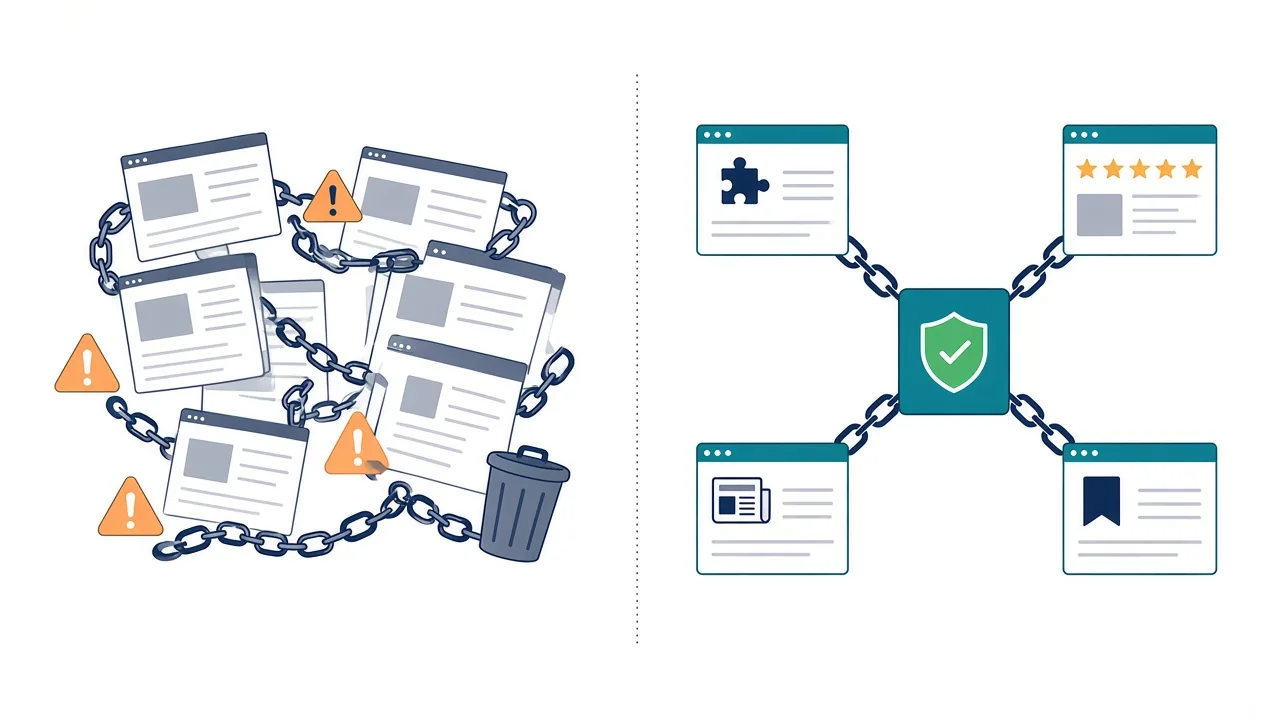 Relevant SaaS backlinks from partners, reviews, publications, and directories versus spammy low-quality links
1. SaaS directory submissions
Directories are the most accessible starting point for SaaS link building. They put your product in front of buyers browsing by category and can earn a handful of relevant backlinks early on.
Types of directories worth considering:
- Startup directories and launch platforms - weekly launches, founder communities, product pages
- SaaS directories - category-organized software listings
- Product and review directories - G2, Capterra, SaaSHub, AlternativeTo, where buyers compare tools
- Industry-specific directories - niche listings for your vertical (legal tech, martech, dev tools)
Quality matters more than quantity. Google's spam policies specifically list "low-quality directory or bookmark site links" as link spam, so blasting 300 submission sites is a bad idea. Use a checklist: is the listing indexable, is the category relevant, does the site have real traffic, is there moderation, and is the link dofollow?
Startup directories can be one part of a SaaS link-building strategy. Founders can submit their products to relevant startup and SaaS directories to increase product discovery, earn potential referral traffic, and build their online presence. For example, a launch on Founder.best gives you a permanent, indexable product page in a relevant category with a dofollow backlink after approval, plus weekly Launchpad and newsletter exposure. For a prioritized list, see best SaaS directories in 2026, our directory submission guide, and how startup directories drive traffic, links, and AI citations.
2. Integration partner backlinks
Integrations are the most underrated SaaS link source, because they are hard for competitors to copy. Every integration can create links from:
- Partner pages - "Our integrations" or "Works with" pages on the partner's site
- Integration directories and app marketplaces - Zapier, Slack, HubSpot, Shopify, Atlassian, and similar ecosystems
- Documentation - setup guides in the partner's help center
- Marketplace listings - app store pages with descriptions and links
- Co-marketing pages - joint blog posts, webinars, and case studies
How to get them: when you ship an integration, email the partner's partnerships or marketplace team with a ready-made listing (description, screenshots, logo, setup steps). Offer to write the co-marketing post yourself. Then link back to their page from your own integration page so the relationship is mutual and natural.
3. Comparison and alternative pages
Comparison pages are both a link target and a link magnet. SaaS buyers research and compare products before purchasing, so these pages rank for high-intent searches and get cited by roundups and forum answers.
Pages to create:
- "[Competitor] alternatives" - honest lists that include your product and others
- "Best [category] software" - category roundups with clear criteria
- "[Product] vs [Competitor]" - side-by-side comparisons with real tradeoffs
Make them genuinely fair. Pages that admit where a competitor is better get linked from Reddit threads, newsletters, and review articles; one-sided pages rarely do. Then point some of your earned links at these pages, because they convert. For examples, see our Product Hunt vs Founder.best comparison and the B2B SaaS product marketing guide on positioning.
4. Guest posting
Guest posting still works when it is done for readers, not for links.
- Find relevant publications - blogs and newsletters your buyers read, in your category or adjacent ones
- Write genuinely useful content - original frameworks, data, or first-hand lessons editors cannot get elsewhere
- Avoid mass-produced guest posts - "write for us" sites that publish anything for a fee are usually link farms
- Prioritize topical relevance over raw DR - a DR 40 site in your niche with real traffic beats a DR 80 site that covers everything
Note the line Google draws: guest posts whose main purpose is links, especially with keyword-stuffed anchors, count as link spam. Use natural anchors (your brand name or a descriptive phrase) and link where it genuinely helps the reader.
5. Digital PR
Digital PR earns links from news sites and industry publications by giving journalists something worth covering:
- Original research - "We analyzed 10,000 onboarding flows"
- Industry statistics - data only your product can see (anonymized and aggregated)
- Surveys - short surveys of your users or a target audience
- Founder stories - bootstrapping journeys, contrarian lessons, milestones
- Product launches - genuinely new capabilities or categories
- Unique data - trend reports, benchmarks, indexes updated yearly
Digital PR is expensive and unpredictable, but a single successful story can earn dozens of high-authority links that are impossible to buy.
6. Linkable assets
Linkable assets are pages people link to because they are useful - and they keep earning links for years.
- Free tools - checkers, generators, graders
- Calculators - ROI, pricing, savings, capacity
- Templates - spreadsheets, checklists, playbooks
- Industry reports - annual benchmarks and state-of reports
- Original datasets - public data other writers can cite
- Interactive resources - quizzes, maps, visual explainers
SaaS companies have an advantage here because they can build tools. On Founder.best we built free tools like the Domain Rating checker, tagline generator, and launch checklist - each is useful on its own and naturally attracts links and mentions from founders who share them. Build one asset that solves a small, frequent problem for your ICP, then promote it in communities and outreach.
7. Customer and partner stories
Case studies are a link-building strategy most SaaS teams forget. A story like "How Company X uses [Your SaaS] to reduce reporting time by 40%" gives the customer a reason to share and link to it - from their blog, newsroom, careers page, or LinkedIn.
- Ask customers after a measurable win
- Make them look good (the story is about their team, not your features)
- Send them a ready-made post or quote they can publish
- Do the same with agencies and consultants who implement your product
Founder stories work the same way. Our guide on SaaS founder stories as lead generation shows how.
8. Unlinked brand mentions
Once your SaaS gets any traction, people will mention it without linking. Those are the easiest links you will ever earn.
- Set up alerts for your brand and product names (Google Alerts, Ahrefs Alerts, or a social listening tool)
- Filter for mentions on relevant, indexed pages without a link
- Email the author: thank them, and ask if they would add a link to the relevant page (often your homepage or the specific feature they mentioned)
Conversion rates on these emails are typically much higher than cold outreach because the author already likes your product.
9. Broken link building
Broken link building means finding dead links on relevant pages and offering your own resource as a replacement.
- Find resource pages, roundups, and guides in your niche
- Check them for broken outbound links (Ahrefs, Semrush, or a free broken-link checker)
- If you have (or can create) a page that covers the same topic, email the site owner with the broken link and your replacement
It is slower than other tactics, but it is genuinely helpful to site owners, which is why it still works.
10. Founder-led PR and communities
Founders are often the best link builders a SaaS has, because people link to people.
- Podcasts - guest appearances usually come with show notes linking to your site
- Newsletters - niche newsletters feature tools and founder stories
- Reddit - helpful answers in relevant subreddits (follow each community's self-promotion rules)
- X and LinkedIn - build-in-public posts get picked up by writers looking for examples
- Founder communities - Indie Hackers, Slack and Discord groups, accelerator networks
- Industry publications - expert quotes and contributed articles
The key is earning legitimate mentions, not spamming links. Most community links are nofollow, and that is fine: they drive traffic, brand searches, and the relationships that lead to editorial links later. The founder-led SEO guide covers this approach in depth.
How to choose a SaaS link building service
This is where most founders get burned. The market is full of "SaaS link building agencies" that resell the same low-quality guest post inventory. Use this checklist before signing anything:
- Relevant websites - ask for sample placements in your category, not generic "tech" or "business" blogs
- Real organic traffic - target sites should have steady organic traffic in Ahrefs or Semrush, not just a high DR
- Topical relevance - the site's content should match your product's audience
- Editorial standards - real editors, real articles, not "write for us" sites that publish anything
- Transparent reporting - live URLs, rel attributes, target pages, and anchor text for every link
- No PBNs - private blog networks are link schemes and a major risk
- No link farms - sites with hundreds of unrelated outbound links per page are red flags
- No guaranteed rankings - nobody controls Google; guarantees usually mean shortcuts
- Natural anchor text - mostly branded and descriptive anchors, not exact-match keyword stuffing
- Clear replacement or refund policy - what happens if a link is removed or changed to nofollow
Questions to ask on the sales call:
- Which pages on our site will you build links to, and why?
- How do you find prospects, and can you show a sample prospect list?
- Do you pay site owners for placements? (If yes, ask how links are qualified.)
- How will you measure success beyond the number of links?
How much do SaaS link building services cost?
There is no single price. Cost depends on:
- Authority of target websites - higher-authority, higher-traffic sites cost more to earn
- Industry - competitive niches (fintech, martech, cybersecurity) cost more
- Content requirements - original research or expert-written articles cost more than short posts
- Outreach difficulty - editorial sites with low acceptance rates take more time
- Number of placements - volume packages lower unit cost but can lower quality
- Digital PR vs. standard outreach - PR campaigns are priced per campaign, not per link
Published research gives a sense of per-link economics:
What a single backlink costs (published studies)
- Paid guest post, average (Ahrefs study of 180 sites)$78
- Paid link, average (Authority Hacker survey of 755 link builders)$83
- Niche edit, average (Ahrefs study of 450 sites)$361
- Acceptable price for one high-quality link (Editorial.Link survey of 412 SEOs)$509
And typical pricing models you will see from SaaS link building services:
| Model | Typical range (USD) | Best for |
|---|---|---|
| DIY directories and founder outreach | $0-$300 per month | Pre-seed and early-stage SaaS |
| Freelance outreach specialist | $500-$2,500 per month | Early traction, defined target pages |
| Per-link agency pricing | $200-$1,000+ per link | Specific pages, predictable volume |
| Monthly agency retainer | $2,000-$10,000+ per month | Growing SaaS with content and assets |
| Digital PR campaign | $5,000-$25,000+ per campaign | Established SaaS with unique data |
These ranges are illustrative market estimates to help you budget - actual prices vary widely by provider, niche, and scope.
Be suspicious of very cheap offers. A $30 "DR 70 guest post" is almost always a paid placement on a site that sells links to anyone, and those links tend to get devalued or deleted.
Link building in numbers
- 74.3%
- of link builders say they pay for links (Authority Hacker survey) - a big reason quality control matters
- 12.6%
- of sites Ahrefs contacted were willing to sell a link outright
- $509
- average price SEOs consider acceptable for one high-quality backlink (Editorial.Link, 2025)
- 80.9%
- of SEOs expect link building to get harder and more expensive in the next 2-3 years (Editorial.Link)
SaaS link building metrics to track
Domain Rating is a useful summary, but it is a lagging, third-party score. Track metrics tied to growth:
- Referring domains - total unique sites linking to you
- Relevant referring domains - the subset from sites in your category or audience
- Organic traffic - especially to the pages you built links to
- Rankings - for commercial and comparison keywords, not just vanity terms
- Referral traffic - visits from the linking pages themselves
- Demos and signups - conversions from organic and referral traffic
- Assisted conversions - organic or referral touches earlier in the journey
- Branded searches - growth in people searching your product name
- Links to important commercial pages - product, pricing, integration, and comparison pages
Setting a fixed monthly backlink quota ("20 links a month") tends to turn link building into a delivery exercise rather than a growth strategy - providers hit the number with whatever links are easiest. Set goals around target pages and outcomes instead. For a practical tracking routine, see how to increase Domain Rating in Ahrefs and check your baseline with the free Domain Rating checker.
SaaS link building vs. traditional link building
| Traditional link building | SaaS link building |
|---|---|
| Generic guest posts | Product- and category-focused content |
| Links to blog posts | Links to product and commercial pages |
| Quantity-focused | Relevance-focused |
| Generic directories | SaaS, startup, and integration directories |
| Basic outreach | Partnerships, PR, and outreach combined |
| SEO-only mindset | SEO plus product discovery |
The biggest difference is the target. Traditional link building often measures success by links acquired. SaaS link building measures success by whether buyers can find and choose your product.
Should you hire a SaaS link building agency?
It depends on your stage. Here is how I would think about it:
Early SaaS (pre-product-market fit, under roughly $10k MRR)
- Start with founder-led outreach, curated directories, integration partners, and communities
- Build one or two comparison pages and one small free tool
- An agency is usually premature - you are still learning which pages convert
Growing SaaS (clear ICP, steady signups)
- Build a repeatable outreach process and a pipeline of linkable assets
- Consider a freelancer or small specialist to scale outreach to your best pages
- Start tracking relevant referring domains to commercial pages monthly
Established SaaS (competitive category, marketing team)
- Consider digital PR, research campaigns, and specialized SaaS link building agencies
- Invest in annual reports and datasets that earn links every year
- Hold agencies to outcome metrics, not link counts
Here is roughly how I would split link-building effort at the early stage:
Suggested link-building effort for an early-stage SaaS
- Curated directories and launch platforms25%
- Integration partners and marketplaces20%
- Comparison and alternative pages20%
- Founder-led PR, podcasts, and communities15%
- One linkable asset (free tool or template)15%
- Unlinked mentions and broken links5%
SaaS link building in the AI search era
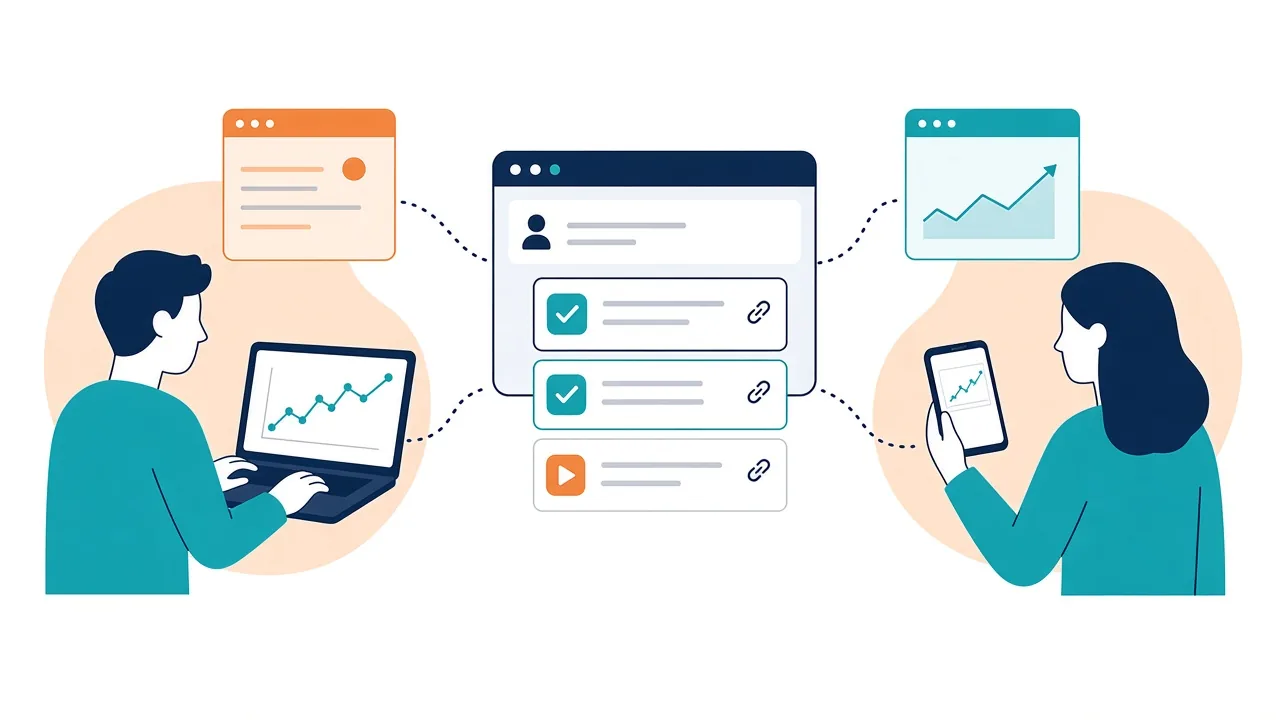 SaaS link building in the AI search era - AI answers citing review sites, comparisons, and industry articles
In 2026, many buyers start with ChatGPT, Perplexity, Claude, or Google AI Overviews instead of ten blue links. That changes what "being found" means for SaaS - but not in the way some agencies claim.
What we know:
- AI systems can use external web sources when generating answers, and many show the pages they drew from.
- Brand mentions on relevant pages - reviews, comparisons, industry publications, directories - give those systems more consistent information about what your product is and who it is for.
- Comparison pages and review sites often appear as sources for "best [category] tool" questions.
- Recommendation pages ("best tools for X") on trusted sites shape which products get mentioned.
- Entity and category associations - consistently being described as "a [category] tool for [audience]" across sites helps systems connect your brand to that category.
What nobody can promise: backlinks do not equal ChatGPT recommendations. There is no reliable way to buy placement in AI answers, and Google now states that its spam policies also apply to attempts to manipulate generative AI responses in Search. The honest framing is that being mentioned in relevant, authoritative sources can contribute to broader brand discoverability - in search and in AI answers.
Practically, that means the same work as good SaaS link building: consistent positioning, honest comparison pages, reviews on the platforms buyers use, curated directory listings, and mentions in publications your buyers read. For more, see how to increase SaaS brand visibility in AI answers and AI search visibility tools for SaaS.
Final checklist
Use this as your SaaS link building starting plan:
- Audit competitors - pull referring domains for your top 3-5 competitors
- Identify target pages - homepage, product, pricing, integrations, comparisons
- Find link gaps - sites linking to two or more competitors but not you
- Create linkable assets - one free tool, template, or data page
- Find relevant directories - curated SaaS, startup, and industry directories (start with Founder.best)
- Reach out to partners - integration pages, marketplaces, co-marketing
- Pitch publications - guest posts, expert quotes, podcasts, newsletters
- Reclaim unlinked mentions - set up brand alerts and ask for links
- Track referring domains - especially relevant ones to commercial pages
- Measure organic conversions - signups and demos from organic and referral traffic
SaaS link building services can speed this up, but the best links still come from being genuinely useful: a product worth listing, integrations worth featuring, data worth citing, and a founder worth quoting. Start with the free and cheap strategies, learn which pages convert, and only then pay someone to scale what works.
Related guides: High authority backlinks · Best SaaS directories · SEO for startups · How to increase Domain Rating · Free Domain Rating checker
Key takeaways
- SaaS link building should point at product, category, integration, comparison, and resource pages - the pages that turn research into signups.
- Relevance beats raw authority: a link from a niche SaaS directory or an integration partner often matters more than a random high-DR blog.
- The strongest SaaS link sources are ones competitors cannot easily buy: integration partners, customer stories, original data, and free tools.
- Good SaaS link building services show real organic traffic on target sites, editorial standards, natural anchors, and transparent reporting - and never guarantee rankings.
- Buying links that pass ranking credit violates Google's spam policies, which now explicitly cover AI Overviews and AI Mode too.
- Measure relevant referring domains, rankings on commercial pages, referral traffic, and signups - not a monthly link quota.
Frequently asked questions
What is SaaS link building?
SaaS link building is the process of earning backlinks from other websites to a software company's site, with a focus on links that support product, category, integration, and comparison pages. It uses SaaS-specific sources such as startup and SaaS directories, integration marketplaces, review sites, partner pages, and industry publications.
How do SaaS companies build backlinks?
SaaS companies build backlinks by listing their product on curated SaaS directories, getting featured on integration partner pages, publishing comparison pages and linkable assets like free tools and original data, running digital PR, guest posting on relevant publications, publishing customer stories, reclaiming unlinked brand mentions, and doing founder-led PR on podcasts and newsletters.
How much does SaaS link building cost?
Costs vary widely. Ahrefs found paid guest posts averaged about $78 and niche edits about $361 per link, while a 2025 Editorial.Link survey found SEOs consider about $509 an acceptable price for one high-quality link. Monthly agency retainers commonly range from about $2,000 to $10,000+ depending on site authority, content, and outreach difficulty.
Are SaaS directories good for SEO?
Curated SaaS directories can help with discovery, referral traffic, and a small number of relevant backlinks when the listing is indexable, the category matches your product, and the site has real traffic and moderation. Google lists low-quality directory links as link spam, so avoid mass submissions to hundreds of low-quality sites.
How many backlinks does a SaaS need?
There is no universal number. Compare the referring domains pointing at the pages that rank for your target keywords, then aim to close that gap with relevant links. For early-stage SaaS, 10-30 relevant referring domains to your homepage and key product pages is often enough to start ranking for long-tail commercial terms.
What makes a good SaaS backlink?
A good SaaS backlink comes from a relevant, indexed page on a site with real organic traffic, is placed editorially in context, uses a natural anchor, and points at a page that helps buyers - such as a product, integration, comparison, or resource page. Dofollow links pass ranking signals; nofollow links can still send traffic and brand exposure.
Should SaaS companies buy backlinks?
No. Buying links that pass ranking credit violates Google's spam policies and can lead to lower rankings or removal from results. Paid placements are fine when marked rel="sponsored" or rel="nofollow". Paying for a listing on a directory or for agency outreach time is different from paying a site owner to insert a dofollow link.
How do I find SaaS websites for backlinks?
Run your top competitors through a backlink tool like Ahrefs or Semrush and filter referring domains that link to two or more competitors but not to you. Add SaaS and startup directories, integration marketplaces for tools you connect with, review sites, niche newsletters, podcasts, and publications your buyers read.
Does link building help SaaS SEO?
Yes, relevant backlinks remain one of the signals search engines use to discover pages and judge authority, and they can help commercial pages rank for competitive keywords. They work best alongside strong content, technical SEO, and search intent match - links alone do not guarantee rankings.
Can backlinks help SaaS visibility in AI search?
Indirectly. AI search systems can draw on web sources when generating answers, so being mentioned on relevant, authoritative pages - reviews, comparisons, directories, and industry publications - can contribute to broader brand discoverability. No backlink guarantees an AI recommendation, and Google's spam policies apply to attempts to manipulate AI responses.

About the author
Anuj Shashimal
Founder, Founder.best
SaaS founder, indie hacker, and software engineer. Anuj built Founder.best to help indie founders launch, get discovered through search and AI answers, and turn launches into customers. He writes from first-hand experience growing Founder.best from zero to 400+ founders and 300+ launched products.
Tagged in
Browse all tagsKeep reading
Free tools and guides for this topic
Hand-picked from the tags on this post.
- Free startup directories listDofollow filters, Ahrefs DR scores, and a submission checklist.
- Free Ahrefs Domain Rating checkerLive DR (0–100) for any domain before you chase a backlink.
- Get your product discovered by AI assistantsWhich listing fields make your product rank for the right questions.
- Directories & SEOWhich startup directories give dofollow backlinks in 2026? Launch platforms, SaaSHub, AI directories, and…
- Docs: public API, MCP server & AI discoveryHow AI assistants and agents search and cite Founder.best listings.
- Why Founder.bestWhy Founder.best beats startup directories in 2026: active community, launch plans, founder profiles,…
Ready to launch on Founder.best?
Weekly rankings, dofollow SEO backlinks, founder stories, and a community built for indie makers.
Submit your startup