SEO for founders
How to get your SaaS recommended by ChatGPT when it never mentions you
If buyers ask ChatGPT for tools in your category and your product never appears, the problem is usually discoverability and corroboration, not a secret ranking trick. Here is what actually moves the needle.

Post by Anuj Shashimal
Founder, Founder.best12 min readUpdated
On this page
- TL;DR
- Why ChatGPT may not recommend your SaaS
- How AI search engines discover and evaluate SaaS products
- How to make your SaaS website easier for AI systems to understand
- How to improve your presence across trusted third-party websites
- How to create content that AI search systems can reference
- How to use structured data, documentation, and llms.txt appropriately
- How to monitor brand mentions in ChatGPT, Perplexity, and other AI search tools
- SEO versus GEO: what transfers and what does not
- A practical 30-day AI visibility action plan
- AI visibility checklist (copy before you close this tab)
- Key takeaways
- FAQ
- About the author
- Keep reading
- Tools & guides
If you are trying to figure out how to get your SaaS recommended by ChatGPT, you have probably already run the test: you ask a buyer-style question in your category and get a short list of familiar names. Yours is not on it.
That does not mean ChatGPT has a grudge against your startup. It usually means the system could not retrieve enough trusted material about your product, or what it found disagreed with itself. The fix is unglamorous: make your product easy to find, easy to parse, and easy to corroborate outside your own marketing site.
Short answer: allow search crawlers, nail one clear product description everywhere, publish pages with specific facts, earn honest mentions on third-party sites, then monitor prompts and fix errors. Nothing here guarantees a citation on any given day.
Why ChatGPT may not recommend your SaaS
ChatGPT answers are not a mirror of your Google rankings. For many buyer prompts, the product uses retrieval: it searches or fetches pages, then summarizes what it trusts. You can rank on page one in classic search and still get skipped in an AI answer if retrieval never pulls a page that names you clearly.
Here are the usual blockers we see when founders audit their visibility:
Crawl and index gaps. If search-oriented bots cannot fetch your marketing site, product pages may never enter the pools ChatGPT and partner search systems use. Check robots.txt, CDN bot rules, and firewall settings. OpenAI documents OAI-SearchBot for ChatGPT search; blocking it can remove your pages from that path. That is eligibility, not promotion.
Weak entity signals. Models reason about products as entities: name, category, audience, pricing model. If your homepage says "workflow OS for teams," your LinkedIn says "AI copilot," and your old Product Hunt tagline says something else, the system gets three weak signals instead of one strong one.
No corroboration. A polished landing page alone is still self-reported. ChatGPT often favors brands that appear on review sites, comparison roundups, documentation hubs, communities, and independent directories with matching facts.
Wrong query mode. Logged-out ChatGPT without browsing behaves differently from ChatGPT with search enabled. Perplexity always retrieves. Your mention rate can be zero in one surface and partial in another.
Category crowding. In crowded niches, models default to brands they already see often in training and retrieval: incumbents, heavily reviewed tools, and products named in listicles that rank for the same prompt.
Accuracy risk. If the model is unsure about your pricing or positioning, it may omit you rather than guess. Missing or vague pricing pages hurt here.
None of this is a moral judgment on your product. It is a supply problem for the answer engine.
How AI search engines discover and evaluate SaaS products
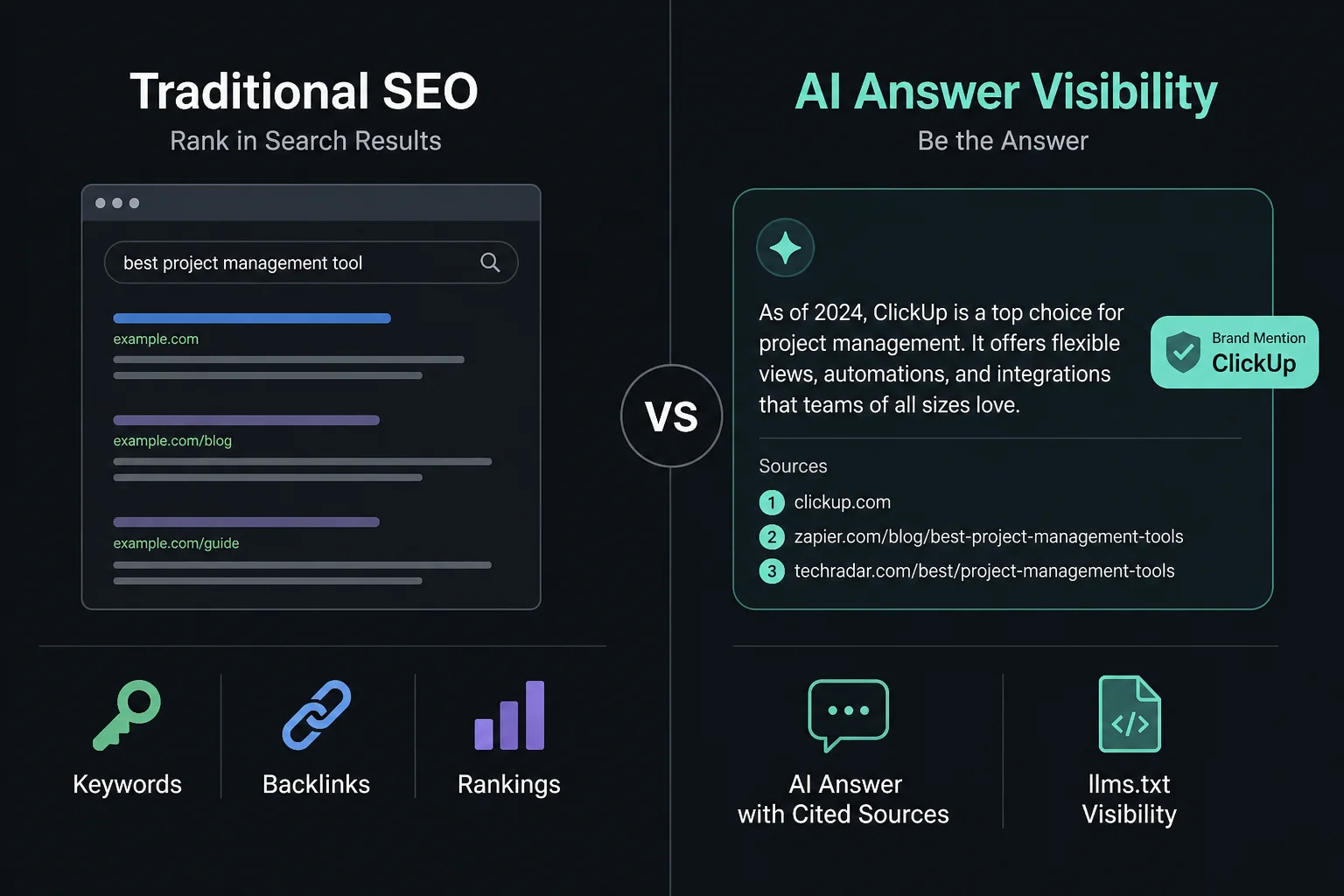
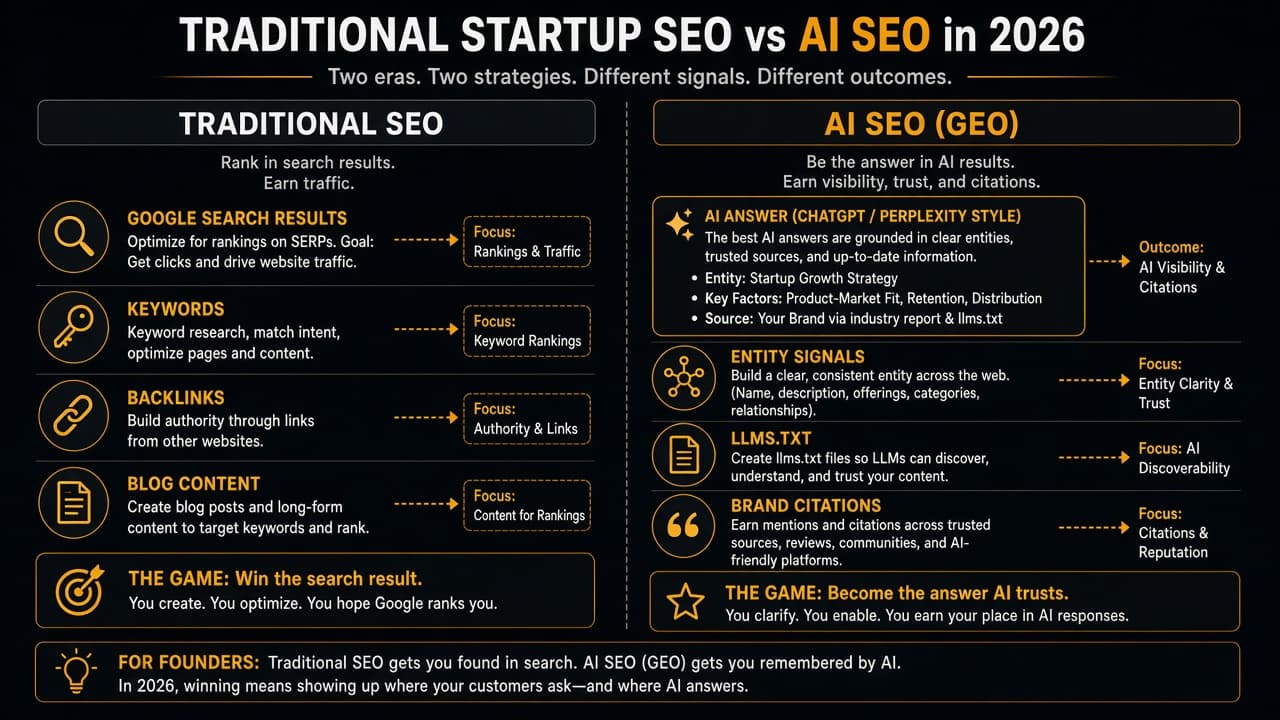
Think in two layers: classic SEO (indexable pages, links, relevance) and GEO-style work (Generative Engine Optimization: making your brand easy to cite in generated answers). They overlap but the success metric differs. SEO chases clicks; AI visibility chases named mentions and linked sources.
Discovery paths vary by platform.
| Surface | Typical discovery path | What founders control |
|---|---|---|
| ChatGPT with search | Documented crawlers plus partner search retrieval | robots.txt, site speed, indexable HTML, Bing or Google indexing |
| Perplexity | PerplexityBot and live fetch of ranked sources | Same technical base plus pages worth retrieving |
| Google AI Overviews | Google index and quality signals | Search Console hygiene, helpful content, structured data |
| Claude and others | Mix of training, search partners, and fetch | Consistent public facts and allowed crawlers per vendor docs |
Evaluation is not a public scorecard. Vendors do not publish "mention this SaaS if DR > 40" rules. In practice, systems favor:
- Pages with direct answers near the top of a section
- Specific facts: price, integrations, limits, best-for statements
- Agreement across independent URLs
- Fresh dates on topics that change year to year
- Sources that already appear for similar questions
Retrieval can lift your page into context. Whether the model names you still depends on whether your facts look safe to quote and whether competitors look clearer.
How to make your SaaS website easier for AI systems to understand
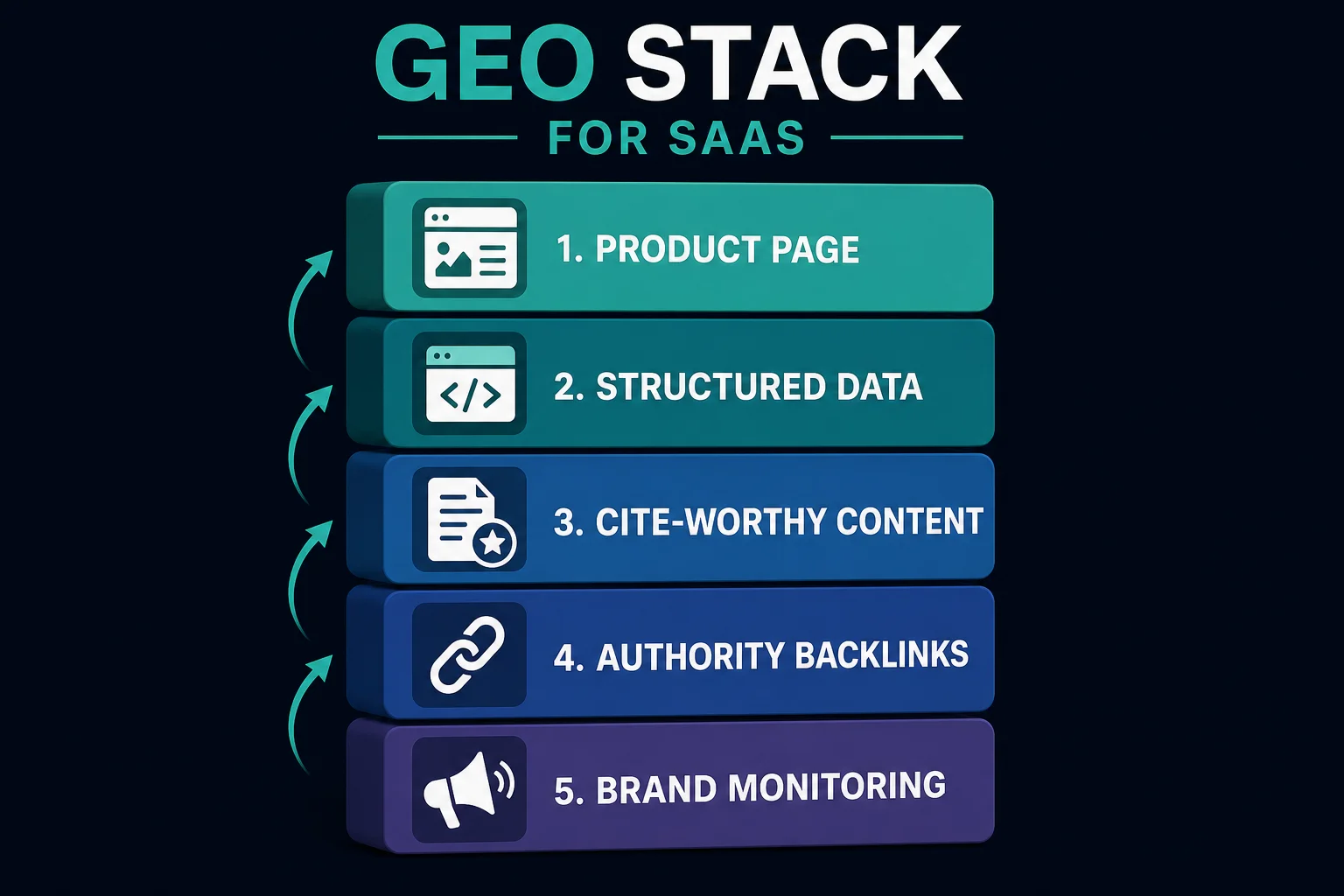
Start on your domain before you chase another launch platform. AI systems read HTML like sophisticated parsers, not like patient humans scrolling your hero animation.
One canonical product URL. Pick a homepage or /product page as the source of truth. Repeat the same product name spelling, category label, and one-sentence description in the title tag, H1, meta description, and visible copy.
Answer-first sections. For each important topic (pricing, integrations, security, who it is for), put the conclusion in the first two sentences. Follow with detail. Buried claims rarely get quoted.
Plain language facts. Write "From $29 per month for five seats" instead of "Flexible plans for every stage." Models and buyers both need numbers.
Technical hygiene.
- Serve indexable HTML without gating core facts behind login
- Fix broken mobile layouts that hide pricing
- Submit sitemaps in Google Search Console and Bing Webmaster Tools
- Allow vendor-documented search bots unless you have a deliberate block policy
Internal linking. Link from blog posts to your product, pricing, docs, and comparison pages. Orphan URLs look unimportant to crawlers.
For a full page-level checklist, see our product page SEO guide for SaaS founders.
How to improve your presence across trusted third-party websites
Third-party presence is corroboration, not a hack. When ChatGPT retrieves a "best CRM for startups" article and your product appears in the body with matching pricing, you become easier to name in the summary.
Review and comparison sites. For B2B software, profiles on G2, Capterra, TrustRadius, or AlternativeTo can matter when the prompt is comparative. Real reviews beat empty shells.
Roundups that already win search. Find articles that answer your buyer question today. Outreach to add your product honestly beats publishing a tenth "best tools" post on your own blog that nobody links to.
Launch platforms and directories. Curated indexes can host permanent product pages with categories, founder links, and backlinks where the platform allows them. Score directories before you submit; dead sites waste time. Our startup directories scoring guide walks through traffic, links, and citation value.
Founder.best as one corroboration option. Founder.best is a launch and discovery platform for indie SaaS. An approved listing adds:
- A permanent, indexable product page at
/products/your-slug - A linked founder profile and optional founder stories
- Product discovery and launch rankings driven by community upvotes
- A backlink to your site when the listing policy provides one
That is one more independent place models may fetch when someone asks what you build. It does not replace reviews, press, or your own docs, and it does not guarantee ChatGPT will name you.
Pick a handful of well-matched sites in your category rather than blasting fifty low-quality submissions. Consistency beats volume.
How to create content that AI search systems can reference
Models cite pages that look like sources, not like ads. Your goal is to publish something a buyer (and a summarizer) could trust without visiting ten other tabs.
High-value formats
- "What is [category]?" definers with neutral tone
- "[Your product] vs [competitor]" with tradeoffs and pricing
- Implementation guides with steps, screenshots, and limits
- Transparent pricing explainers tied to use cases
- Original benchmarks or survey snippets only you can publish
Low-value formats
- Generic listicles with no firsthand testing
- AI-generated filler with no numbers
- Pages that restate docs in vague marketing language
Update cornerstone pages when pricing or positioning changes. Stale facts are how you get misquoted for months.
Pair content with distribution: share in communities where your buyers already ask questions, and link from your product page so crawlers see the connection.
For founder-led narratives that also index well, see SaaS founder stories and lead generation.
How to use structured data, documentation, and llms.txt appropriately
These tools help machines read your site. They are not placement buttons.
Structured data (JSON-LD). SoftwareApplication or Product schema on your canonical page makes name, description, URL, category, and offers machine-readable. Google may use it for rich results; AI systems may extract the same fields. Invalid or spammy markup wastes time. Validate in Search Console.
Documentation. Public docs, API references, and changelogs are citation gold when buyers ask "does it integrate with X?" or "how do webhooks work?" Keep docs on the same domain as your product facts when possible.
llms.txt. A text file at yourdomain.com/llms.txt can list your preferred URLs (product, pricing, docs, key guides). It is a community convention; support varies by vendor. Google has stated it does not use llms.txt for ranking. Use it to reduce ambiguity, not as your entire GEO strategy. Founder.best publishes its own llms.txt and developer docs as a reference for how a directory can expose machine-readable surfaces.
Do not confuse training bots with search bots. Blocking GPTBot is a training-data choice. OAI-SearchBot is documented for search retrieval. Read each vendor's current documentation before you change robots.txt.
How to monitor brand mentions in ChatGPT, Perplexity, and other AI search tools
You cannot optimize what you never measure. You also should not panic over one screenshot.
Build a prompt list (10 to 20 queries). Use real buyer language:
- Best [category] for [audience]
- [Competitor] alternatives for [use case]
- How much does [your product] cost
- What tool should a solo founder use for [job to be done]
Run it on a schedule. Monthly is enough for most early-stage teams. Log date, tool, search on or off, whether you were named, whether a URL was cited, who appeared instead, and any factual errors.
Tools versus manual checks. Platforms in our AI search visibility tools roundup can automate prompt runs and track citations. They still do not guarantee future mentions. Manual logging stays useful when budgets are tight.
Act on errors first. If ChatGPT quotes the wrong price, fix pricing on your site and every profile you control, then update the page that was cited. Mention rate often lags factual fixes.
Separate SEO metrics. Track indexed pages and referring domains in Search Console and your preferred SEO tool. Rising indexation and corroboration often precede AI mentions, but the correlation is not perfect.
SEO versus GEO: what transfers and what does not
| Practice | Helps classic SEO | Helps AI mention odds | Guarantees ChatGPT citation |
|---|---|---|---|
| Fast, indexable product page | Yes | Yes | No |
| Dofollow backlinks from relevant sites | Yes | Often | No |
| JSON-LD SoftwareApplication | Sometimes (rich results) | Sometimes (clarity) | No |
| Directory product listing | Sometimes | Sometimes (corroboration) | No |
| llms.txt | Unproven for Google | Maybe for some agents | No |
| Paid ads | Traffic | No direct organic mention | No |
| Original comparison or pricing content | Yes | Yes | No |
Established SEO still matters because retrieval often starts from search indexes. GEO adds entity consistency, extractable answers, and third-party agreement. Treat both as long-term work.
A practical 30-day AI visibility action plan
Days 1 to 3: Audit
- Run your prompt list in ChatGPT (search on), Perplexity, and one Google AI surface
- Record competitors named and any wrong facts about you
- Crawl your robots.txt and confirm search bots you intend to allow are not blocked
Days 4 to 7: Canonical product facts
- Rewrite the hero and H1 with one category label and audience
- Publish or fix pricing with numbers and plan limits
- Add or fix SoftwareApplication schema on the canonical URL
Days 8 to 12: Corroboration
- Update profiles on two to three third-party sites you already have (same copy as your site)
- Submit or refresh one scored directory from best SaaS directories or launch on Founder.best if it fits your stage
- Link your product page to docs and one comparison or FAQ page
Days 13 to 18: Cite-worthy asset
- Ship one page only you can write: comparison, benchmark, or "what is [category]" guide
- Add an FAQ section with direct answers at the top of each block
- Internally link from homepage and footer
Days 19 to 22: Documentation and llms.txt
- Expose integration or API facts in public docs
- Optional: publish llms.txt pointing to product, pricing, docs, and your new guide
Days 23 to 27: Distribution
- Share the new asset where buyers ask questions (without spamming)
- Publish a short founder story if you use Founder.best or your own blog
Days 28 to 30: Re-test and fix
- Re-run the full prompt list
- Fix any remaining factual drift
- Note which sources were cited when competitors won (those are outreach targets for month two)
Repeat the cycle quarterly. AI visibility compounds slowly, like SEO.
AI visibility checklist (copy before you close this tab)
| Step | Done? |
|---|---|
| One-sentence product description matches site, docs, and profiles | ☐ |
| Pricing visible in plain text with numbers | ☐ |
| Search crawlers allowed per your policy | ☐ |
| Sitemap submitted to Google and Bing | ☐ |
| SoftwareApplication JSON-LD validates | ☐ |
| At least one third-party product listing with matching facts | ☐ |
| One comparison or category explainer on your domain | ☐ |
| Public docs answer integration or setup questions | ☐ |
| Optional llms.txt lists canonical URLs | ☐ |
| Monthly prompt log with mention rate tracked | ☐ |
For a broader GEO playbook on entity building and launch strategy, read how to increase SaaS brand visibility in AI answers. For tooling choices, see best AI search visibility tools for SaaS.
If your product is live and you want another independent listing with permanent pages, founder profiles, and launch rankings, submit your SaaS on Founder.best. Fill every field with the same facts as your site so models see one clear story, not three.
Key takeaways
- ChatGPT search and similar tools choose a few brands per answer; absence usually means weak retrieval or weak corroboration, not a penalty.
- AI systems favor the same facts repeated on your site, docs, reviews, and independent product pages.
- Schema, llms.txt, and directory links help models understand you; they do not contractually guarantee citations.
- Comparison pages, pricing explainers, and documentation beat generic blog filler for extractable answers.
- Log 10 to 20 buyer prompts monthly in ChatGPT and Perplexity, then fix factual drift before you publish more content.
Frequently asked questions
Why doesn't ChatGPT recommend my SaaS?
Common reasons include blocked or slow crawlers, thin product pages, inconsistent naming across the web, no third-party mentions in your category, and queries where ChatGPT relies on sources that never reference you. The model also varies by account, region, and whether search is enabled, so one blank answer is not the whole story.
How do I get my SaaS recommended by ChatGPT?
Make your product retrievable (allow documented search crawlers, fix indexing in Google and Bing), publish one factual product page, match that story on review sites and directories, add comparison and FAQ content only you can write, and earn mentions on pages that already answer buyer questions in your niche. Then test the same prompts regularly and correct wrong details.
Does llms.txt make ChatGPT cite my product?
No. llms.txt is a proposed convention that points tools at your preferred URLs. It may reduce ambiguity for some agents, but OpenAI and Google have not promised it controls ChatGPT citations. Treat it as optional clarity, not a placement guarantee.
Do startup directories guarantee AI mentions?
No. A good directory listing adds a third-party product record and sometimes a backlink. That can help corroboration when a retrieval layer fetches that page, but placement still depends on the query, competing brands, and which sources the model trusts that day.
Is AI search visibility the same as Google SEO?
Overlapping, not identical. Classic SEO targets rankings and clicks. AI search visibility is about being named or linked inside generated answers. Strong SEO usually helps because many AI tools retrieve from search indexes, but you also need entity consistency and extractable facts models can quote without guessing.
Can I pay ChatGPT to recommend my SaaS?
There is no public paid slot for organic product recommendations in ChatGPT answers. Sponsored surfaces, if any, are separate from the citations buyers treat as research. Durable visibility still comes from being a credible, well-described option across trusted pages.
How long until my SaaS shows up in AI answers?
There is no fixed timeline. Brands with clear pages, existing mentions, and category-relevant content sometimes see new mentions within a few months of fixing consistency and earning third-party listings. New domains with no corroboration should expect slower results.
Which AI search tools should I monitor besides ChatGPT?
Start with ChatGPT (with search on), Perplexity, and Google AI Overviews if your buyers use Google. Add Copilot, Claude, or Gemini when your ICP or spot checks show meaningful traffic there. Use the same prompt list everywhere so you can compare mention rates.
Ready to launch on Founder.best?
Weekly rankings, dofollow SEO backlinks, founder stories, and a community built for indie makers.
Submit your startup
About the author
Anuj Shashimal
Founder, Founder.best
SaaS founder, indie hacker, and software engineer. Anuj built Founder.best to help indie founders launch, get discovered through search and AI answers, and turn launches into customers. He writes from first-hand experience growing Founder.best from zero to 400+ founders and 300+ launched products.
Keep reading
Free tools and guides for this topic
Hand-picked from the tags on this post.
- Free Ahrefs Domain Rating checkerLive DR (0–100) for any domain before you chase a backlink.
- Get your product discovered by AI assistantsWhich listing fields make your product rank for the right questions.
- Free SaaS directories for backlinksList of free SaaS and startup directories with dofollow filters, Ahrefs DR scores, and a submission checklist.
- Startup launch statistics & researchOriginal launch data plus sourced figures on AI search and startup failure.
- Directories & SEOWhich startup directories give dofollow backlinks in 2026? Launch platforms, SaaSHub, AI directories, and…
- Docs: public API, MCP server & AI discoveryHow AI assistants and agents search and cite Founder.best listings.