Launch & growth
B2B SaaS product marketing: The simple (but complete) 2026 guide
B2B buyers now pick a favorite vendor before they ever talk to sales. Here is how B2B SaaS product marketing wins that invisible research phase - a 6-step framework founders can run without a full marketing team.

Post by Anuj Shashimal
Founder, Founder.best16 min read
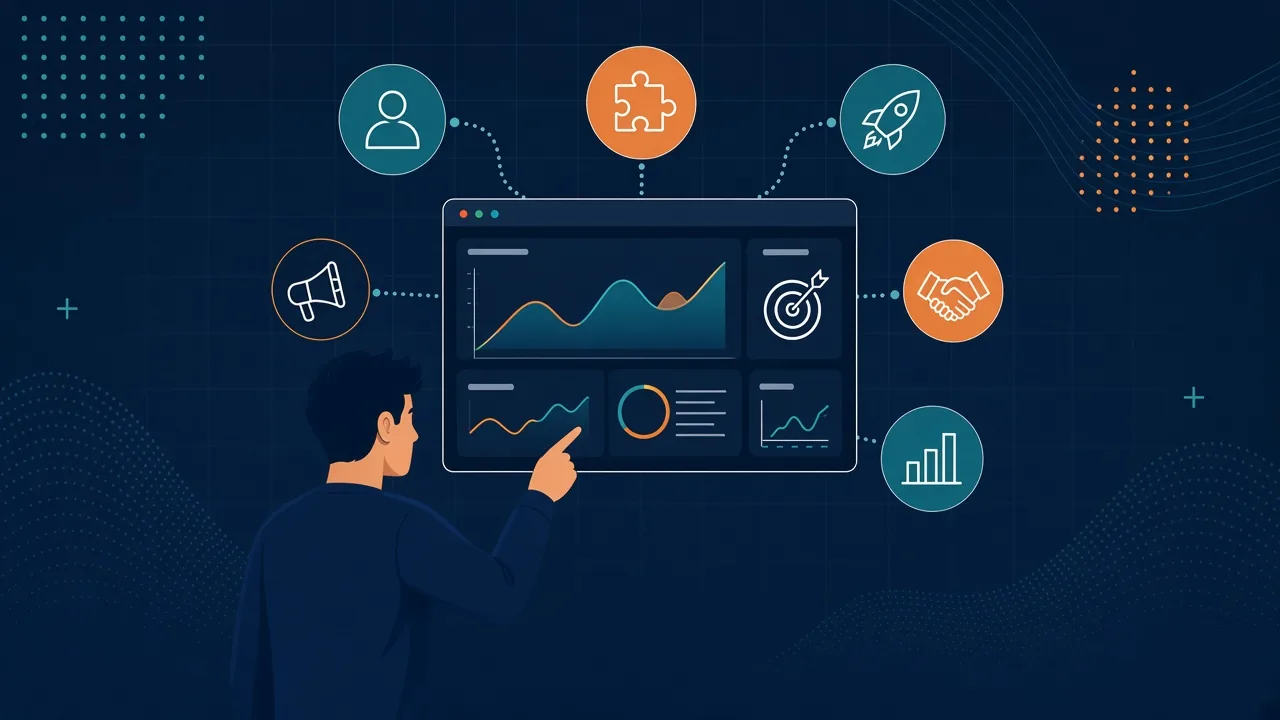
B2B SaaS product marketing is the difference between a product that is technically good and a product that buyers actually choose. You can ship the best workflow tool in your category and still lose deals to a clunkier competitor whose story is clearer, whose pricing page answers procurement's questions, and whose name shows up when a buyer asks ChatGPT for a shortlist.
That gap got wider in 2026. B2B buyers research alone, compare vendors before booking a call, and usually decide on a favorite long before your sales team hears their name. Product marketing is how you win that invisible part of the journey.
This guide is written for SaaS founders and small teams. It covers what B2B SaaS product marketing actually is, why it matters more now, and a 6-step framework - research, positioning, pricing, launch, enablement, and adoption - with templates, charts, and metrics you can use this week. I run the same playbook to grow Founder.best from zero to 400+ founders, so everything here is tested on a real product, not just theory.
What is B2B SaaS product marketing?
B2B SaaS product marketing is the function that brings a software product to business buyers and drives its adoption. It turns customer insight into positioning, messaging, pricing, launches, and sales assets, then measures whether those things create pipeline, wins, and expansion revenue.
Product marketing sits at the intersection of four teams:
- Product - turns roadmap and features into benefits buyers care about
- Marketing - supplies the positioning and messaging every campaign uses
- Sales - gets battlecards, demo narratives, and objection handling
- Customer success - gets onboarding stories and feature-adoption campaigns
In consumer apps, a catchy message and a smooth signup can carry the product. In B2B SaaS, a purchase often involves a buying group, a security review, a budget owner, and a champion who has to sell your tool internally. Product marketing gives each of those people what they need to say yes.
Product marketing vs. product management vs. demand generation
Founders often blur these three roles. That is fine at five people, but you should still know which hat you are wearing.
| Function | Core question | Owns | Measured by |
|---|---|---|---|
| Product management | What should we build? | Roadmap, requirements, prioritization | Usage, retention, delivery |
| Product marketing | Why should buyers choose it? | Positioning, messaging, pricing input, launches, enablement | Win rate, pipeline influenced, adoption |
| Demand generation | How do we reach more buyers? | Campaigns, channels, lead volume | Qualified pipeline, CAC |
Demand generation amplifies a message. Product marketing decides what the message is. If your ads, cold emails, and landing pages all describe your product differently, that is a product marketing problem, not a channel problem.
Why B2B SaaS product marketing matters more in 2026
The B2B buying journey moved away from sales conversations years ago, and it keeps moving. Gartner's survey of 750 B2B buyers found that buyers spend only 17% of their total buying time meeting with potential suppliers - and that time is split across every vendor they evaluate.
How B2B buyers spend their buying time
- Researching independently online27%
- Meeting with the internal buying group22%
- Researching independently offline18%
- Meeting with potential suppliers (all vendors)17%
- Other16%
Research from 6sense points the same way. Buyers build and rank a shortlist before they reach out, and the vendor they contact first usually wins.
The B2B buyer journey in numbers
- 75%
- of B2B buyers say they prefer a rep-free buying experience (Gartner)
- 61%
- of the way through their journey is when buyers typically make first contact with sellers (6sense, 2025)
- 94%
- of buying groups rank their shortlist before engaging any vendor (6sense, 2025)
- ~80%
- of deals go to the vendor the buyer contacted first (6sense, 2025)
Put those numbers together and the implication is blunt: by the time a prospect books a demo, product marketing has already done most of the selling - or failed to. The assets that shape a shortlist are all product marketing work:
- Homepage and product page positioning
- Comparison and "alternatives" pages
- Pricing page clarity
- Reviews, directory listings, and founder stories on third-party sites
- How AI assistants summarize your product when a buyer asks "what's the best tool for X?"
That last point is new. If your positioning is inconsistent across your site and third-party pages, AI systems will describe you inconsistently too. See how to increase SaaS brand visibility in AI answers for the tactical side.
The B2B SaaS product marketing framework
Every mature product marketing team runs some version of the same loop. Here it is in six steps, sized for a startup.
The 6-step B2B SaaS product marketing framework
- 1. ResearchICP, buying group, jobs-to-be-done, win/loss
- 2. Positioning & messagingalternatives, differentiation, value, category
- 3. Pricing & packagingvalue metric, tiers, pricing page
- 4. Launch & go-to-markettiered launches, channels, listings
- 5. Sales & buyer enablementbattlecards, one-pagers, demo narrative
- 6. Adoption & expansiononboarding, feature launches, customer proof
You do not need to perfect one step before starting the next. But skipping step 1 or 2 is the most common reason early B2B SaaS marketing feels like shouting into the void.
Step 1: Research your buyers and market
Great B2B SaaS product marketing starts with knowing your buyer better than your competitors do. Aim for three outputs.
1. An ideal customer profile (ICP). Company size, industry, tech stack, trigger events, and the "do nothing" alternative. If you cannot name ten real companies that fit, it is too broad. Our guide on finding B2B clients for your SaaS has a one-page ICP template.
2. A buying-group map. B2B deals rarely have one decision maker. Map at least:
- Champion - feels the pain daily and pushes for the tool
- Economic buyer - owns the budget and signs
- Technical evaluator - checks security, integrations, and data
- End users - decide whether adoption actually happens
Each role needs a different message. The champion cares about their workflow; the economic buyer cares about cost and risk; the technical evaluator cares about SSO, APIs, and compliance.
3. Jobs-to-be-done and win/loss insight. Interview five recent customers and, if you can, five lost deals. Ask:
- What was happening that made you start looking?
- What else did you consider, including spreadsheets or doing nothing?
- What almost stopped you from buying?
- How would you describe our product to a colleague?
Record the exact words buyers use. That language becomes your headlines, your SEO keywords, and your ad copy. Store it in your CRM (best CRM for startups compares lightweight options) so it survives beyond your memory.
Step 2: Nail positioning and messaging
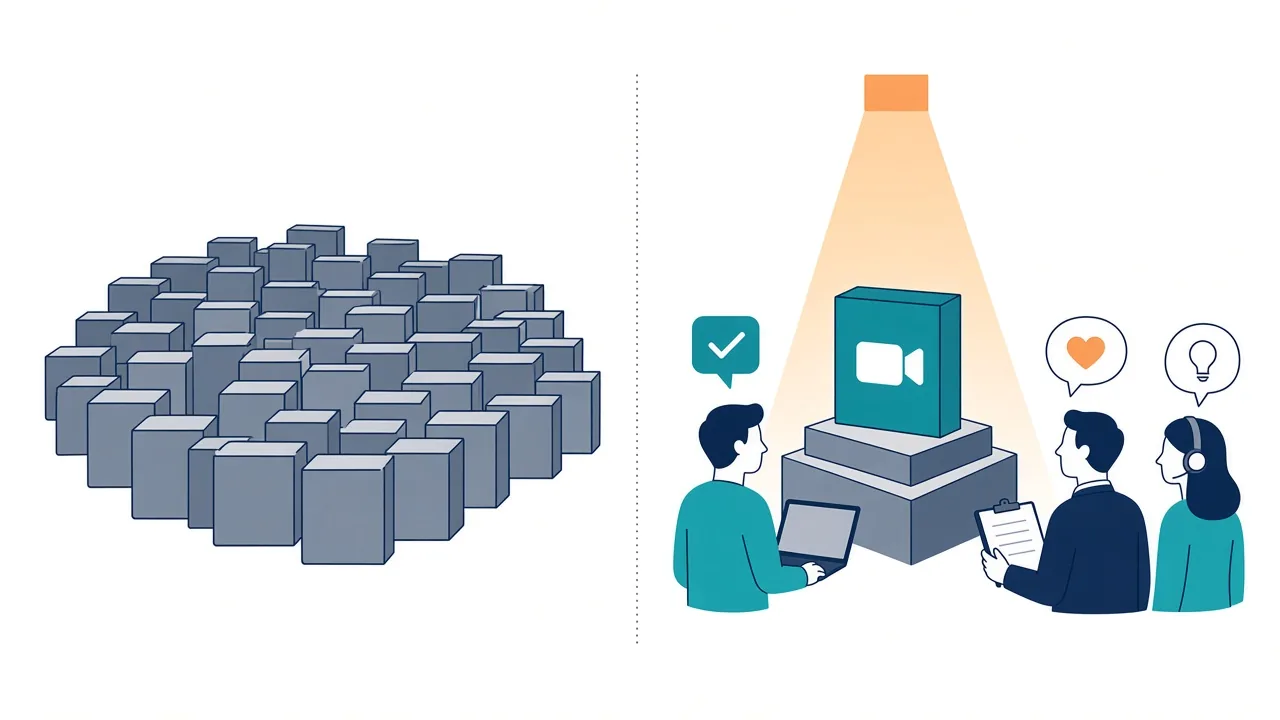 B2B SaaS positioning - standing out from a crowd of look-alike software with a clear message for each buyer
Positioning defines how your product is the best choice for a specific set of buyers compared with their alternatives. Messaging is how you express that positioning in words. Get positioning wrong and no amount of copywriting will fix it.
A practical positioning framework, adapted from April Dunford's Obviously Awesome, works through five components in order:
- Competitive alternatives - what buyers would use if you did not exist (a competitor, spreadsheets, an agency, an internal tool)
- Unique capabilities - what you have that those alternatives lack
- Differentiated value - the outcome those capabilities create for the buyer
- Best-fit customers - who cares most about that value
- Market category - the frame that makes your value obvious
Then write a one-paragraph positioning statement your whole team can repeat:
For [best-fit customer] who [trigger or pain], [product] is a [market category] that [differentiated value]. Unlike [main alternative], we [unique capability].
Turn positioning into a messaging framework. Build a simple grid with one row per persona:
| Persona | Top pain | Key message | Proof point |
|---|---|---|---|
| Champion (ops lead) | Manual reporting eats Fridays | Automated weekly reports in 5 minutes | Customer quote with hours saved |
| Economic buyer (VP) | Tool sprawl and cost | Replaces two tools at lower total cost | Pricing comparison |
| Technical evaluator | Security and integration risk | SOC 2, SSO, native integrations | Security page, docs |
Test the messaging where it is cheap: LinkedIn posts, cold email subject lines, and your homepage headline. Keep the version buyers repeat back to you on calls. If you are stuck on words, the free tagline generator is a quick way to explore angles before you commit.
Step 3: Get pricing and packaging right
Pricing is product marketing's most underused lever. A small pricing change often moves revenue more than a big feature launch.
Pick a value metric. Charge on the unit that grows as the customer gets more value - seats, contacts, projects, usage, or revenue processed. A good value metric feels fair to buyers and expands naturally as accounts grow.
Package in three tiers. A common B2B SaaS pattern:
- Starter / self-serve - one team, core workflow, card payment
- Pro / growth - collaboration, integrations, reporting
- Business / enterprise - SSO, audit logs, admin controls, security review, invoicing
Put features that only matter to larger companies (SSO, SCIM, audit logs, custom contracts) in the top tier. They are the features procurement asks about, and they justify the price jump.
Make the pricing page do sales work. Remember that most buyers prefer to research without a rep. Your pricing page should answer the questions a salesperson would:
- Which plan fits a team like mine?
- What happens when we grow?
- Is there a free trial or pilot?
- What does security and procurement look like?
- How do we compare with the incumbent tool?
Hiding prices behind "contact sales" makes sense for true enterprise deals. For most early-stage B2B SaaS it just removes you from the shortlist.
Step 4: Plan launches and go-to-market
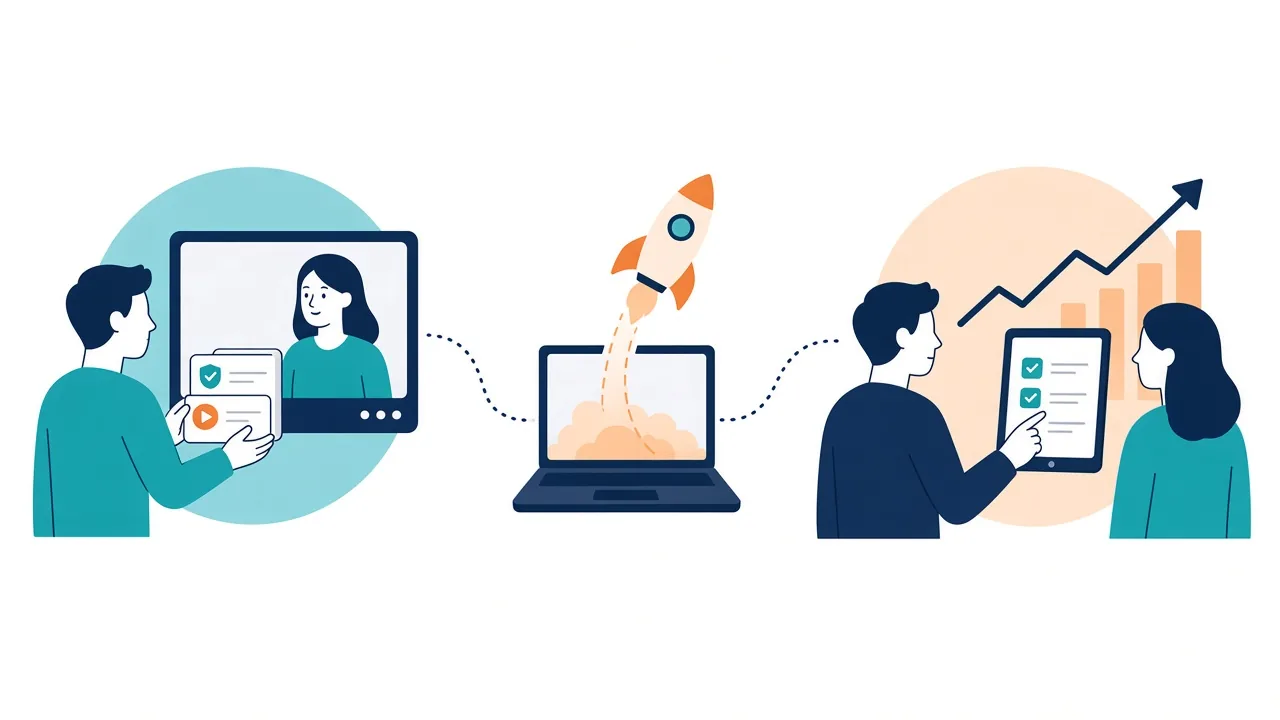 B2B SaaS product launch and sales enablement - from enablement assets to launch to customer onboarding and retention
Launches are the most visible part of B2B SaaS product marketing. The mistake founders make is treating every release the same: either everything is a "big launch" (and your audience tunes out) or nothing is (and good work goes unnoticed).
Use launch tiers:
| Tier | What qualifies | Effort | Typical activities |
|---|---|---|---|
| Tier 1 | New product, major repositioning, new pricing | 4-8 weeks | Launch page, press or newsletter push, launch platforms, customer webinar, sales training |
| Tier 2 | Significant feature that changes a buying decision | 1-3 weeks | Blog post, in-app announcement, email to relevant segment, updated battlecard |
| Tier 3 | Improvements and fixes | Days | Changelog entry, social post, product page update |
A simple Tier 1 launch checklist:
- Positioning and messaging updated for the launch
- Launch page with screenshots, a short demo video, and FAQs
- Sales and support briefed with a one-pager and top objections
- Email to customers and prospects, segmented by persona
- Launch on curated platforms and directories where your buyers browse
- Founder posts on LinkedIn and X telling the story behind the launch
- Tracking in place (UTMs, signups, demos, pipeline by source)
Launch where B2B buyers and search engines find you later. Launch-day spikes fade, but permanent, indexable product pages keep sending buyers and backlinks. A listing on Founder.best gives you a permanent product page, weekly Launchpad visibility, and a dofollow backlink on paid tiers - useful for both discovery and the SEO behind your comparison pages. For where else to launch, see best websites to launch a SaaS, our SaaS launch checklist, and Product Hunt launch strategies.
Treat updates as mini-launches. Posting product updates on your listings and changelog keeps pages fresh for buyers and crawlers, and gives sales a reason to re-engage stalled deals.
Step 5: Enable sales and buyers
Sales enablement is where product marketing turns into revenue. In 2026 it has a twin: buyer enablement - giving buyers the material they need to convince their own buying group without you in the room.
Core sales enablement assets:
- Battlecards - one page per competitor: where we win, where we lose, landmines to set, how to handle "we already use X"
- Product one-pager - problem, solution, proof, pricing summary; easy to forward
- Demo narrative - a story built around the buyer's workflow, not a feature tour
- Objection handling doc - the top ten objections with honest answers
- Case studies - customer context, problem, why they chose you, results in numbers
Buyer enablement assets (the ones champions forward internally):
- ROI or business case template
- Security and compliance overview
- Implementation timeline and "what the first 30 days look like"
- Comparison pages that are honest about tradeoffs
Honest comparisons build more trust than one-sided ones. Buyers can tell when a comparison table has every checkmark on one side. If you want to see the format, our Product Hunt vs Founder.best comparison shows where each platform is the better choice.
Keep enablement alive. Review battlecards monthly with whoever sells (even if that is only you). Update them after every lost deal where a competitor won.
Step 6: Drive adoption, retention, and expansion
In B2B SaaS, the sale is the start. Revenue compounds through retention and expansion, and product marketing has a big role after the contract is signed.
- Onboarding messaging - align welcome emails and in-app guides with the value promised in the sales process. The AI tool post-launch onboarding sequence guide has a template.
- Feature adoption campaigns - when you ship a Tier 2 feature, market it to existing customers who would benefit most, not just to prospects.
- Customer marketing - turn happy customers into case studies, reviews, referrals, and speakers.
- Expansion plays - show usage-based triggers (seat limits, new teams, advanced features) that make upgrading the obvious next step.
Win/loss notes, churn reasons, and adoption data then feed straight back into Step 1. That loop is what makes product marketing a system instead of a series of one-off projects.
Content that moves B2B SaaS buyers
Most B2B SaaS content is written for traffic. Product marketing content should be written for decisions. Prioritize by buyer intent:
Bottom of funnel (publish first):
- "[Competitor] alternatives" and "[Your product] vs [Competitor]" pages
- "Best [category] for [role or industry]" with honest tradeoffs
- Pricing, ROI, and security pages
- Integration guides for tools your buyers already pay for
Middle of funnel:
- Workflow guides that show how your product solves a specific job
- Case studies and founder stories with real numbers
- Templates and free tools related to the job
Top of funnel (later):
- Industry trends, opinion pieces, original data
Founder-written content beats generic AI drafts here because it contains details only a practitioner knows - exactly the first-hand experience Google and AI assistants look for. Read founder-led SEO for early-stage startups, product page SEO, and content marketing for startups to build the cluster.
If you are a solo founder doing product marketing yourself, here is how I would split a limited weekly budget between these activities:
Suggested weekly time split for a founder running product marketing
- Customer and buyer conversations30%
- Positioning, messaging, and page updates20%
- Bottom-of-funnel content and comparison pages20%
- Launches, listings, and product updates15%
- Sales and buyer enablement assets10%
- Metrics review5%
B2B SaaS product marketing metrics that matter
Product marketing is easy to judge by output (pages written, launches shipped). Judge it by outcomes instead.
| Metric | What it tells you | Where to find it |
|---|---|---|
| Pipeline influenced | Deals that touched PMM assets (comparison pages, case studies, launch pages) | CRM + UTMs |
| Win rate vs. named competitors | Whether positioning and battlecards work | CRM loss reasons |
| Sales cycle length | Whether buyer enablement removes friction | CRM |
| Pricing and comparison page conversion | Whether high-intent pages persuade | Web analytics |
| Trial-to-paid and activation rate | Whether onboarding delivers the promised value | Product analytics |
| Feature adoption after launch | Whether launches reach existing customers | Product analytics |
| Net revenue retention | Whether expansion messaging works | Billing |
| Share of voice in search and AI answers | Whether buyers find you during research | Search Console, AI visibility tools |
Start with three: pipeline by source, win rate, and activation rate. Add the rest as your data matures. For AI visibility tracking, see our roundup of AI search visibility tools for SaaS.
Product marketing for founders without a product marketer
Most startups do not hire a dedicated product marketing manager until after product-market fit, often once there is a sales team to support. Before that, the founder is the product marketer - and should be, because positioning depends on first-hand customer conversations.
A 4-6 hour weekly routine:
- Monday (60 min) - review last week's calls, demos, and lost deals; log buyer language
- Tuesday (90 min) - improve one high-intent page (homepage headline, pricing, or a comparison page)
- Wednesday (60 min) - publish or refresh one bottom-of-funnel piece
- Thursday (45 min) - post one product update to your changelog, listings, and social
- Friday (45 min) - update one enablement asset and check pipeline, win rate, and activation
Once a month, rewrite your positioning statement from memory. If it changed, update the homepage, pricing page, and listings the same week so buyers and AI systems see one consistent story.
Common B2B SaaS product marketing mistakes
- Leading with features instead of outcomes - buyers buy results, then check features
- Positioning against the wrong alternative - your real competitor is often a spreadsheet or "do nothing"
- One message for the whole buying group - the CFO and the end user care about different things
- Treating launches as one-day events - without permanent pages and follow-up, launch traffic disappears
- Hiding pricing and security information - buyers researching alone will just skip you
- Measuring traffic instead of pipeline - page views do not pay invoices
- Letting positioning drift - inconsistent messaging across your site, listings, and reviews confuses buyers and AI assistants alike
Start this week
B2B SaaS product marketing is not a department you need to hire. It is a discipline of knowing your buyer, telling a clear story, and putting that story everywhere buyers research. Start small:
- Interview three customers and write down their exact words
- Write your one-paragraph positioning statement
- Rewrite your homepage headline and pricing page from that positioning
- Publish one honest comparison or alternatives page
- Launch or update your product on Founder.best so buyers researching your category find a permanent, up-to-date page
Buyers are choosing their favorite vendor before they talk to anyone. Product marketing makes sure that favorite is you.
Related guides: Finding B2B clients for your SaaS · Marketing tools for startups · SEO for startups · SaaS creation framework · Free launch checklist tool
Key takeaways
- B2B SaaS product marketing is the bridge between product and revenue: it owns buyer insight, positioning, messaging, pricing input, launches, sales enablement, and adoption.
- Buyers do most of their evaluation alone - Gartner puts supplier meetings at just 17% of buying time - so your website, comparison pages, and listings are your first sales rep.
- Positioning starts from competitive alternatives and unique capabilities, not features. Write it down before you write any copy.
- Tier your launches (major, medium, minor) so every release gets the right amount of effort instead of every update getting a "big launch."
- Measure product marketing by pipeline influenced, win rate, sales cycle length, activation, and expansion - not page views.
- Founders without a product marketer can run a lightweight version in 4-6 hours a week using the routine in this guide.
Frequently asked questions
What is B2B SaaS product marketing?
B2B SaaS product marketing is the function that brings a software product to business buyers and drives its adoption. It covers buyer and market research, positioning and messaging, pricing and packaging input, product launches, sales enablement, and customer adoption and expansion. It sits between product, marketing, sales, and customer success.
How is product marketing different from product management?
Product management decides what to build and why, working with engineering on the roadmap. Product marketing decides how to position, price, launch, and sell what gets built, working with sales and marketing. Both rely on customer research, but product marketing owns the market-facing story and its results in pipeline and adoption.
What does a B2B SaaS product marketing strategy include?
A complete strategy includes an ideal customer profile and buying-group map, a written positioning statement, a messaging framework per persona, a pricing and packaging model, a tiered launch plan, sales enablement assets (battlecards, one-pagers, demo scripts), bottom-of-funnel content, and a metrics dashboard covering pipeline, win rate, and activation.
When should a SaaS startup hire a product marketing manager?
Most startups hire a first product marketing manager after product-market fit, often when there is a sales team to enable and releases are frequent enough to need launch coordination - commonly somewhere between $1M and $5M ARR. Before that, the founder should own positioning and messaging directly, because it depends on first-hand customer conversations.
What metrics measure B2B SaaS product marketing success?
Track pipeline sourced and influenced by product marketing assets, win rate against named competitors, sales cycle length, conversion rate on pricing and comparison pages, trial-to-paid conversion, feature adoption after launches, net revenue retention, and share of voice in search and AI answers for your category.
How does AI search change B2B SaaS product marketing in 2026?
Buyers increasingly ask ChatGPT, Perplexity, and Google AI Overviews to shortlist vendors. Product marketing now has to make positioning consistent and citable across your site, comparison pages, reviews, and third-party listings, so AI systems describe your product accurately and include it in category answers.

About the author
Anuj Shashimal
Founder, Founder.best
SaaS founder, indie hacker, and software engineer. Anuj built Founder.best to help indie founders launch, get discovered through search and AI answers, and turn launches into customers. He writes from first-hand experience growing Founder.best from zero to 400+ founders and 300+ launched products.
Tagged in
Browse all tagsKeep reading
Free tools and guides for this topic
Hand-picked from the tags on this post.
- Startup tagline generator12 tight one-liners for your landing page and launch post.
- Launch SaaS guideHow to launch a SaaS product in 2026: validation, launch platforms, SaaS launch checklist, SEO backlinks,…
- How Founder.best worksSubmit in 10 minutes, rank on the weekly Launchpad, stay discoverable.
- Free startup launch checklist30+ tasks across pre-launch, launch day, and post-launch.
- Free startup directories listDofollow filters, Ahrefs DR scores, and a submission checklist.
- Free tools for foundersName generator, tagline writer, slug checker, DR checker, launch checklist.
Ready to launch on Founder.best?
Weekly rankings, dofollow SEO backlinks, founder stories, and a community built for indie makers.
Submit your startup